

This guide shares general information about traditional food, not medical or nutrition advice. If you have a health condition or special diet, talk to a doctor or registered nutritionist-dietitian.
Many traditional Filipino dishes are naturally healthy because they’re built on vegetables, fish and broth: sinigang (sour tamarind soup), tinola (ginger chicken soup with malunggay), pinakbet (mixed vegetables), ginisang monggo (mung bean stew), inihaw na isda (grilled fish), kinilaw and the Visayan utan bisaya. Local vegetables like malunggay, kangkong, ampalaya and talbos ng kamote are cheap and nutrient-rich. The government’s Pinggang Pinoy plate guide suggests filling about half your plate with vegetables and fruit, with smaller portions of rice and protein.
Healthy Filipino dishes to try
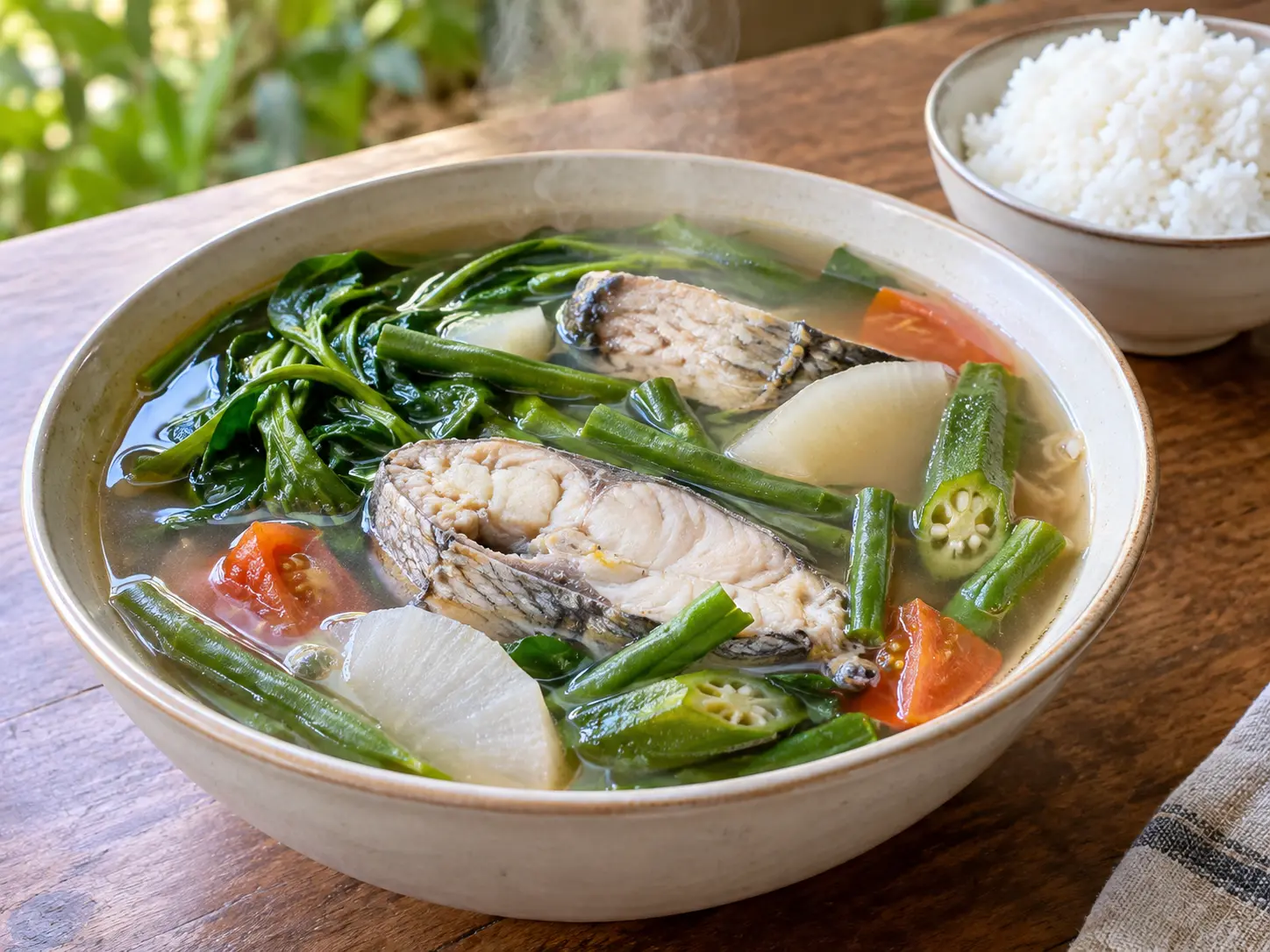
- Sinigang A sour soup of tamarind broth with vegetables like kangkong, radish, okra and string beans, plus fish, shrimp or lean pork. Choose fish or shrimp for a lighter bowl.

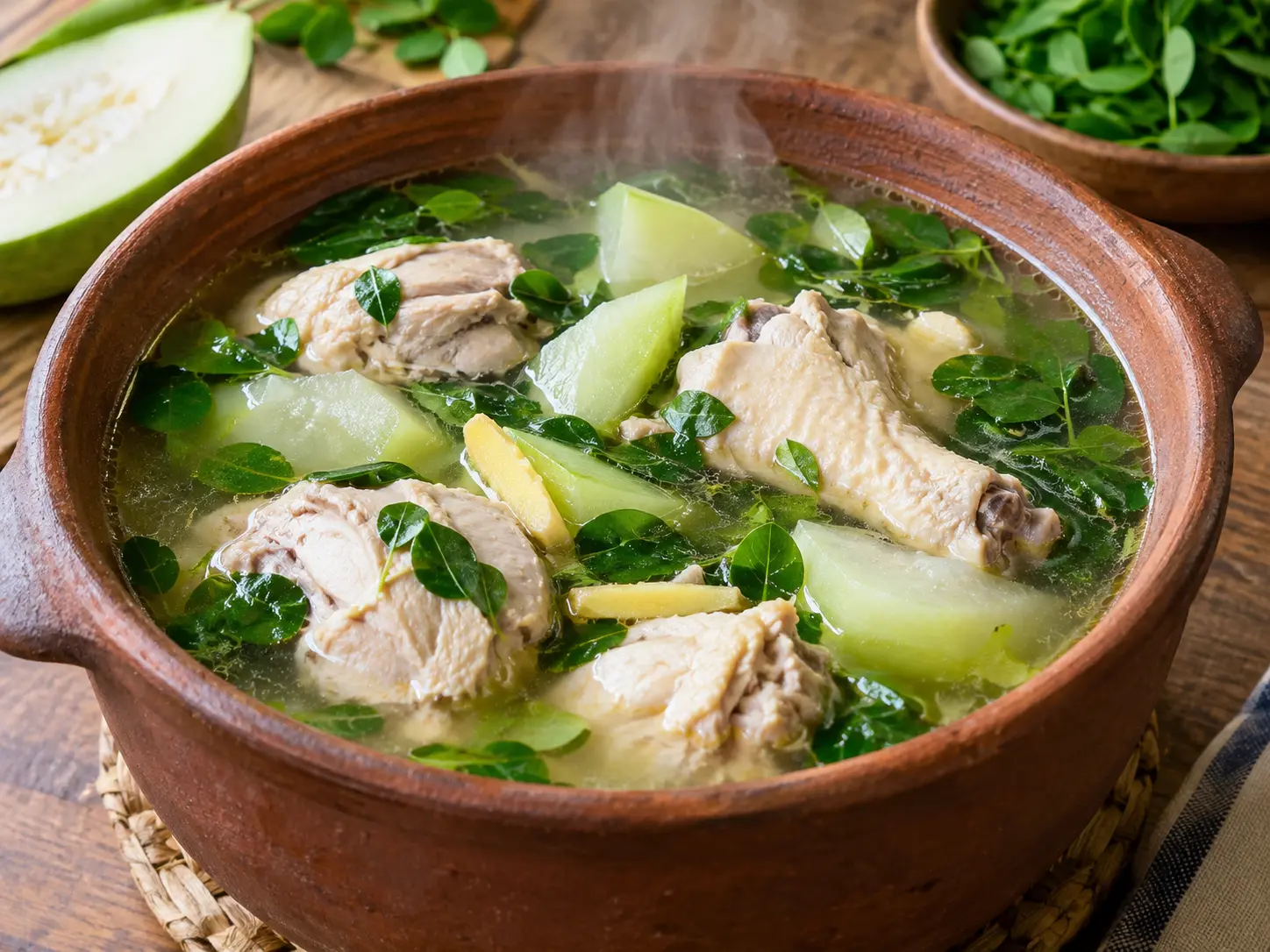
Sinigang na isda, light and full of vegetables. Illustrative image. - Tinola Chicken simmered with ginger, green papaya or sayote and malunggay leaves. Remove the skin for a leaner version.
Tinola with green papaya and malunggay. Illustrative image. - Pinakbet An Ilocano medley of squash, eggplant, okra, bitter gourd and string beans, flavored with a little shrimp paste.
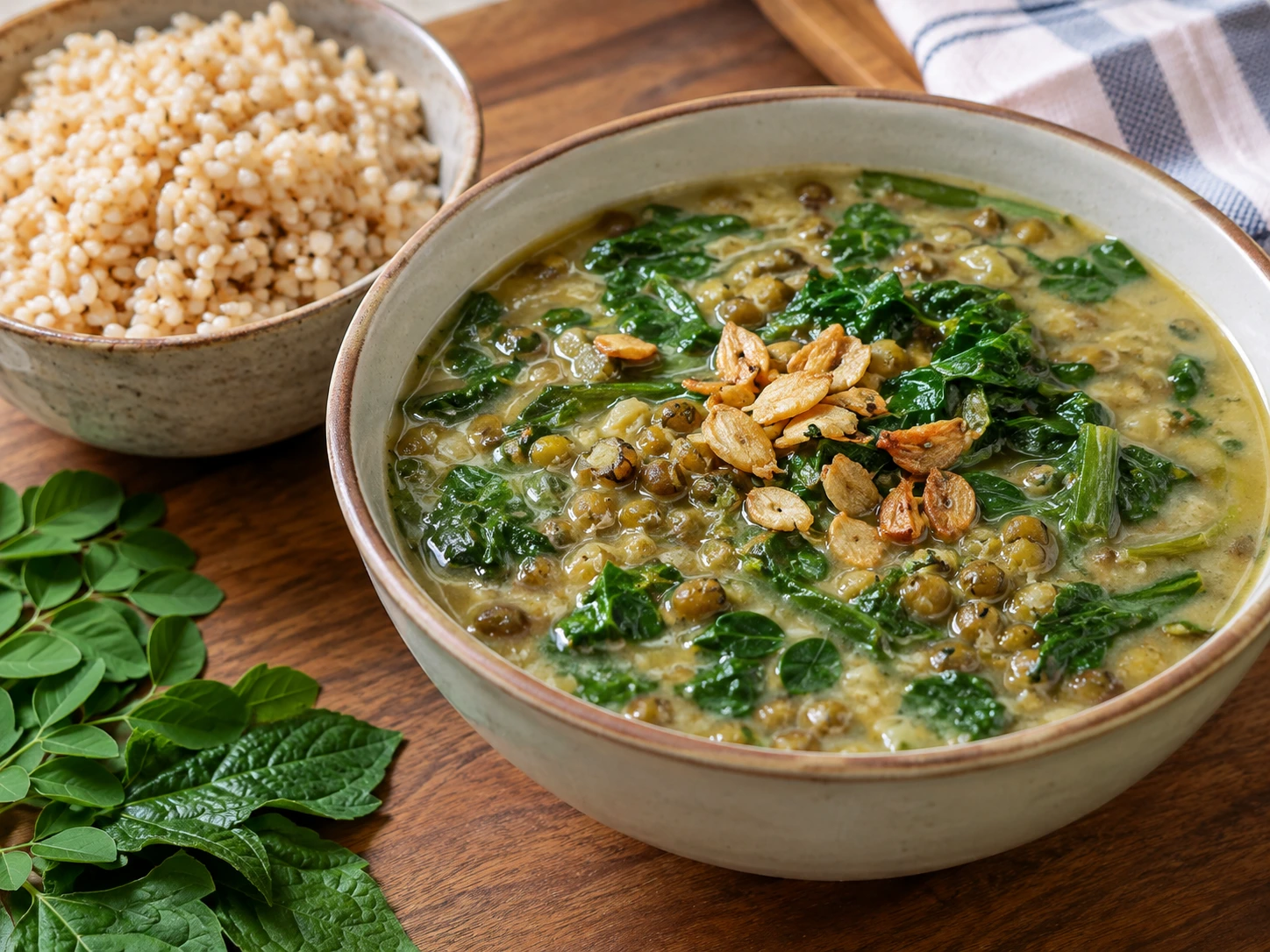
- Ginisang monggo A comforting mung bean stew, often with malunggay or ampalaya leaves, traditionally eaten on Fridays. It’s rich in plant protein and fiber.
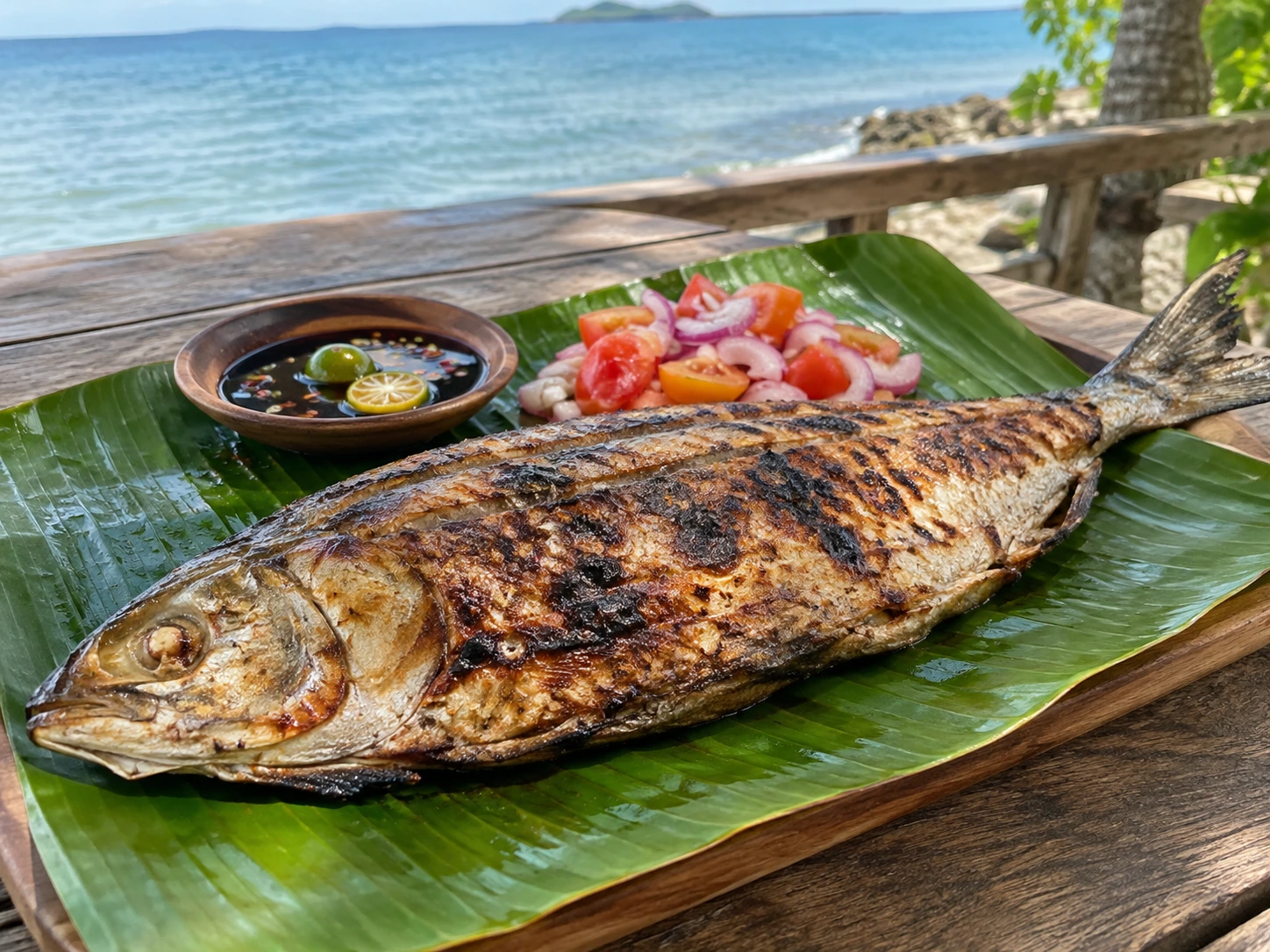
Ginisang monggo, a Friday favorite. Illustrative image. - Inihaw na isda Grilled fish like bangus or tilapia, served with tomatoes, onions and a dip of soy sauce and calamansi.
Grilled bangus with tomatoes and onions. Illustrative image. - Kinilaw Fresh raw fish cured in vinegar or citrus with ginger, onion and chili. No cooking oil at all. See our spicy Filipino food guide.
- Utan bisaya and law-uy Simple Visayan vegetable soups of squash, string beans, malunggay and other garden greens in a light broth.
- Paksiw na isda Fish simmered in vinegar, garlic and ginger, a classic, low-fat way to cook fish.
- Lumpiang sariwa Fresh spring rolls filled with vegetables, wrapped in a thin crepe instead of being fried.
- Ensaladang talong A salad of grilled eggplant with tomatoes and onions, a common side dish for grilled fish.
Pinggang Pinoy: the Filipino healthy plate
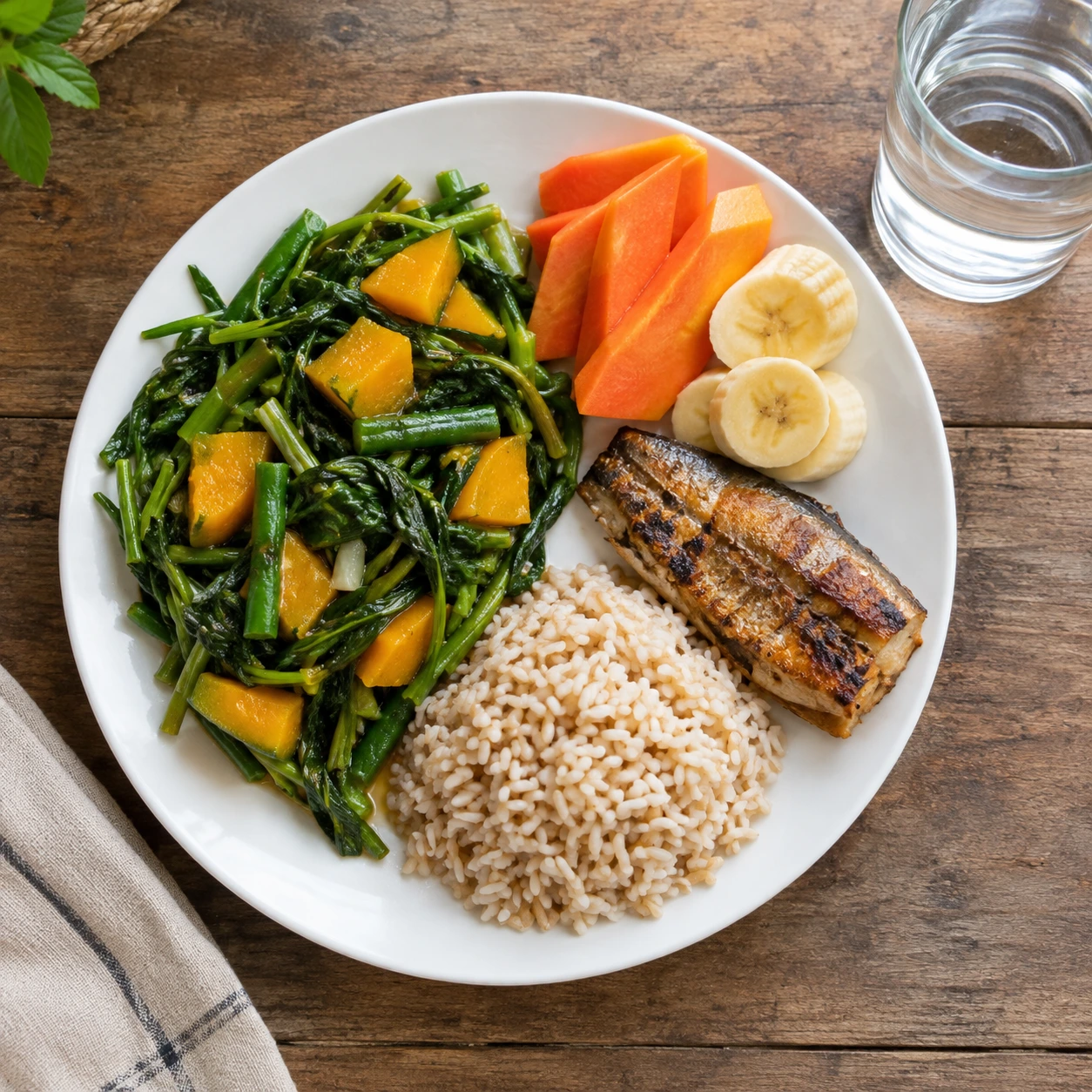
The Pinggang Pinoy is the Philippine healthy plate guide from the Department of Science and Technology’s Food and Nutrition Research Institute (DOST-FNRI). It uses familiar Filipino foods to show a balanced meal:
| Part of the plate | Food group | Filipino examples |
|---|---|---|
| About one-third | Vegetables (“Glow” foods) | Kangkong, malunggay, ampalaya, squash, string beans, talbos ng kamote |
| About one-sixth | Fruit (“Glow” foods) | Banana, papaya, mango, calamansi |
| About one-third | Rice and other energy foods (“Go” foods) | Rice (brown or red rice when you can), kamote, corn, saba |
| About one-sixth | Protein (“Grow” foods) | Fish, chicken, eggs, tofu, monggo |
Proportions simplified from the DOST-FNRI Pinggang Pinoy. Water is the recommended drink.
Filipino vegetables and “superfoods”
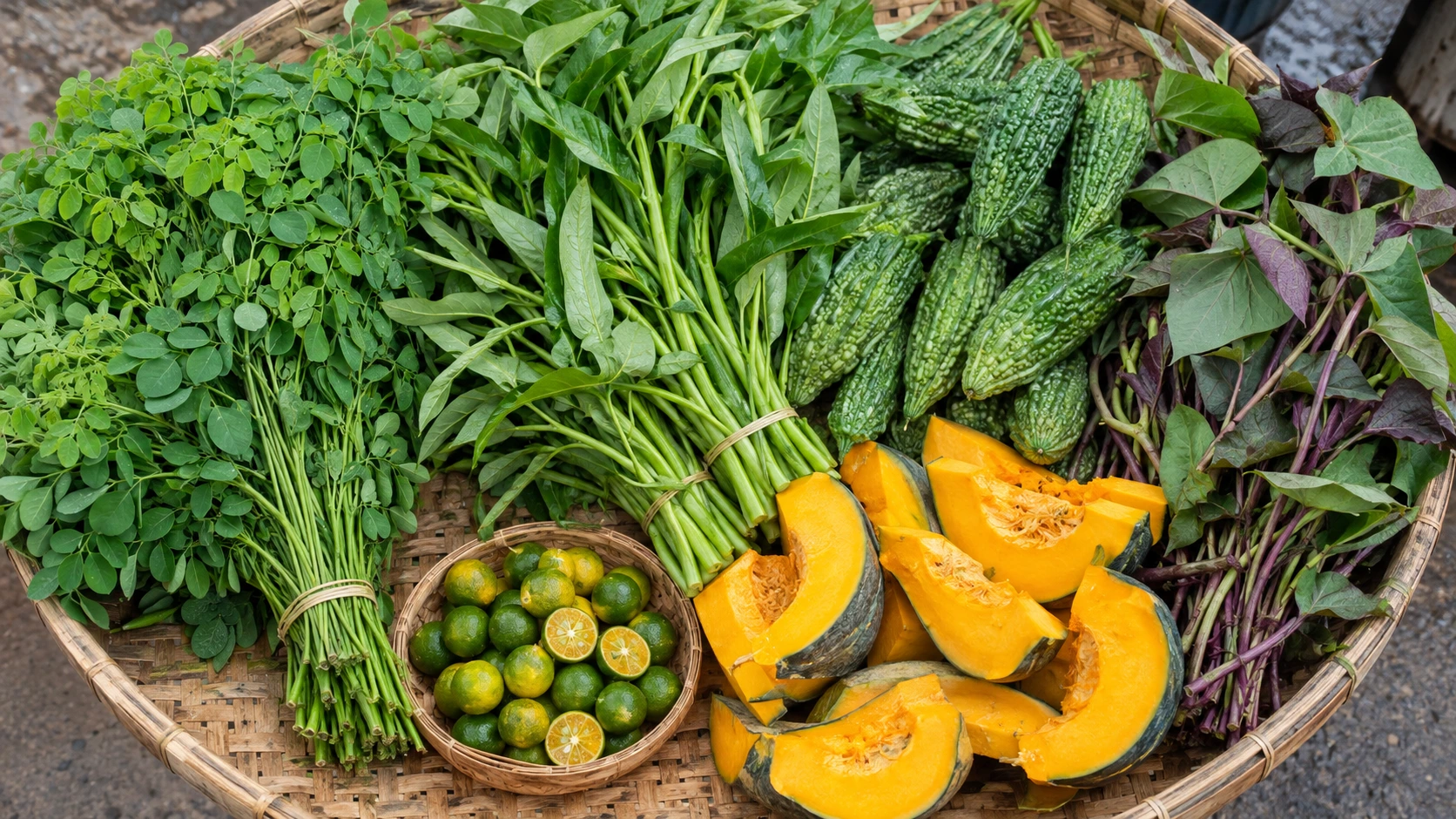
- Malunggay (moringa): small, tender leaves added to tinola, monggo and soups, and widely valued as a nutrient-rich green.
- Talbos ng kamote: sweet potato tops, cheap and leafy, often blanched and eaten with tomatoes and bagoong.
- Kangkong: water spinach, used in sinigang and stir-fries.
- Ampalaya: bitter gourd, sautéed with eggs or added to pinakbet.
- Saluyot: jute leaves, a slippery Ilocano green used in soups.
- Kamote and saba: sweet potato and cooking bananas, filling, fiber-rich snacks when boiled.
- Calamansi: the small Philippine lime, used for juice and dipping sauces.
Simple swaps to make Filipino food lighter
| Instead of… | Try… |
|---|---|
| Fried fish or chicken | Grilled (inihaw), steamed or paksiw |
| Lechon kawali or crispy pata | Lean pork in sinigang or adobo with less fat |
| A second cup of white rice | A bigger serving of vegetables, or brown or red rice |
| Lots of patis, soy sauce and bagoong | Calamansi, vinegar, garlic and ginger for flavor |
| Soft drinks | Water or fresh buko juice |
| Instant noodles and canned meat | Ginisang monggo or vegetable soups |
| Fried street snacks | Boiled kamote, saba or fresh fruit |
Filipino favorites like lechon, crispy pata, sisig and rich desserts are still part of the culture. Enjoy them at fiestas and celebrations, and keep everyday meals lighter.
Eating healthy while traveling in the Philippines
- Carinderias (local eateries) usually have vegetable dishes like pinakbet, monggo and ginisang gulay. Pick one vegetable and one fish dish.
- Coastal towns serve fresh grilled fish and kinilaw, the lightest way to eat in the islands.
- Markets are full of cheap tropical fruit like mango, papaya, banana and pineapple.
- Ask for less rice (“konting kanin lang”) or skip the extra serving.
- Stay hydrated with water and buko juice in the heat.
Planning a longer stay? See our cost of living guide, where home-cooked Filipino meals are one of the easiest ways to save money.
Fresh, home-style Filipino food is healthy and cheap. Add it to your trip budget in our free calculator.
Healthy Filipino food: FAQ
What is the healthiest Filipino food?
Vegetable- and fish-based dishes like sinigang, tinola, pinakbet, ginisang monggo, inihaw na isda, kinilaw and Visayan utan bisaya are among the healthiest traditional Filipino foods.
Is Filipino food healthy?
It can be. Everyday home-style dishes built on vegetables, fish and broth are nutritious, but many popular foods are fried, fatty, salty or sweet. Choosing more vegetables, grilled or boiled dishes, and less salt and rice makes Filipino food much healthier.
What is Pinggang Pinoy?
Pinggang Pinoy is the Philippine healthy plate guide from DOST-FNRI. It shows a balanced meal using Filipino foods: plenty of vegetables and fruit, a moderate portion of rice or other energy foods, and a smaller portion of protein like fish or chicken.
Is sinigang healthy?
Yes, sinigang is generally a healthy choice. It’s a broth-based soup with lots of vegetables. Choose fish, shrimp or lean meat, and go easy on added salt and seasoning mixes.
What is malunggay?
Malunggay is the Filipino name for moringa, a tree whose small leaves are added to tinola, monggo and soups. It’s widely valued as a nutrient-rich green.
What is a healthy Filipino breakfast?
Try boiled kamote or saba, oatmeal or lugaw with an egg, fresh fruit, or a smaller serving of garlic rice with egg and grilled fish instead of fried meats.
Are there vegetarian Filipino dishes?
Yes, though many vegetable dishes include shrimp paste, fish sauce or pork. Ask for versions without them. Good options include tortang talong, lumpiang sariwa, ginisang gulay and monggo cooked without meat.
How can I make adobo healthier?
Use skinless chicken or lean pork, trim visible fat, reduce the soy sauce, and add vegetables like kangkong or potatoes. Serve it with plenty of vegetables and a smaller portion of rice.

Cebu-born travel writer raised between Cebu and Dumaguete, now based in Zamboanga del Sur, Mindanao, where he also keeps a vegetable garden. Gio writes Best Philippines Travel Guide to help visitors enjoy the islands with confidence.