
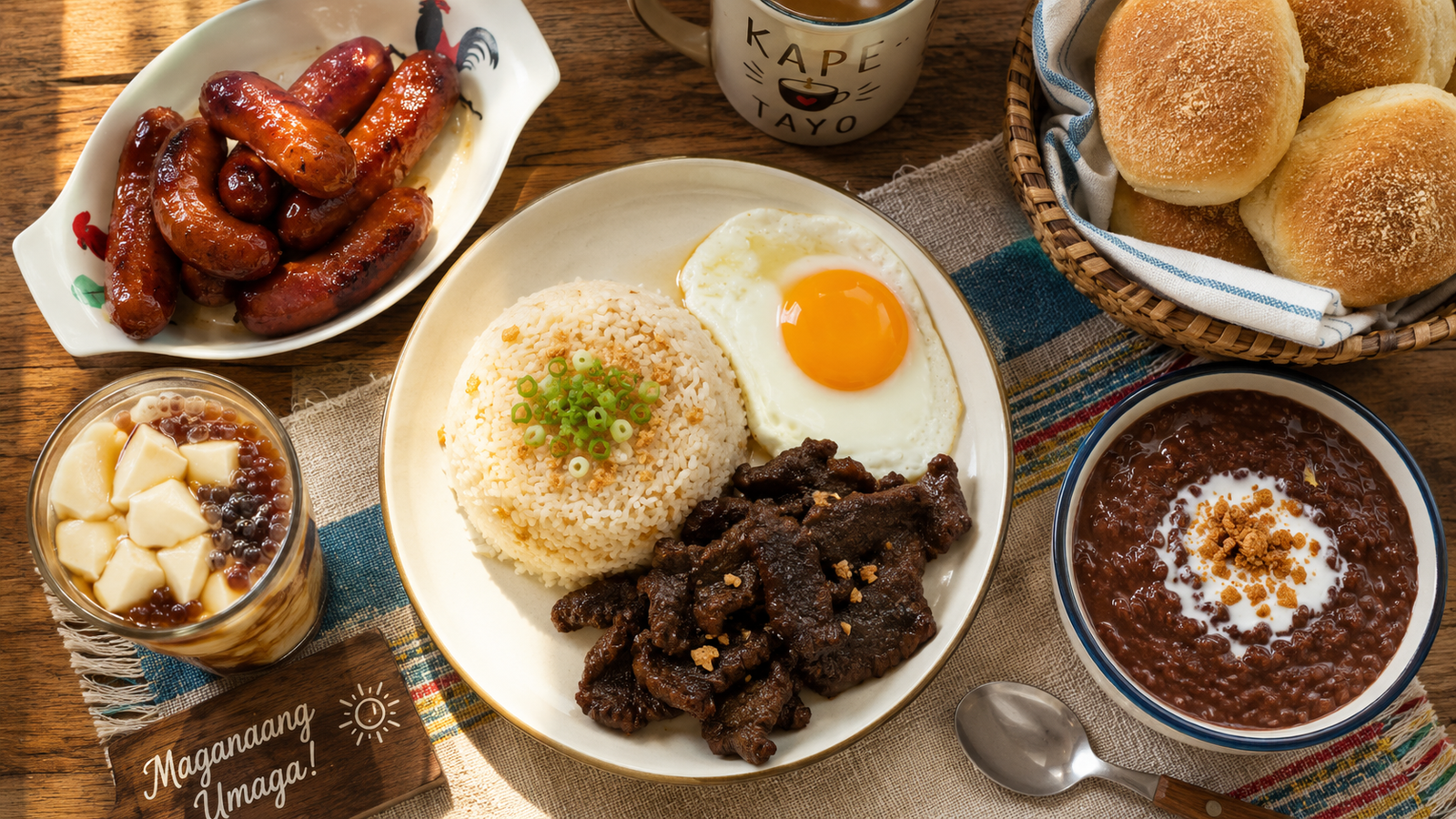
A Filipino silog breakfast spread — garlic fried rice (sinangag), sunny-side-up egg (itlog), tapa beef, and pandesal. The silog formula is the foundation of Filipino breakfast culture.
Filipino breakfast food centers on silog meals — a combination of sinangag (garlic fried rice) + itlog (fried egg) + a protein. The most popular are tapsilog (cured beef), longsilog (pork sausage), bangsilog (milkfish), and tocilog (sweet cured pork). Beyond silog, Filipino breakfasts include pandesal (soft bread rolls), champorado (chocolate rice porridge), arroz caldo (ginger chicken congee), and taho (sweet silken tofu sold by street vendors). Almost every Filipino breakfast includes rice.
I grew up eating tapsilog in Cebu City and sinangag with tuyo in Dumaguete — the smell of garlic browning in oil at 6 AM is one of my most vivid childhood memories. Filipino breakfast is not like Western breakfast. There is no cereal, no toast, no yogurt. There is rice, there is garlic, there is a fried egg, and there is something savory and intensely flavored on the side. Once you understand the silog system, you understand Filipino breakfast.
The Silog System — How Filipino Breakfast Works
The genius of Filipino breakfast is its modularity. Once you understand the silog formula, you can decode every Filipino breakfast menu, order confidently at any tapsihan (breakfast eatery), and understand why Filipinos eat rice at 6 AM.
Name it by combining the protein abbreviation + “silog” → Tapa + silog = Tapsilog · Longganisa + silog = Longsilog · Any protein can become a silog.
The silog system was born in the carinderia and tapsihan culture of Metro Manila — where affordable, filling, flavorful breakfasts needed to be assembled quickly from available ingredients. Leftover rice from dinner becomes sinangag. A fried egg goes on every plate. The protein changes but the template never does. It is simultaneously a cooking system, a menu format, and a cultural institution.
All Silog Variants — Complete Guide
Tapa is thin-sliced beef (or sometimes pork or carabao) marinated in soy sauce, calamansi juice, garlic, sugar, and black pepper — then dried overnight and pan-fried until the edges caramelize slightly. The result is savory-sweet-garlicky meat with a slight chew. Tapsilog is served with sinangag and a sunny-side-up egg, always alongside a small bowl of spiced vinegar for dipping. Originating from the tapsihans of Metro Manila, it is now the default Filipino breakfast order at any eatery in the country. Price: ₱60–₱120 at carinderia, ₱150–₱250 at restaurants.
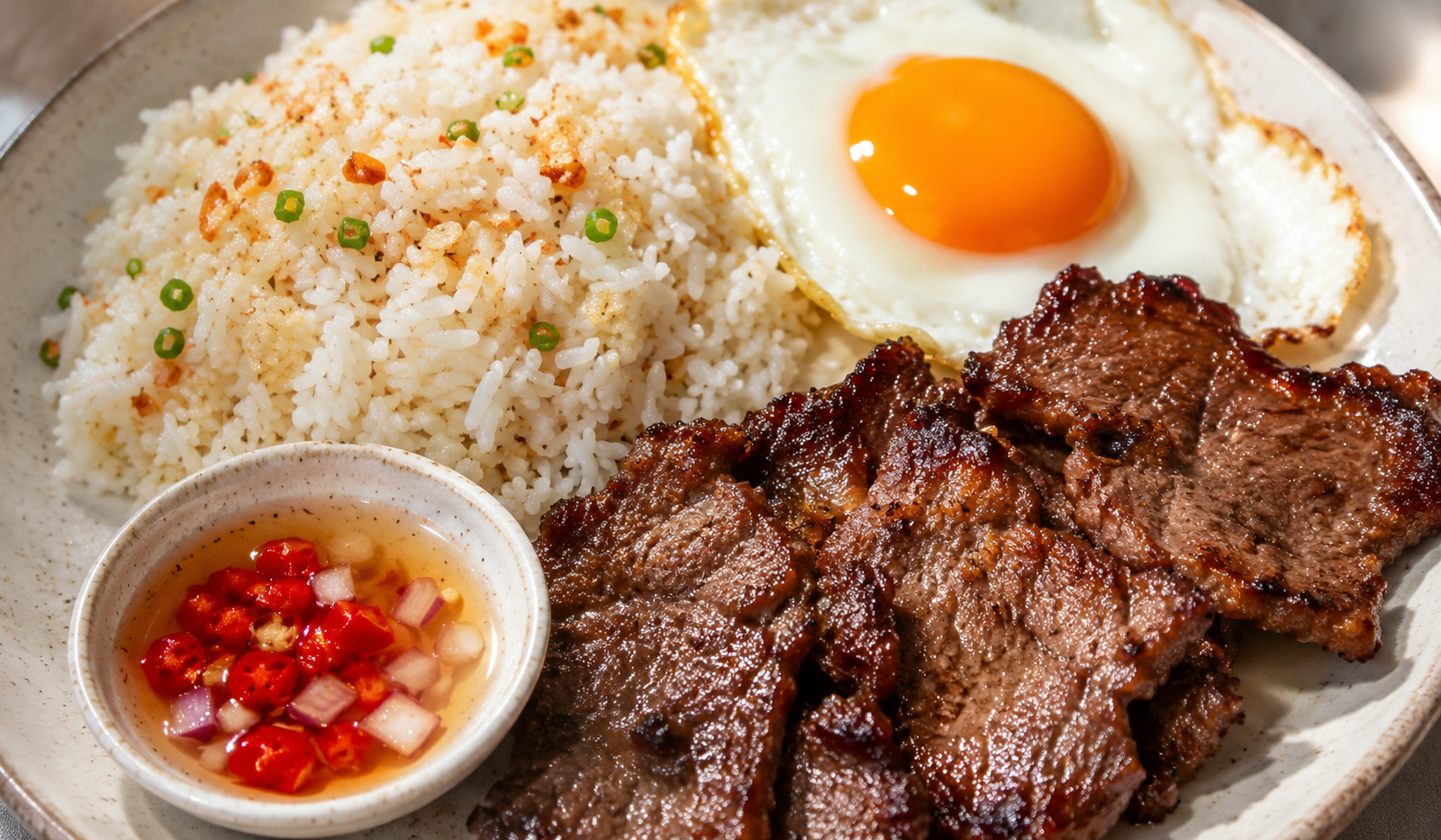
Tapsilog — tapa beef + sinangag + itlog. The most popular Filipino silog breakfast. Caramelized edges on the tapa, golden garlic rice, a sunny-side-up egg, and spiced vinegar on the side. ₱60–₱120 at any tapsihan.
Longganisa is Filipino pork sausage — intensely flavored with garlic and vinegar (Vigan-style), or sweet with sugar and anise (Pampanga and Cebu-style). Every province has its own longganisa recipe. The sausages are pan-fried (sometimes in their own fat) until the casing caramelizes and splits, releasing a flood of savory, garlicky oil. The regional variation is significant — Longganisa de Recado (Vigan, Ilocos Sur) is garlicky-sour; Chorizo de Cebu is sweet and fatty; Lucban longganisa (Quezon) is herby with oregano. If someone specifies “Vigan longsilog,” they want the sharp, pungent Ilocano version. Price: ₱55–₱110 at carinderia.
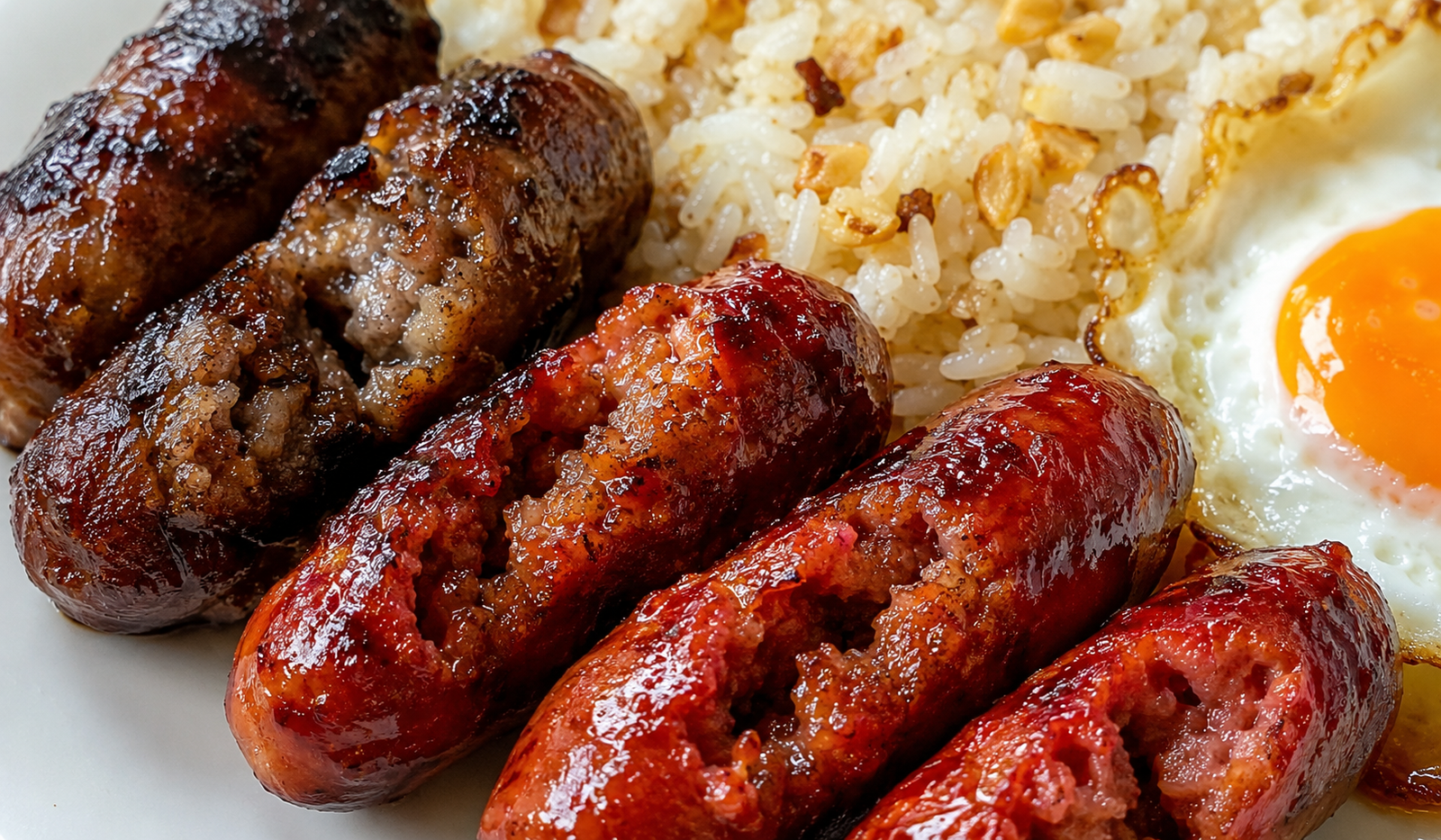
Longsilog — longganisa + sinangag + itlog. Filipino pork sausage caramelizes in its own fat, splitting open as it cooks. Regional variations are significant — Vigan longganisa is garlicky-sour; Cebu and Pampanga versions are sweet.
Bangus (milkfish) is the national fish of the Philippines and a Filipino breakfast institution. For bangsilog, bangus is prepared either as daing na bangus (butterfly-cut, marinated in vinegar and garlic overnight, then deep-fried until crispy) or simply pan-fried with salt. The bangus is notoriously bony — experienced Filipinos navigate the small bones effortlessly; newcomers take their time. Daing na bangus has a sharp, sour-garlic marinade that penetrates the flesh. Paired with sinangag and egg, it is one of the most specifically Filipino flavor experiences — nothing else tastes quite like daing na bangus at 7 AM. Price: ₱65–₱130.
Tocino is sweet cured pork — thin slices of pork belly or shoulder marinated in sugar, salt, food coloring (often giving it a pink-orange hue), and spices until deeply caramelized and sweet. It is the sweetest of all silog proteins — almost candied pork. Children particularly love tocilog for this reason. Pan-fried tocino caramelizes in its own sugar, creating sticky, intensely sweet and savory edges. CDO, Purefoods, and Virginia all sell commercial tocino in Filipino supermarkets. Price: ₱55–₱110. A popular companion: spiced vinegar to cut the sweetness.
The Philippines is one of the top Spam-consuming nations on earth — a legacy of American military rations during World War II that evolved into a beloved breakfast ingredient. Spam Classic is pan-fried until the sliced surfaces caramelize and develop a crust. Spam Lite, Spam Tocino, and Spam Garlic are popular variants. Spamsilog sits in an interesting cultural position — introduced by American colonialism but now so Filipino that it appears on carinderia menus alongside traditional tapa with no distinction. Price: ₱70–₱140 (Spam is expensive by Filipino standards).
Filipino hotdogs are a different product from American-style hotdogs — they are distinctly redder (from food coloring), sweeter, and spongier. Pan-fried in butter or margarine until the skin blisters. Hotsilog is the budget-entry silog — the most affordable option at any tapsihan, popular with children and budget-conscious commuters. It is also the fastest to prepare. The Filipino hotdog brands are tender juicy, Purefoods, and CDO — all widely available in supermarkets. Price: ₱45–₱80.
Canned corned beef is a Filipino pantry institution — introduced by Americans and transformed by Filipino cooking into something completely its own. For cornsilog, canned corned beef is sautéed with onions and garlic until fragrant and slightly caramelized, served on sinangag with a fried egg. Argentina Corned Beef and CDO Corned Beef are the most popular brands. Cornsilog is the classic “no-budget” breakfast — a can of corned beef and leftover rice can feed a family. Price: ₱55–₱90.
Sisig is chopped pork face (cheeks, ears, snout) and chicken liver, seasoned with calamansi, chili, and onions — sizzled on a hot metal plate until crispy and served with a raw egg cracked on top to cook in the residual heat. As a silog, it is a heartier, richer breakfast than the standard options — more suitable for a late brunch than an early breakfast. Sisig originates from Pampanga (Central Luzon), considered the culinary capital of the Philippines. Price: ₱120–₱200.
All silog variants — quick reference
| Name | Protein | Flavor profile | Price range |
|---|---|---|---|
| Tapsilog | Cured beef (tapa) | Savory, garlicky, slightly sweet | ₱60–₱120 |
| Longsilog | Pork sausage (longganisa) | Garlicky-sour (Vigan) or sweet (Pampanga) | ₱55–₱110 |
| Bangsilog | Milkfish (bangus) | Sour-garlicky (daing) or plain salted | ₱65–₱130 |
| Tocilog | Sweet cured pork | Sweet, caramelized, sticky | ₱55–₱110 |
| Spamsilog | Spam canned pork | Salty, savory, slightly sweet | ₱70–₱140 |
| Hotsilog | Red Filipino hotdog | Sweet, mild, kid-friendly | ₱45–₱80 |
| Cornsilog | Canned corned beef | Savory, onion-forward, soft | ₱55–₱90 |
| Sisigsilog | Sizzling pork sisig | Rich, fatty, sour, crispy | ₱120–₱200 |
| Chicksilog | Fried chicken | Crispy, savory | ₱80–₱150 |
| Porksilog | Grilled pork chop | Charred, savory, garlicky | ₱70–₱130 |
| Adosilog | Chicken/pork adobo | Vinegar-soy, tangy, rich | ₱75–₱140 |
| Liemposilog | Pan-fried pork belly | Crispy, fatty, savory | ₱80–₱150 |
| Tunasilog | Canned tuna in oil | Mild, budget-friendly | ₱50–₱90 |
| Sardsilog | Canned sardines in tomato | Tangy, oily, fishy | ₱45–₱80 |
Sinangag — Filipino Garlic Fried Rice
Sinangag is not just fried rice — it is a specifically Filipino version of fried rice, and the technique matters. The rice must be day-old and cold from the refrigerator. Fresh rice is too wet and clumps. Cold leftover rice, when hit with hot oil and fried garlic, separates into individual grains and develops a slightly nutty, charred flavor that fresh rice cannot replicate.
The garlic is the soul of sinangag. Crushed or minced garlic is fried in generous oil until deep golden brown — some might say slightly burnt. The caramelized garlic is stirred into the rice and the entire mixture is stir-fried over high heat until each grain of rice is coated in garlic-infused oil. Season with salt. The result is fragrant, deeply savory, and a thousand times better than it sounds on paper.
Every Filipino household has its own sinangag recipe — some add onions, some add fish sauce (patis), some add leftover bits of whatever protein was in last night’s dinner. The only non-negotiable: garlic, cold rice, hot oil, high heat.
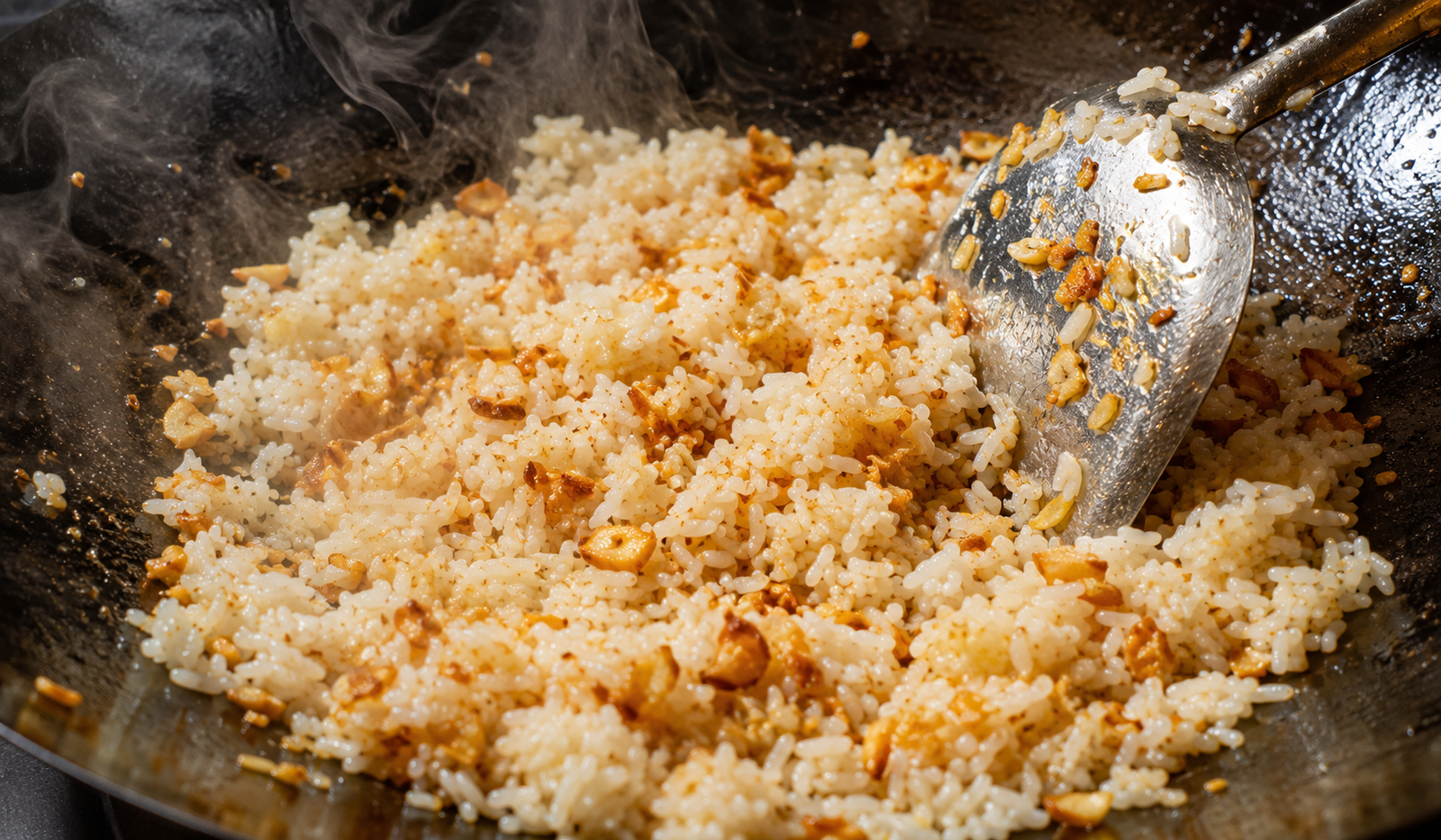
Sinangag — Filipino garlic fried rice. Day-old cold rice + garlic fried until golden + high heat = the foundation of every silog breakfast. The garlic must be slightly browned — not raw, not burnt. That caramelized garlic flavor is what makes sinangag sinangag.
Pandesal — Filipino Breakfast Bread
Pandesal (from Spanish pan de sal — “bread of salt”) is the soul of Filipino breakfast — small, soft, slightly sweet oval rolls dusted with fine breadcrumbs, baked fresh in every panaderia (local bakery) in the Philippines every single morning from 4 AM onwards. The smell of pandesal baking at 5 AM — that warm, yeasty, slightly sweet smell drifting through a still-dark neighborhood — is one of the most beloved sensory memories in Filipino life.
Pandesal is eaten in multiple ways: plain (warm from the oven, slightly chewy inside, crispy edges); dipped in coffee (instant Nescafé or 3-in-1 coffee); filled — cheese (Eden processed cheese is the classic), peanut butter (Lily’s peanut butter is the Filipino standard), butter and sugar, condensed milk, corned beef, or keso. Premium panaderias now offer whole wheat, ube, and ensaymada (soft spiral bread with cheese and butter) variants. But the original ₱3 pandesal from the neighborhood panaderia remains unchallenged as the most democratic and beloved Filipino food.
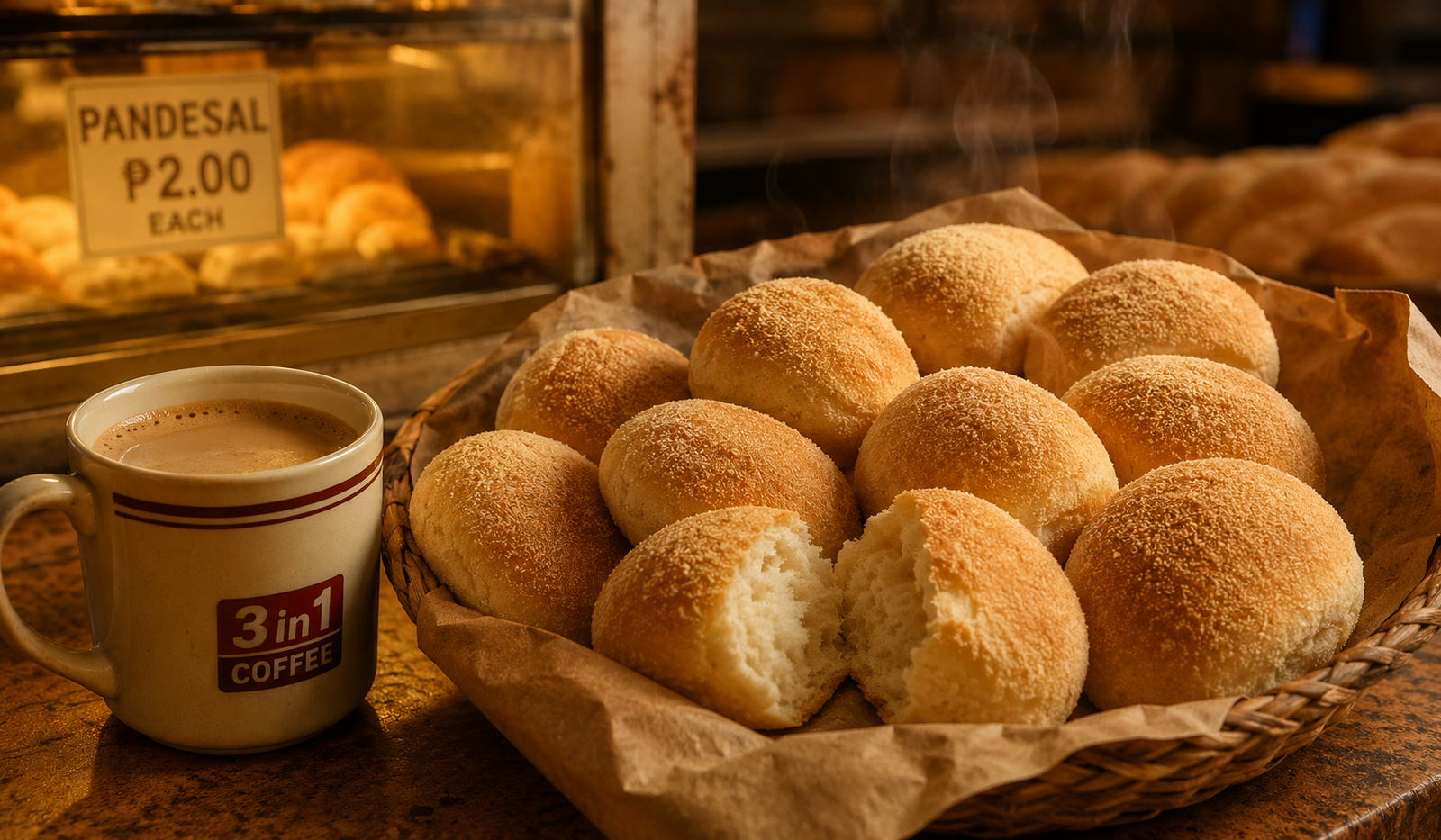
Pandesal — fresh from the panaderia at 5 AM. Soft, slightly sweet, dusted with breadcrumbs. ₱3–₱5 per piece. Eaten plain, dipped in instant coffee, or filled with Eden cheese or Lily’s peanut butter. Nothing in Filipino breakfast is more universally beloved.
Champorado — Sweet Chocolate Rice Porridge
Champorado is a Filipino sweet chocolate rice porridge — glutinous rice cooked in water until it becomes thick and sticky, sweetened with sugar and flavored with tablea (pure cacao tablets, ground and dissolved) or cocoa powder, creating a rich, chocolatey congee. Served in a bowl with a generous drizzle of evaporated milk on top — the white swirl against the dark chocolate porridge is the visual signature of this dish.
The iconic pairing that confuses non-Filipino visitors: champorado with tuyo (dried salted fish). The sweet chocolate porridge and the intensely salty, pungent dried fish eaten together create one of the most polarizing but beloved Filipino flavor contrasts. This sweet-salty pairing is deeply traditional — it makes complete sense to anyone raised with it and is genuinely surprising to anyone who wasn’t.
Champorado is considered rainy-day and cold-morning food — a bowl of warm chocolate porridge against the grey monsoon sky is a specific Filipino comfort that defies easy explanation to outsiders.
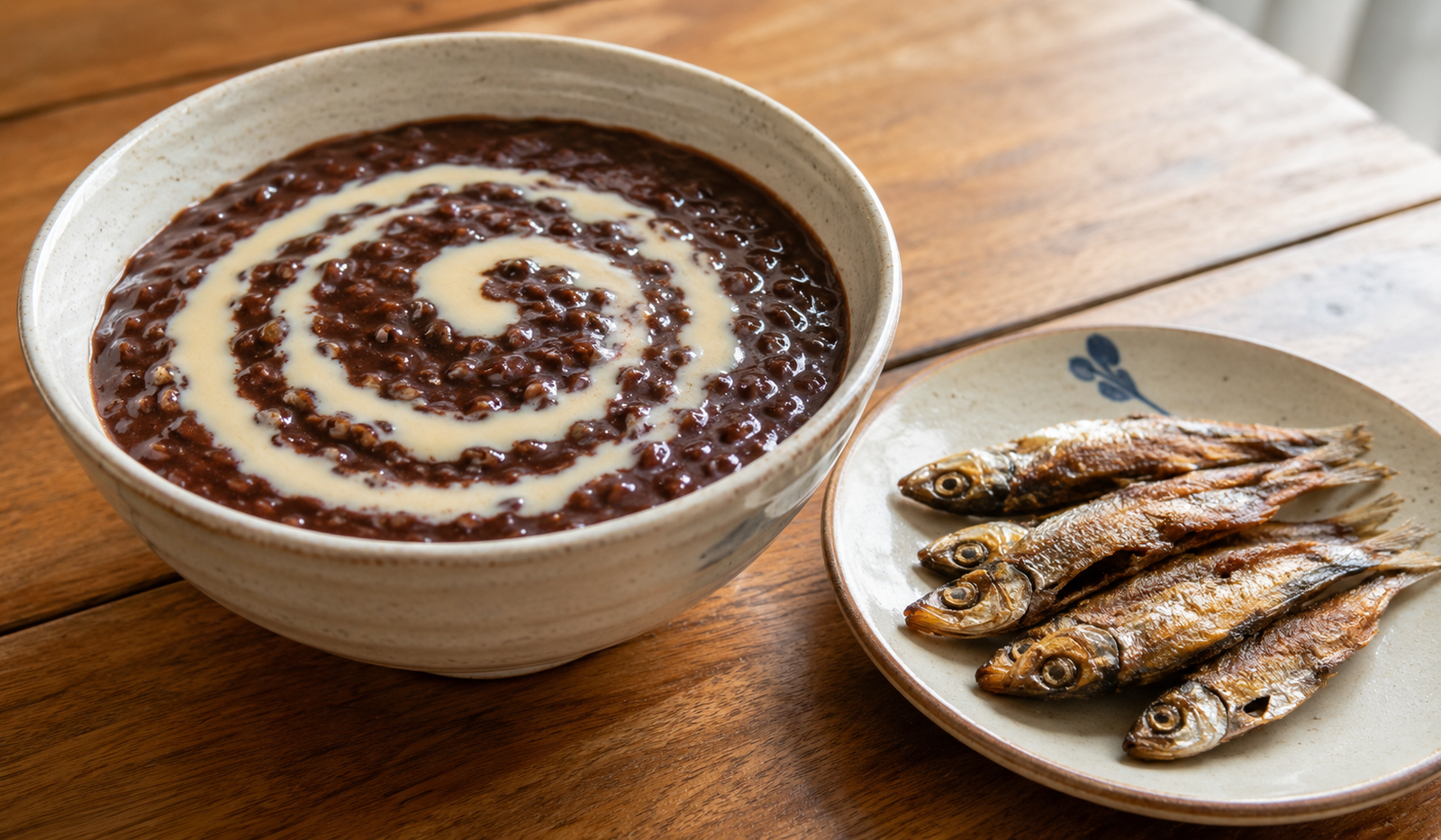
Champorado with tuyo — the sweet chocolate rice porridge with evaporated milk drizzled on top, paired with crispy dried salted fish. The sweet-salty combination confuses non-Filipinos every time. For Filipinos, it is simply the most comforting rainy-day breakfast that exists.
Arroz Caldo — Ginger Chicken Rice Porridge
Arroz caldo is a Spanish-named Chinese-origin Filipino ginger chicken rice porridge — and the three-culture history of its name tells you everything about Filipino food. Chinese congee arrived with Chinese traders; Spanish colonizers named it arroz caldo (“rice broth”); Filipinos added ginger, calamansi, fish sauce (patis), and fried garlic and made it their own.
Chicken pieces (thighs are best) are sautéed with garlic, onions, and ginger, then cooked with glutinous rice in chicken broth until the mixture thickens into a creamy, fragrant congee. Served with: fried garlic on top, sliced scallions, a hard-boiled egg, a squeeze of calamansi, and a splash of fish sauce at the table. Arroz caldo is simultaneously a breakfast dish, a merienda (afternoon snack), a recovery meal when sick, and a street food sold at late-night lugaw stalls after midnight. It is the Filipino equivalent of chicken soup — consumed for comfort as much as for hunger.
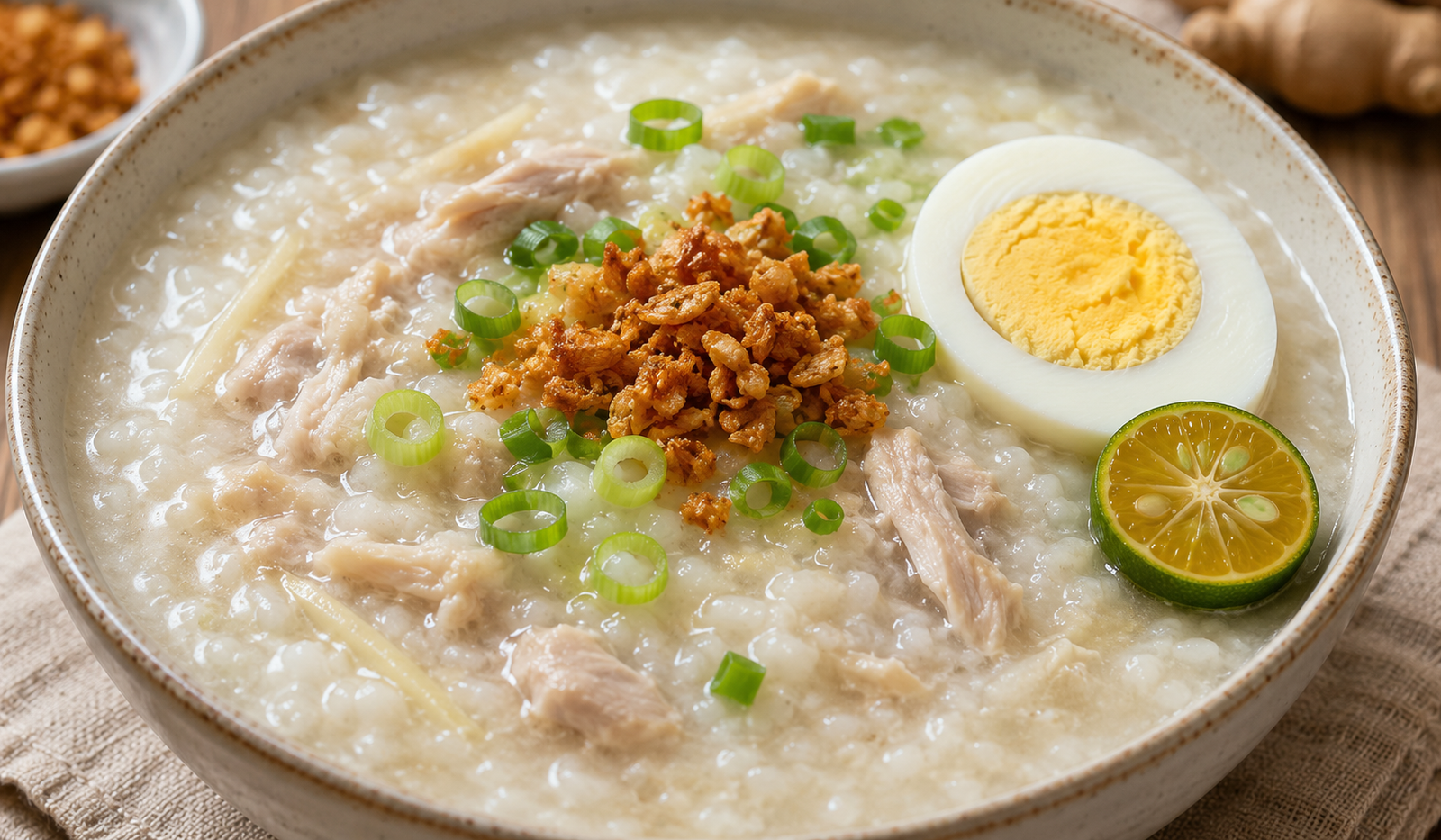
Arroz caldo — Filipino ginger chicken rice porridge. Topped with fried garlic, scallions, a hard-boiled egg, and a squeeze of calamansi. Eaten for breakfast, when sick, as a late-night snack, and whenever comfort is needed. The Filipino chicken soup equivalent.
Taho — Sweet Silken Tofu Street Food
Taho is one of the most beloved Filipino morning rituals — silken soft tofu layered with arnibal (sweet brown sugar syrup flavored with vanilla) and sago pearls (clear tapioca pearls) served hot in a plastic cup. It is sold exclusively by magtataho — street vendors who walk through residential neighborhoods every morning carrying two large aluminum containers (bilao) suspended from a bamboo pole balanced across the shoulders. The vendor calls out “Taho!” — a sound that wakes up neighborhoods across the Philippines every morning.
The experience of chasing the taho vendor down the street in pajamas, cup in hand, is a Filipino childhood memory so universal that it functions as cultural shorthand for simpler times. Taho is hot, sweet, silky, and costs almost nothing — one of the great democratic pleasures of Filipino daily life. Modern variants include ube taho (purple yam flavored, popular in Manila) and strawberry taho (unique to Baguio City, made with fresh local strawberries).
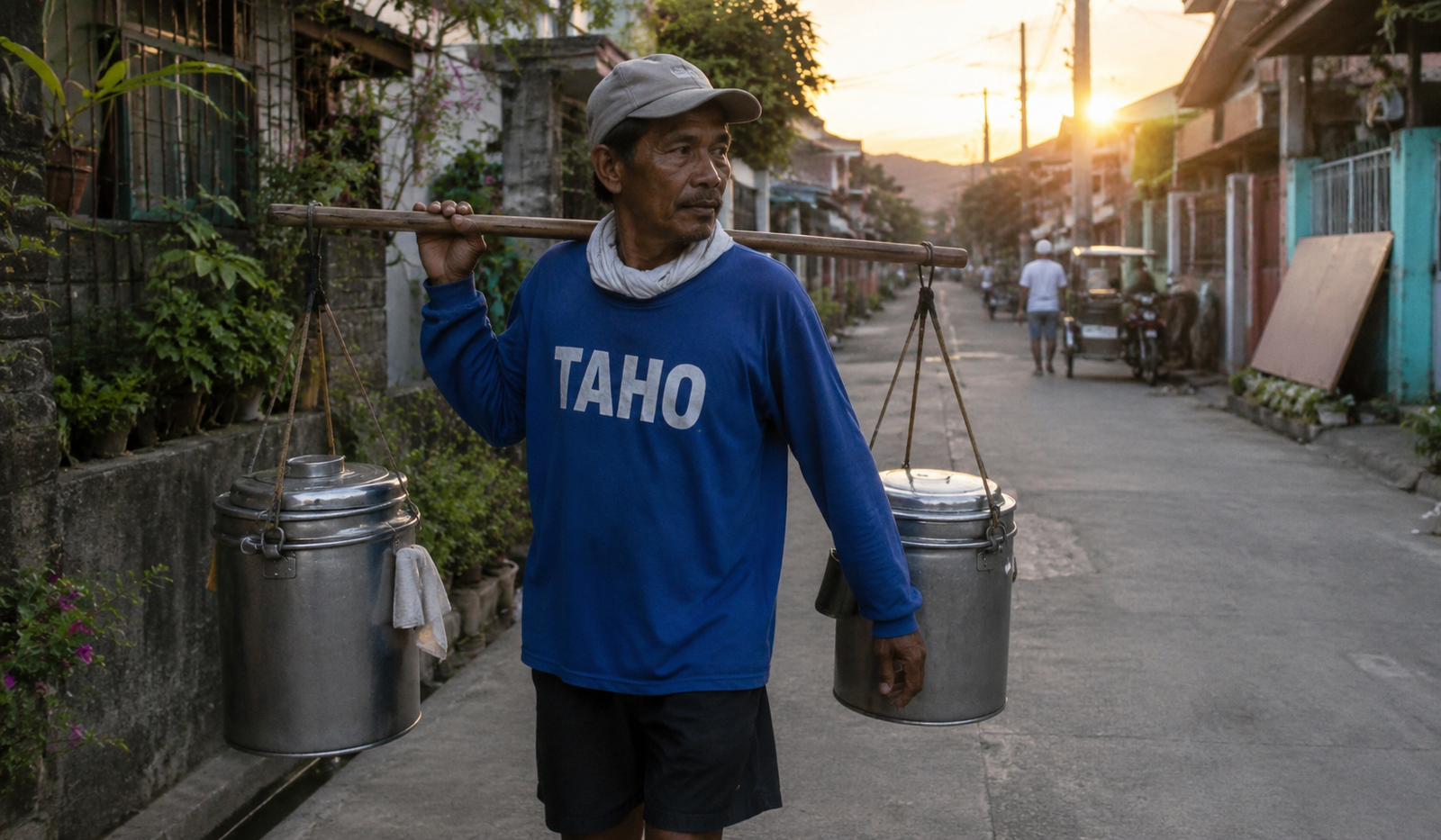
Taho — silken tofu, arnibal (sweet brown sugar syrup), and sago pearls, served hot. Sold by magtataho vendors who walk through Philippine neighborhoods every morning calling “Taho!” ₱10–₱25 per cup. One of the most beloved Filipino morning rituals.
Tuyo and Dried Fish — The Pungent Essential
Tuyo (dried salted fish) is one of the most polarizing Filipino foods for non-Filipino visitors — intensely pungent, salty, and fishy in a way that fills an entire room. For Filipinos, particularly in the Visayas and Mindanao where I grew up, the smell of tuyo frying in the morning is simply the smell of home. Small fish (typically herring, anchovies, or galunggong) are salted and sun-dried until almost mummified, then pan-fried until crispy. Eaten by hand with sinangag and a fried egg, with vinegar or tomatoes on the side.
Beyond tuyo, the category of Filipino dried fish includes daing (butterfly-cut dried fish), dilis (dried anchovies, milder than tuyo), tinapa (smoked fish — less aggressive than tuyo, popular with tomatoes), and danggit (dried rabbit fish from Cebu — the prestige dried fish, expensive and delicate). Danggit with sinangag and vinegar is one of my personal favorite breakfasts — a deeply Cebuano morning meal.
Other Filipino Breakfast Dishes
Lugaw — Plain Rice Porridge
Lugaw is the plainest form of Filipino rice porridge — white rice cooked with water and ginger until soft and thick, with minimal seasoning. It is the base from which arroz caldo (add chicken), goto (add beef tripe), and other congee variations are built. Sold at lugaw stalls (small street-side or market stalls), typically open from 5 AM to 2 PM. Topped with fried garlic, scallions, and a squeeze of calamansi at the table. Price: ₱20–₱50.
Kesong Puti at Itlog na Pula
Kesong puti (fresh white cheese from carabao milk, soft and milky, wrapped in banana leaf) and itlog na pula (salted red duck egg) are traditional Filipino breakfast accompaniments — eaten with sinangag or pandesal. Kesong puti is most associated with Laguna province, where the finest carabao’s milk cheese is made. Itlog na pula’s vivid red shell (from being cured in salt and red clay) alongside its orange yolk is one of the most visually striking Filipino breakfast elements. Both are best at wet markets — the commercial supermarket versions are significantly inferior.
Champorado vs Arroz Caldo — when to eat which
Both are rice porridges but serve different purposes. Champorado is for sweet mornings, rainy days, weekends when there’s time to linger, and children’s breakfasts. Arroz caldo is for sick days, cold mornings, post-midnight hunger, and hungover Sundays. Many Filipinos switch between them based on weather and mood with no conscious decision — the right porridge simply presents itself.
Where to Eat Filipino Breakfast
Frequently Asked Questions

I grew up eating tapsilog in Cebu and sinangag with daing na bangus in Dumaguete. The smell of garlic frying in oil at 6 AM is my earliest kitchen memory. Filipino breakfast is not a research topic for me — it is the meal that starts every day and the food that most immediately signals home. I write about Filipino food culture at Best Philippines Travel Guide.