This guide contains Klook affiliate links. If you book through them, Best Philippines Travel Guide may earn a small commission at no extra cost to you.
Some of the most surprising facts about the Philippines: it has 7,641 islands, more than 175 languages, and a population of about 112.7 million (2024 census). It celebrates the world’s longest Christmas season, starting in September. The country was named after King Philip II of Spain, its jeepneys began as leftover US Army jeeps from World War II, and it’s home to one of the world’s smallest primates, the tarsier, and one of its largest eagles, the Philippine eagle.
See the facts for yourself: the Chocolate Hills and tarsiers are a day tour away in Bohol.
The Philippines by the numbers
| Fact | Number | Source |
|---|---|---|
| Islands | 7,641 | NAMRIA (updated from the old 7,107 count) |
| Population | 112,729,484 (July 2024) | PSA 2024 Census |
| Languages | More than 175 | Ethnologue |
| Official languages | Filipino and English | 1987 Constitution |
| Island groups | 3: Luzon, Visayas, Mindanao | |
| Active volcanoes | About two dozen | PHIVOLCS |
| Tropical cyclones per year | About 20 enter Philippine waters | PAGASA |
| Highest peak | Mount Apo, about 2,954 m | |
| UNESCO World Heritage Sites | 6 (3 cultural, 3 natural) | UNESCO |
| Independence Day | June 12 (declared in 1898) |
Geography and nature facts
- There are 7,641 islands, not 7,107. For decades, schoolbooks said 7,107. A 2016 mapping update by NAMRIA, the national mapping agency, counted 7,641 islands, including many small ones found with better technology.
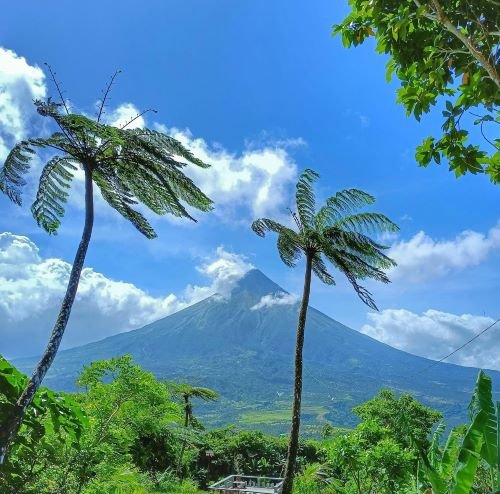
- It’s on the Pacific Ring of Fire. The country has about two dozen active volcanoes. Mayon in Albay, famous for its near-perfect cone, is the most active, with dozens of recorded eruptions.

Mayon Volcano in Albay, the country’s most active volcano. - About 20 typhoons a year. PAGASA records an average of about 20 tropical cyclones entering Philippine waters each year. See our best time to visit guide.
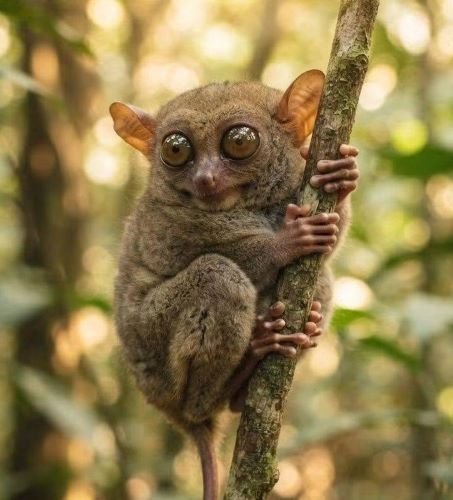
- Home to one of the world’s smallest primates. The Philippine tarsier fits in the palm of your hand, and its eyes are each about as big as its brain. See them at the sanctuary in Bohol.

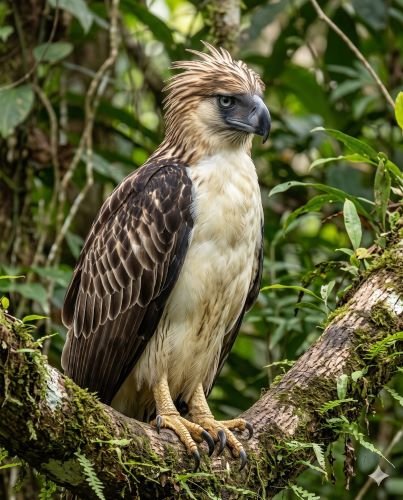
A Philippine tarsier in Bohol. - And one of the world’s largest eagles. The Philippine eagle, the national bird, is one of the largest and most powerful eagles on Earth, and critically endangered.

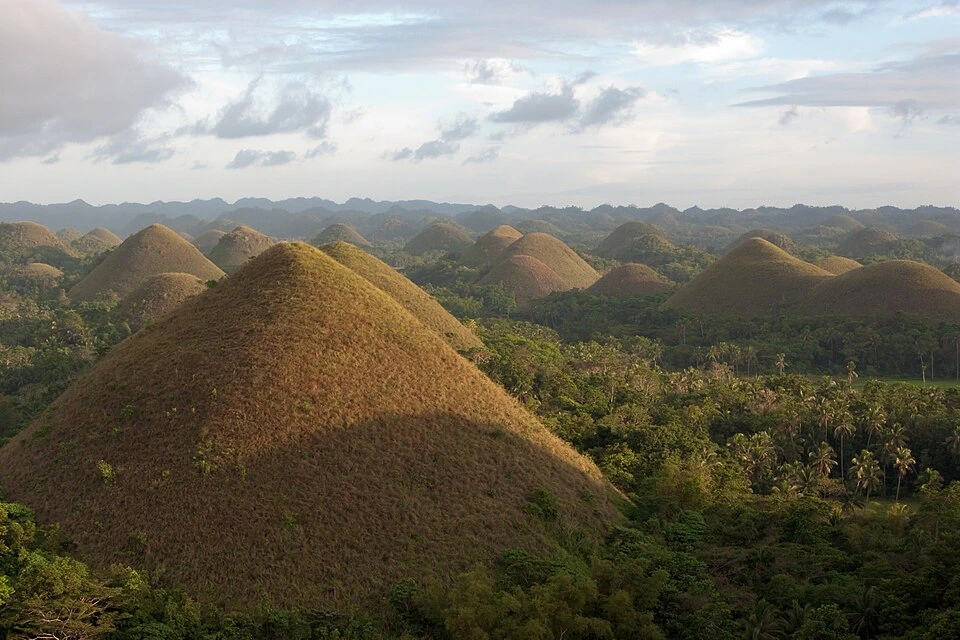
The Philippine eagle, the national bird. - The Chocolate Hills turn brown in the dry season. Bohol’s more than 1,200 cone-shaped hills are green most of the year but turn chocolate brown when the grass dries out.

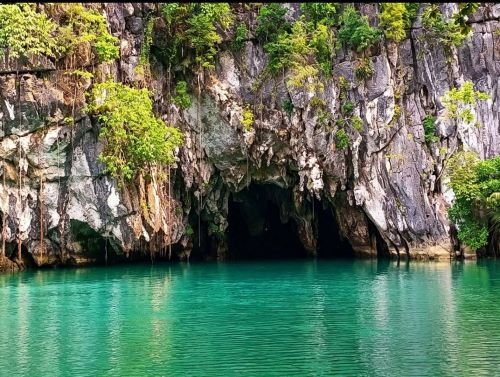
The Chocolate Hills of Bohol. Photo: Argenberg, via Wikimedia Commons - A New 7 Wonder of Nature. The Puerto Princesa Underground River in Palawan, one of the longest navigable underground rivers in the world, was named one of the New 7 Wonders of Nature in 2012.

Entering the Puerto Princesa Underground River. - At the heart of the Coral Triangle. Philippine waters are part of the Coral Triangle, the most diverse marine region on the planet, which is why diving here is world-class. See our best diving spots.
- One of the world’s longest coastlines. With thousands of islands, the Philippines has one of the longest coastlines of any country.
- One of the world’s top coconut producers. Coconut trees cover huge areas of farmland, and coconut shows up in everything from food to wine (tuba) to building materials.

Culture and people facts
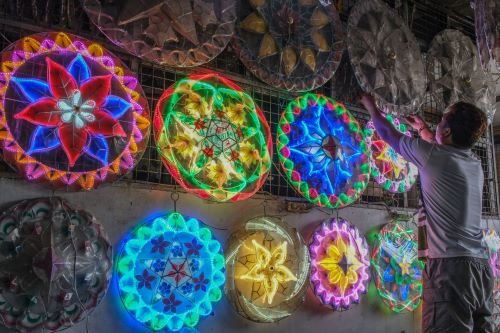
- The world’s longest Christmas season. Filipinos start playing Christmas songs and putting up decorations as soon as the “ber” months begin in September, and celebrations run into January. See Christmas in the Philippines.

Parol lanterns light up Filipino homes from September. - Named after a Spanish king. In 1543, Spanish explorer Ruy López de Villalobos named the islands “Las Islas Filipinas” after the future King Philip II of Spain.
- Jeepneys started as army surplus. After World War II, Filipinos converted leftover US military jeeps into colorful shared taxis. The jeepney became the country’s most iconic ride.
- Basketball is the national obsession. You’ll find hoops in almost every barangay, even in remote villages.
- “Po” and “opo” show respect. Filipinos add po to sentences when speaking to elders, and greet them with mano po, pressing an elder’s hand to their forehead.
- One of the largest Catholic populations in the world. Most Filipinos are Catholic, and religious festivals like Sinulog draw millions. See our Philippine festivals guide.
- Karaoke is serious business. Videoke machines are everywhere, from homes to fiestas, and a Filipino inventor, Roberto del Rosario, is credited with patenting a karaoke sing-along system.
- Millions of Filipinos live abroad. An estimated 10 million Filipinos live or work overseas, and their remittances are a major part of the economy.
- English is widely spoken. English is an official language alongside Filipino and is used in schools, government and business, which makes travel easy for visitors.
- Baybayin is making a comeback. The pre-colonial script appears today in logos, tattoos, art and on Philippine banknotes.
Food facts
- Rice at every meal, even breakfast. Filipinos eat rice morning, noon and night. A favorite breakfast is silog: garlic rice and egg with a meat.
- Spaghetti is sweet. Filipino-style spaghetti uses banana ketchup and hot dogs. Banana ketchup was invented by Filipino food scientist María Orosa.
- Jollibee beats McDonald’s at home. The local fast-food chain is the country’s most popular, and it now has branches around the world.
- Balut is the ultimate food dare. A boiled fertilized duck egg, sold on the streets at night. See our weird Filipino food guide.

Balut, the famous Filipino street-food dare. - Anthony Bourdain praised Cebu lechon as the best pig he’d ever had. See famous lechon in Cebu.
- Five meals a day is normal. Breakfast, morning merienda, lunch, afternoon merienda and dinner. More in our Filipino food guide.

History facts
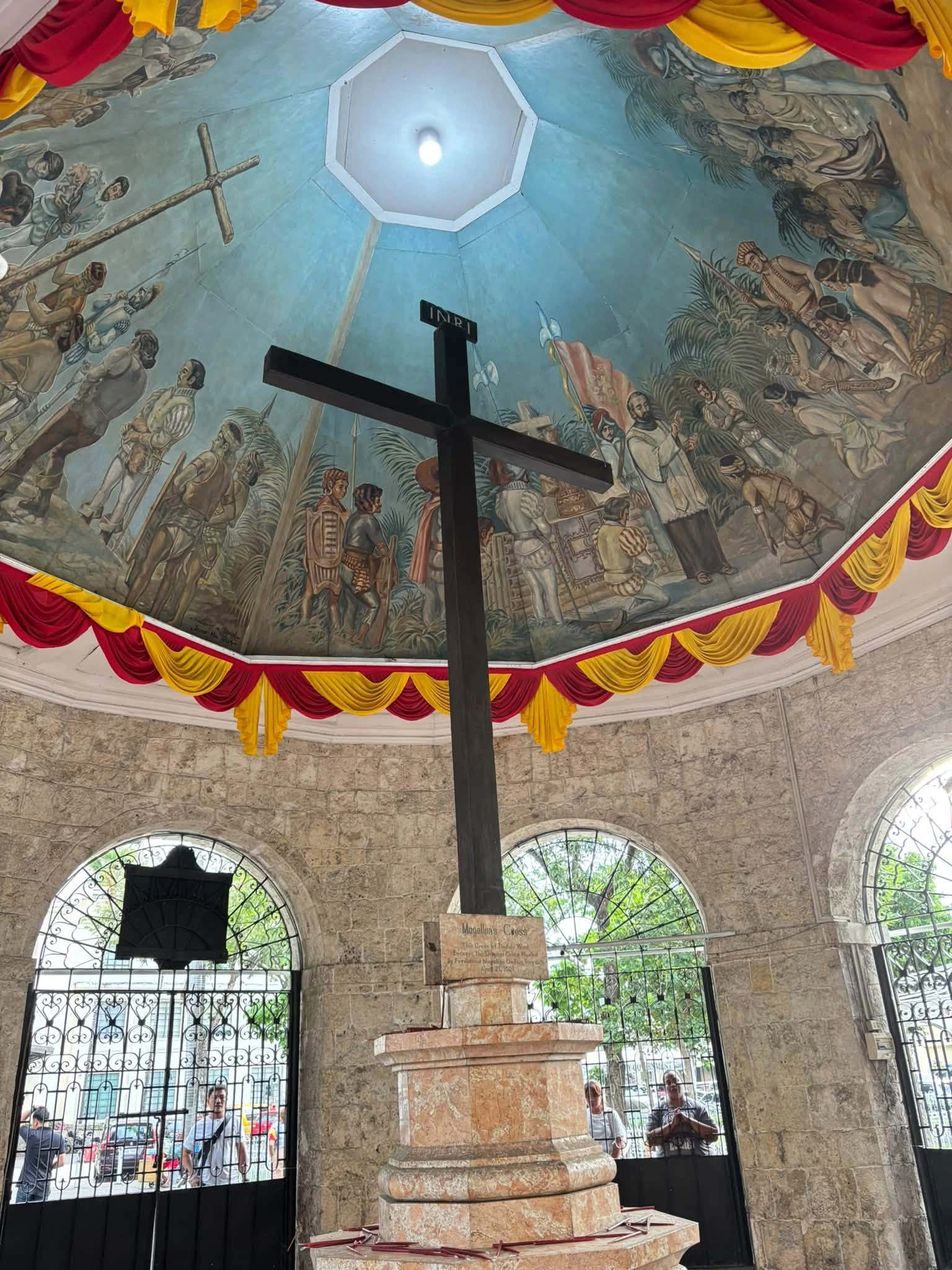
- Lapu-Lapu defeated Magellan in 1521. The chieftain of Mactan beat Ferdinand Magellan’s forces at the Battle of Mactan, and is honored as the first Filipino hero.

Magellan’s Cross in Cebu City, planted by Magellan’s expedition in 1521. - Two independence days. Independence from Spain was declared on June 12, 1898, in Kawit, Cavite, but full independence was recognized by the United States only on July 4, 1946.
- Asia’s first constitutional republic. The Malolos Congress established the First Philippine Republic in 1899, often described as the first in Asia.
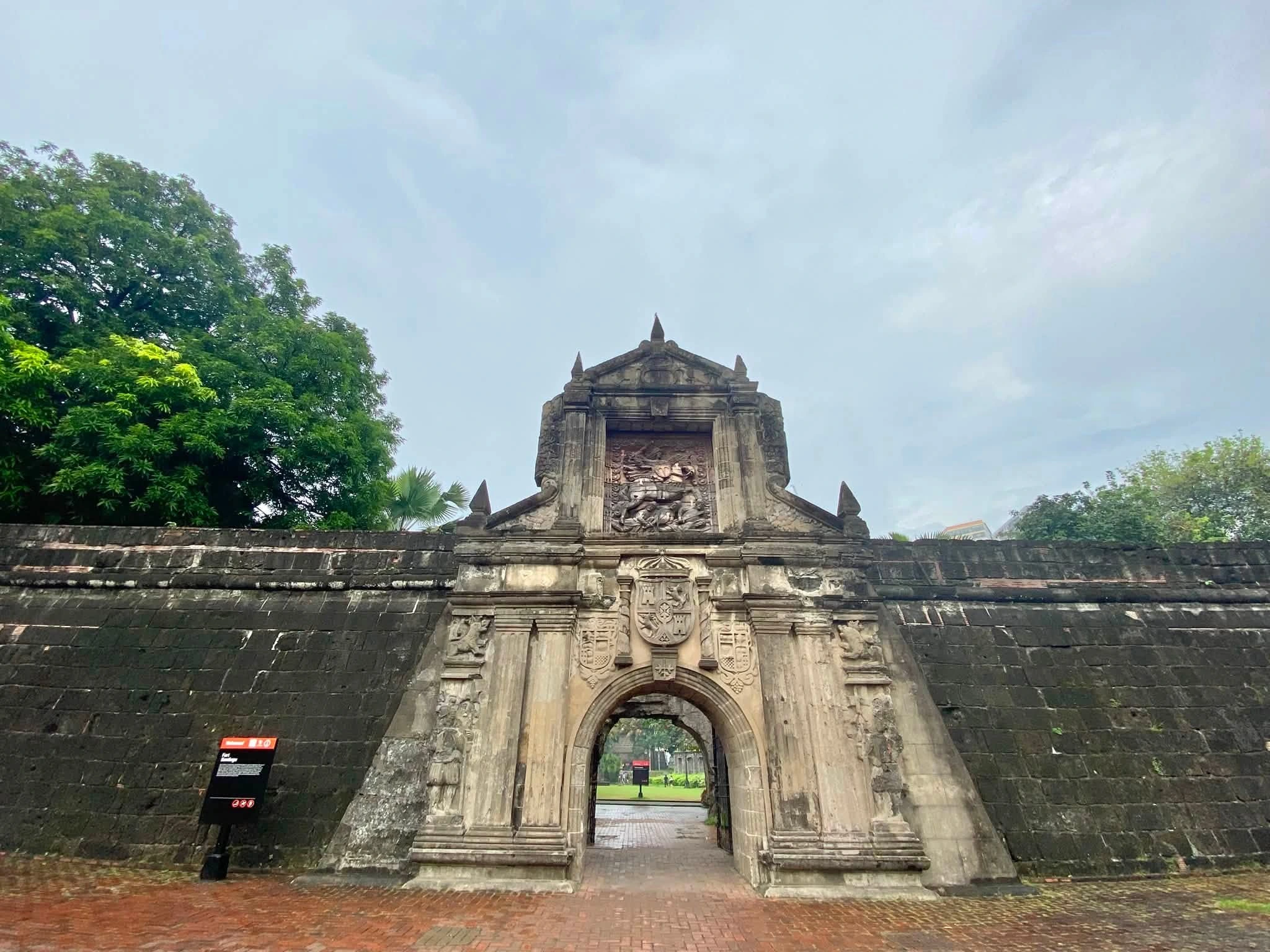
- José Rizal was a doctor, novelist and polymath. The national hero spoke many languages, and his novels helped spark the Philippine Revolution. See Dr. José Rizal.

Fort Santiago in Intramuros, where Rizal was imprisoned before his execution. - The oldest Spanish fort is in Cebu. Fort San Pedro was started in the 1560s by Miguel López de Legazpi’s expedition.
- The oldest stone church is in Manila. San Agustin Church in Intramuros is part of the UNESCO-listed Baroque Churches of the Philippines. See our historical sites guide.
- The rice terraces may be younger than you think. They’re often called 2,000 years old, but recent research suggests many were built 300 to 400 years ago. See our Ifugao guide.
Records and inventions
- The yo-yo was popularized by a Filipino. Filipino-American Pedro Flores started mass-producing yo-yos in California in the 1920s, sparking the craze in the United States.
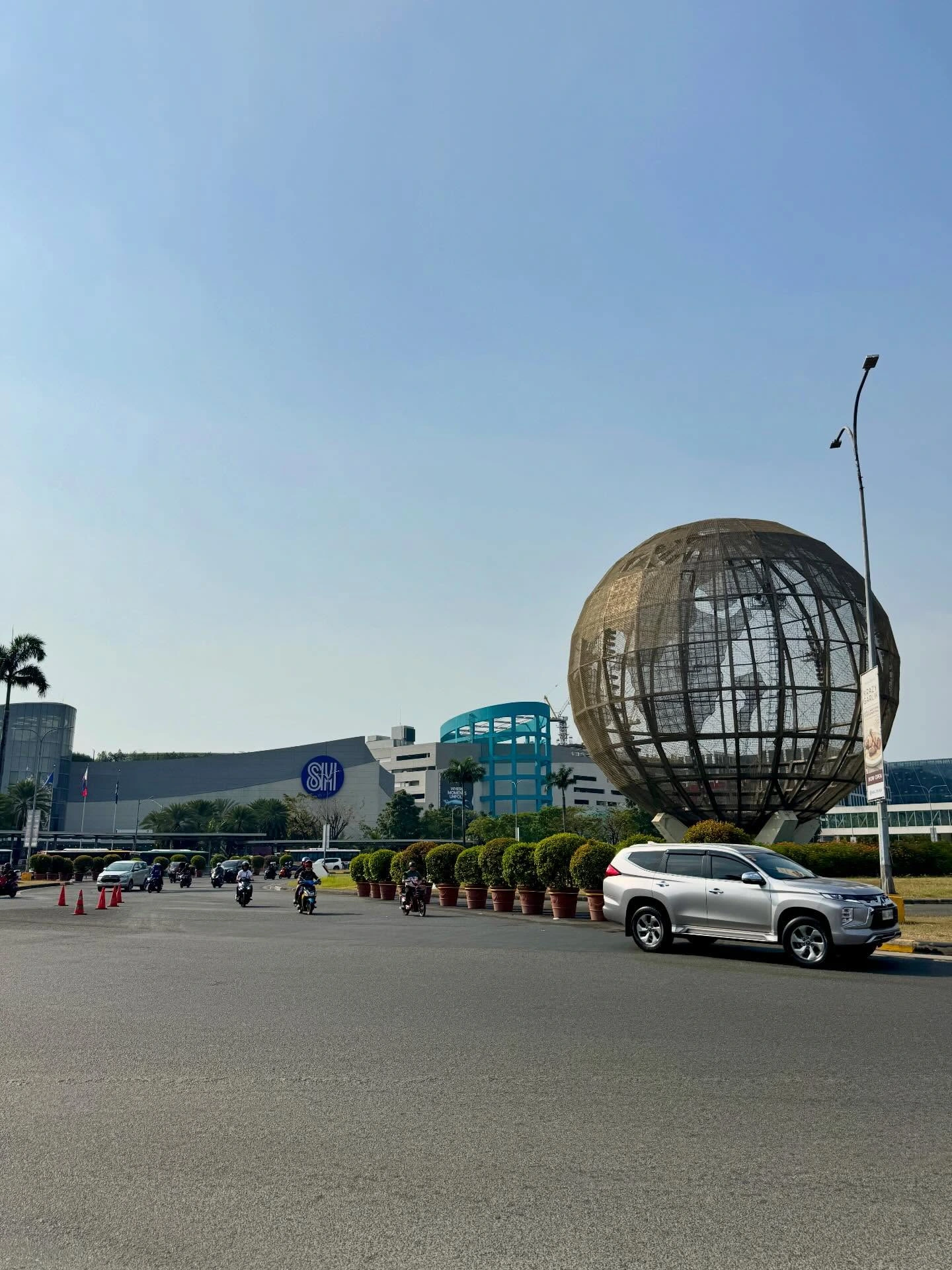
- One of the biggest malls in the world. SM Mall of Asia in Pasay has about 497,000 m² of floor space. See our biggest malls guide.

SM Mall of Asia by Manila Bay. - The widest waterfall in the country. Tinuy-an Falls in Surigao del Sur is about 95 meters wide. See our top waterfalls guide.

Tinuy-an Falls, about 95 meters wide. - The “Pearl of the Orient Seas.” The country’s poetic nickname appears in the national anthem and in Rizal’s farewell poem.

Common myths about the Philippines
| Myth | Fact |
|---|---|
| “The Philippines has 7,107 islands.” | The updated count is 7,641. |
| “A Filipino invented the fluorescent lamp.” | A popular myth. The fluorescent lamp was developed in Europe and the United States; there’s no evidence for the Filipino-inventor story. |
| “Filipino food is very spicy.” | Most dishes are savory and sour, not spicy. Bicol is the exception. See spicy Filipino food. |
| “The Banaue Rice Terraces are a UNESCO site.” | The UNESCO listing covers five other terrace clusters, including Batad and Bangaan. |
See these wonders in person
Turn the facts into a trip. Klook bookings often include free cancellation.
Fun facts about the Philippines: FAQ
How many islands are in the Philippines?
The Philippines has 7,641 islands, according to an updated count by NAMRIA, the national mapping agency. The older, commonly cited number was 7,107.
What is the population of the Philippines?
The population of the Philippines was 112,729,484 as of July 1, 2024, according to the Philippine Statistics Authority’s 2024 Census of Population.
How many languages are spoken in the Philippines?
More than 175 languages are spoken in the Philippines, according to Ethnologue. Filipino and English are the official languages, and Tagalog, Cebuano and Ilocano are among the most widely spoken.
Why is it called the Philippines?
The Philippines is named after King Philip II of Spain. Spanish explorer Ruy López de Villalobos named the islands “Las Islas Filipinas” in 1543, when Philip was still crown prince.
Why does the Philippines have the longest Christmas season?
Filipinos begin celebrating as soon as the “ber” months start in September, with Christmas music and decorations, and the season runs until January. It reflects the country’s strong Catholic traditions and love of family celebrations.
What is the national animal of the Philippines?
The Philippine eagle is the national bird, one of the largest eagles in the world. The carabao, or water buffalo, is widely considered the national animal.
Is English widely spoken in the Philippines?
Yes. English is an official language alongside Filipino and is used in schools, government, business and signage, which makes the Philippines one of the easiest countries in Asia for English speakers to travel.
What is the Philippines famous for?
The Philippines is famous for its 7,000+ islands and beaches, like Boracay and Palawan, its friendly people, festivals like Sinulog, dishes like adobo and lechon, the Chocolate Hills, tarsiers, and the world’s longest Christmas season.
Ready to see the Philippines for yourself? Start with the country’s top attractions.
Cebu-born travel writer raised between Cebu and Dumaguete, now based in Zamboanga del Sur, Mindanao. Gio writes Best Philippines Travel Guide to help first-time visitors travel the islands with confidence.