
Quick Answer
Christmas in the Philippines is the world’s longest celebrated holiday season, unofficially starting September 1 and running through the first Sunday of January. It centers on Simbang Gabi (nine dawn Masses, Dec 16–24), parol lanterns, and the Noche Buena feast shared at midnight on Christmas Eve.
When Does Christmas Season Start in the Philippines?
Filipinos start playing Christmas songs and setting up parols the moment the calendar hits September — the first of the four “Ber” months (Sep-tember, Oc-tober, Nov-ember, Dec-ember). That’s not folklore; it’s the reason the Philippines is widely cited as having the longest Christmas season on Earth, stretching roughly four months from prep to the final feast in early January.
What Is Simbang Gabi?
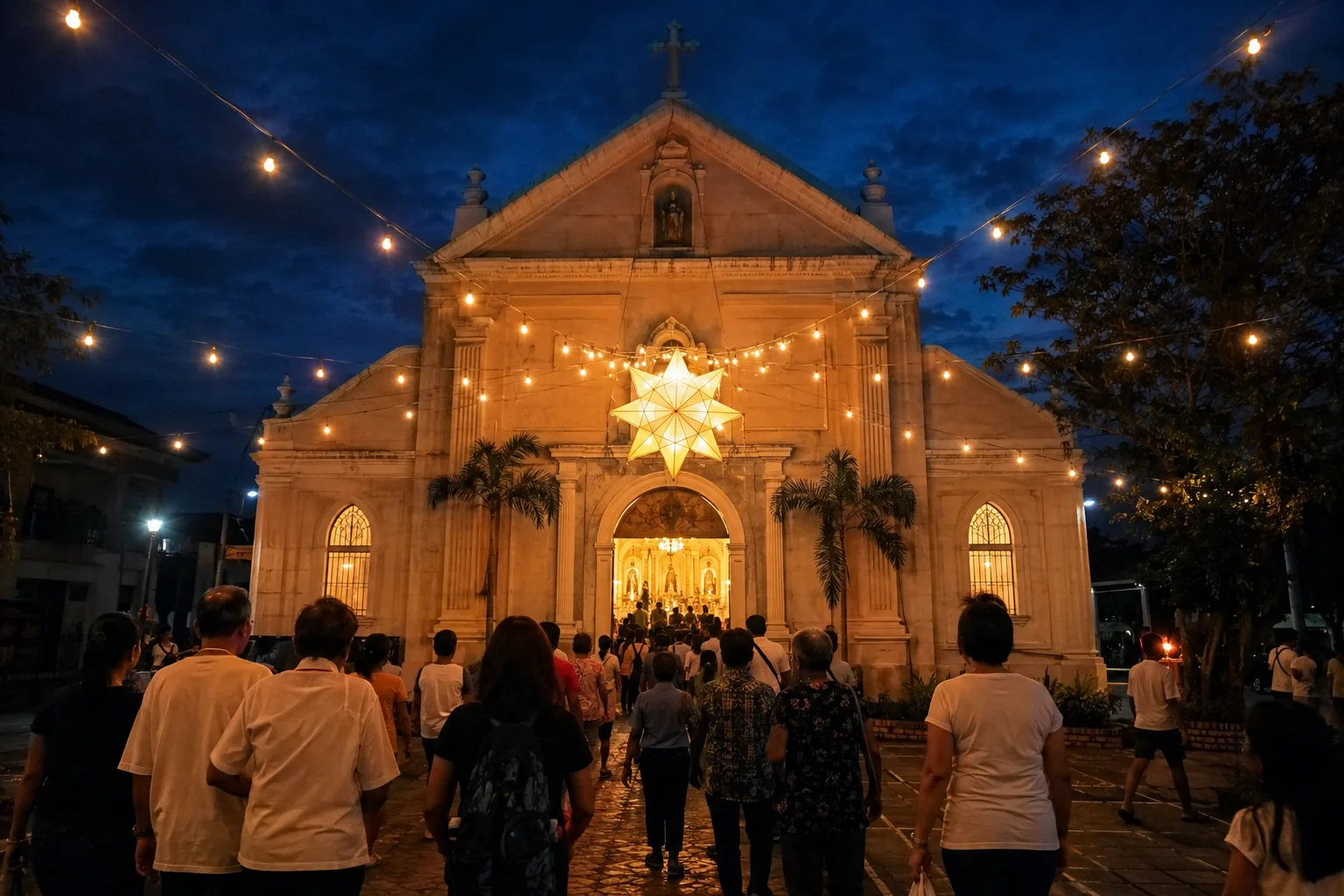
Simbang Gabi (“night Mass”) is a novena of nine consecutive dawn Masses from December 16 to December 24, usually starting between 4am and 5am. Completing all nine is a personal milestone for many Filipino Catholics, and churches get packed even before sunrise, with vendors selling puto bumbong and bibingka right outside.
| Date | What Happens |
|---|---|
| Sept 1 | “Ber months” begin — parols and Christmas songs appear nationwide |
| Dec 16–24 | Simbang Gabi — nine dawn Masses |
| Dec 24, midnight | Noche Buena — the main family feast |
| Dec 25 | Christmas Day — visiting relatives, gift-giving (aguinaldo) |
| Dec 31, midnight | Media Noche — New Year’s Eve feast, fireworks |
| First Sunday of Jan | Feast of the Santo Niño — closes the season |
What Do Parols Symbolize?
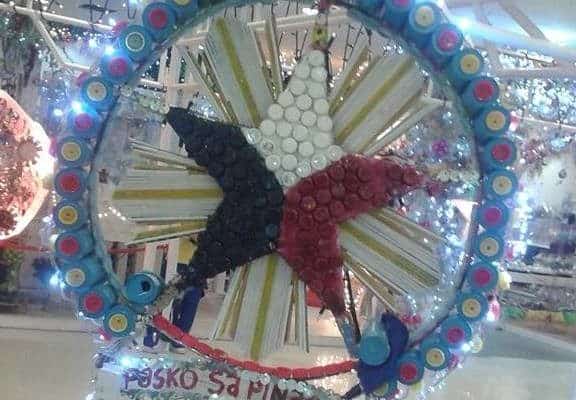
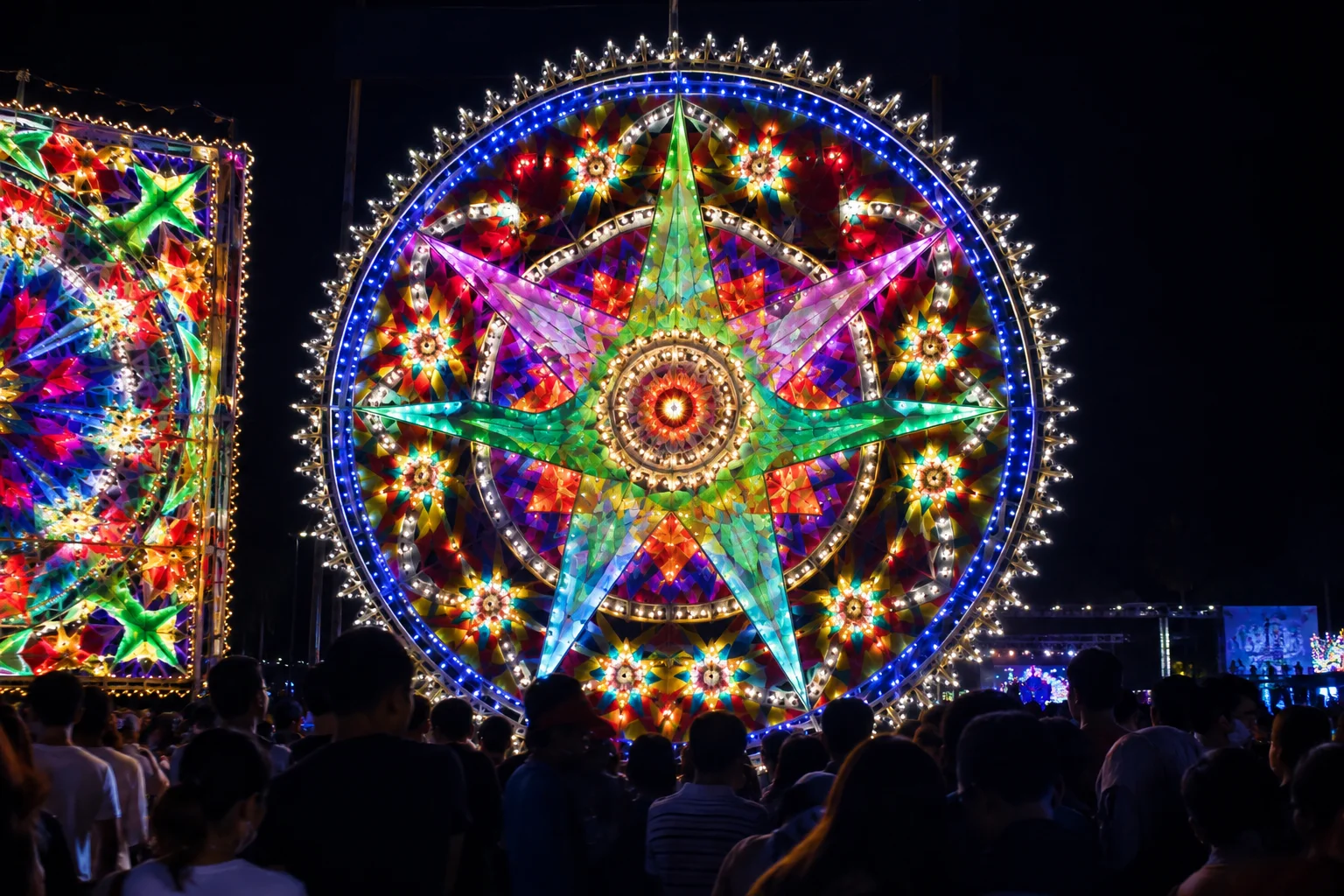
The parol is a star-shaped lantern, traditionally built from bamboo strips and colored paper or capiz shell, lit up outside homes and along streets. It represents the Star of Bethlehem guiding the Magi, and by extension, hope and goodwill during the season.
What’s on the Noche Buena Table?
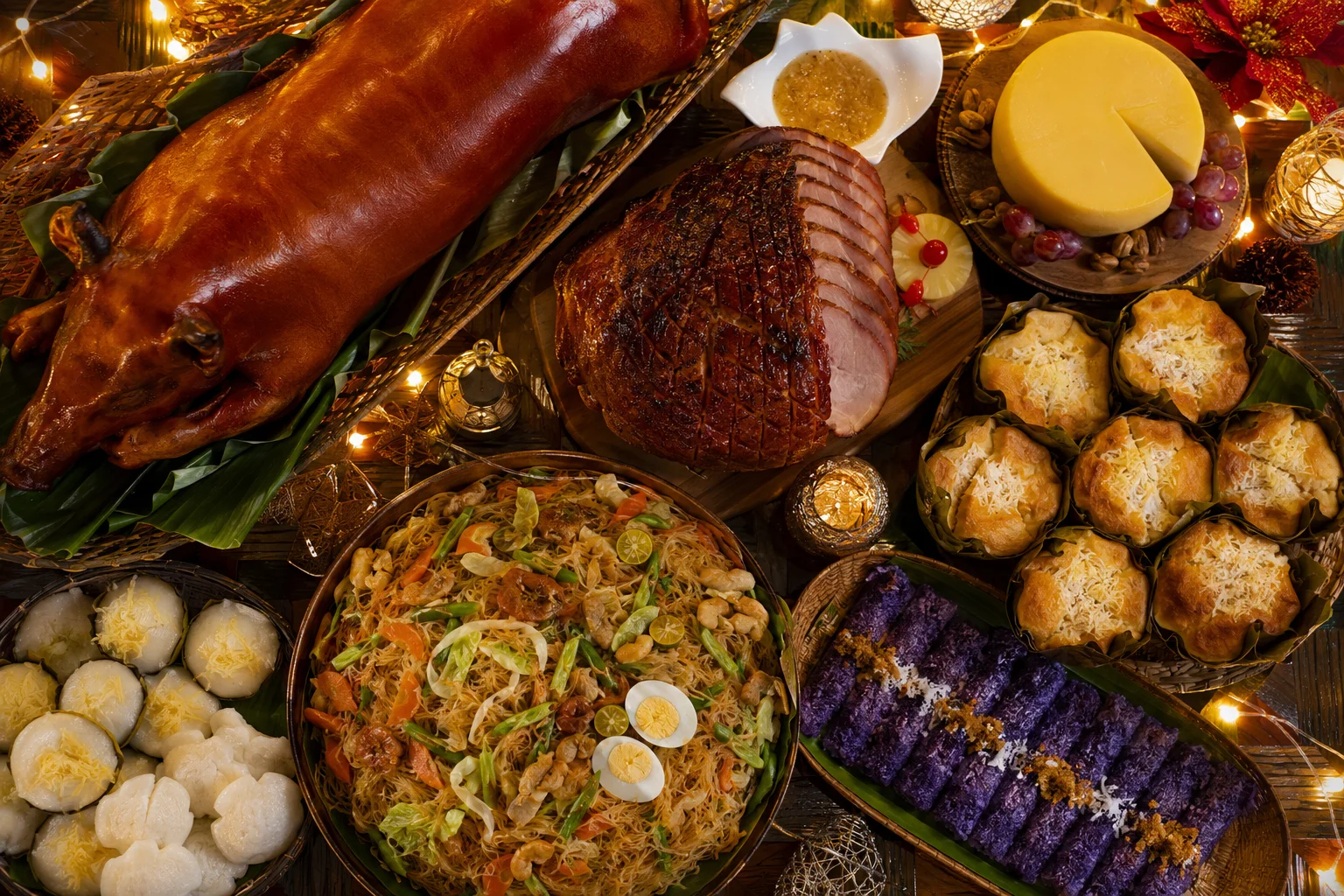
Noche Buena is the midnight feast on Christmas Eve, right after families return from Simbang Gabi or attend Midnight Mass. It’s less a sit-down dinner and more a spread the whole household picks at through the night.
- Lechon — whole roasted pig, the centerpiece of almost every Filipino feast (see our guide to Cebu’s famous lechon)
- Hamon — sweet, glazed Christmas ham
- Queso de bola — the ball of edam cheese that’s practically a Filipino Christmas mascot
- Pancit — noodles symbolizing long life
- Bibingka & puto bumbong — rice cakes traditionally eaten warm after Simbang Gabi
What Is a Belen?
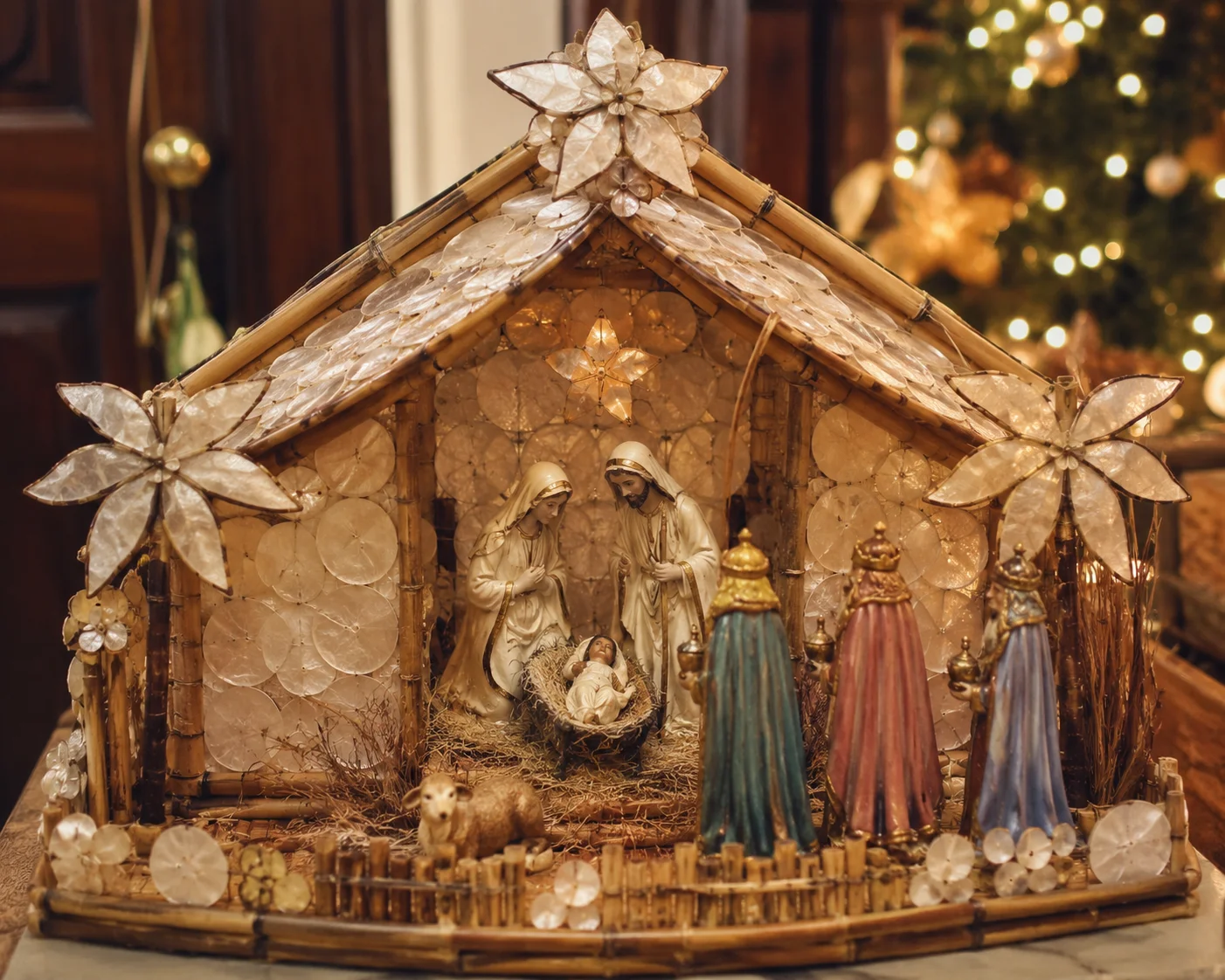
A Belen is a Filipino nativity scene — Mary, Joseph, the newborn Jesus, the Three Kings, shepherds, and barn animals, often flanked by angels. Spanish missionaries introduced the custom in the 16th century, and Filipino families have made it their own ever since, building sets from porcelain, capiz shell, coconut husk, or whatever recycled material is on hand. Many households treat the Belen as a stand-in for (or companion to) a Christmas tree, displayed at the entryway from December 16 onward.
What Is Panunuluyan?
Panunuluyan is a live reenactment of Joseph and Mary searching for shelter in Bethlehem, performed by parishioners on Christmas Eve in towns and barangays across the country. A procession moves house to house, with residents playing innkeepers who turn the couple away, before the group is finally “welcomed” at the church for the nativity’s completion. It’s one of the more moving, less commercialized traditions — worth seeking out if you’re in a smaller town rather than Metro Manila.
Who Are Ninong and Ninang, and What Is Aguinaldo?
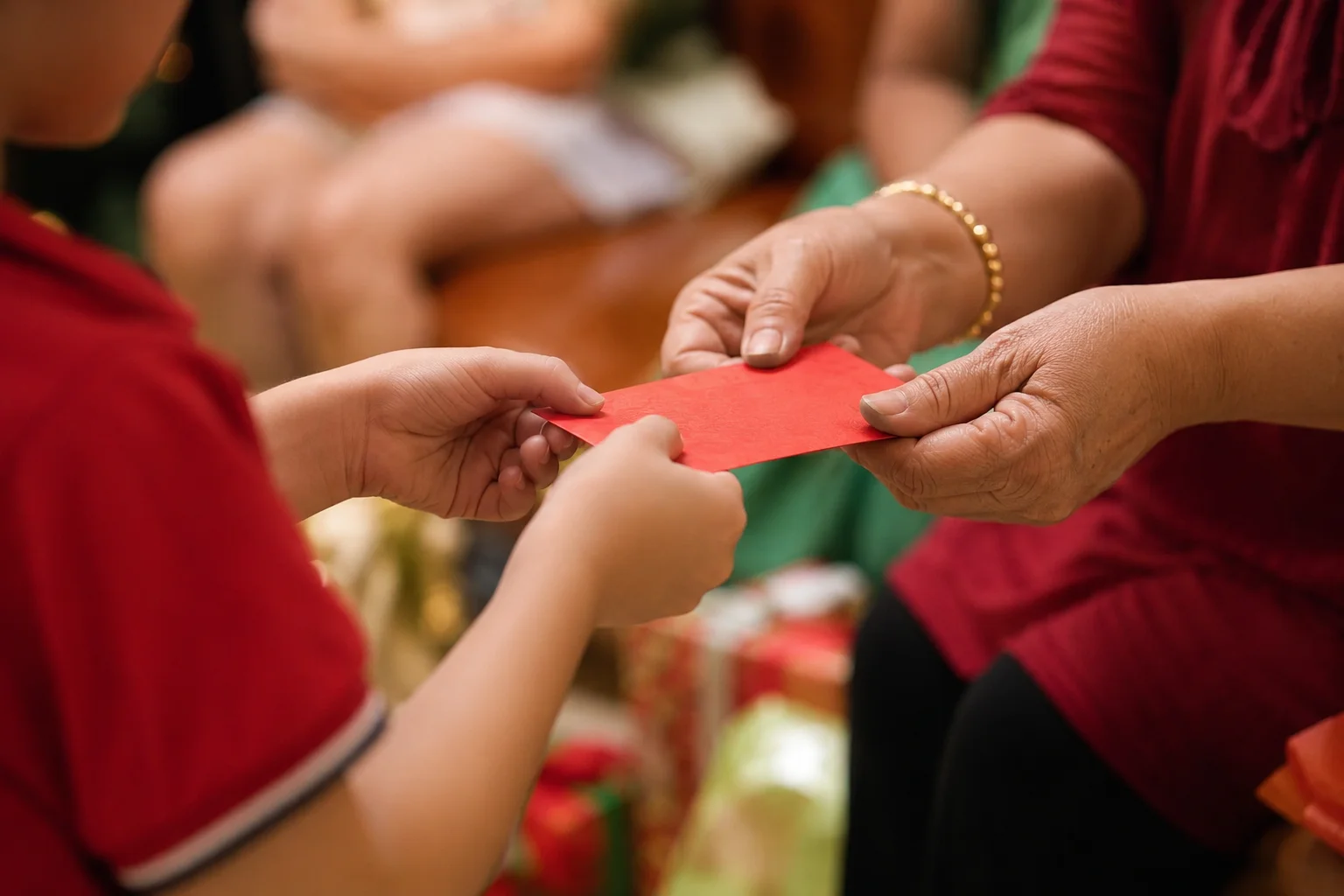
Ninong (godfather) and Ninang (godmother) are chosen at a child’s baptism or confirmation and are expected to look out for their godchild (“inaanak”) for life. At Christmas, that relationship shows up very concretely: children visit their ninongs and ninangs — often on Christmas Day itself — and receive aguinaldo, a cash gift usually tucked into a red or blue envelope. It’s one of the customs visiting relatives ask about most, since it has no direct Western equivalent.
Why Is Jose Mari Chan Part of Every Filipino Christmas?
The moment September starts, one song is guaranteed to play in every mall, jeepney, and living room in the country: Jose Mari Chan’s 1990 hit “Christmas in Our Hearts.” It’s become a running national joke (and a genuine cultural marker) — hearing it is basically the unofficial starting gun for the season, right alongside the calendar flipping to a “Ber” month.
The Spirit of Bayanihan During Christmas
One of the most distinctive parts of a Filipino Christmas is bayanihan — community spirit and unity. Barangays and church groups organize gift drives, feeding programs, and shared meals so that families with less are included in the season’s generosity. It’s less an organized charity campaign and more a default cultural reflex.
How Has the Celebration Evolved in Recent Years?
Modern Filipino Christmas keeps its core traditions — Simbang Gabi, parols, Noche Buena — while adding contemporary touches: pop-up Christmas markets, mall-wide light displays, and, since the pandemic years, hybrid options like livestreamed Masses and virtual reunions for overseas Filipino workers (OFWs) who can’t fly home every year.
Traveling to the Philippines During Christmas? Here’s What to Expect
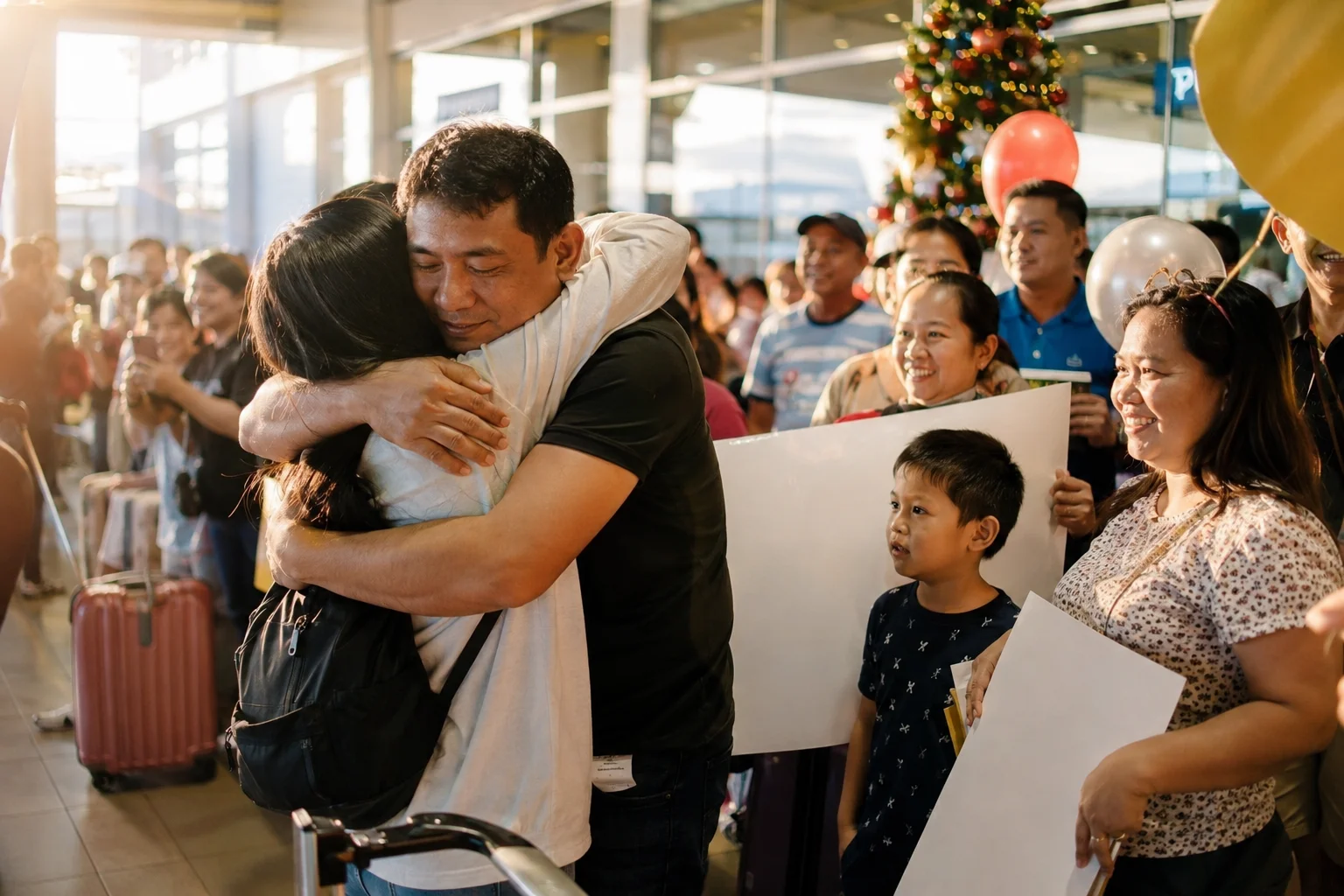
December and January fall squarely in dry season, so weather-wise it’s a great time to visit. The catch: this is also peak homecoming season for OFWs (overseas Filipino workers), which means domestic flights, buses, and ferries book out early and prices climb — sometimes weeks in advance for popular routes like Manila–Cebu or Manila–Bohol.
How Long Does the Filipino Christmas Season Last?
From the first “Ber month” in September to the Feast of the Santo Niño on the first Sunday of January, the season spans about four months — making it, by most counts, the longest Christmas celebration in the world.
Frequently Asked Questions
When does the Christmas season start in the Philippines?
It starts as early as September 1, the first of the four “Ber” months, making the Philippine Christmas season one of the longest in the world at roughly four months.
What is Simbang Gabi?
Simbang Gabi is a novena of nine dawn Masses held from December 16 to 24, traditionally attended between 4am and 5am, believed to have roots in Spanish-era harvest schedules for farmers and fishermen.
What does the parol symbolize?
The parol, a star-shaped lantern usually made of bamboo and paper, represents the Star of Bethlehem and symbolizes hope and goodwill; the tradition is most closely tied to San Fernando, Pampanga, home of the annual Giant Lantern Festival.
What food is served at Noche Buena?
A typical Noche Buena spread includes lechon, hamon, queso de bola, pancit, bibingka, and puto bumbong, eaten as a family feast right after midnight on Christmas Eve.
How long does the Filipino Christmas season last?
It runs from September through the first Sunday of January, the Feast of the Santo Niño, covering roughly four months of preparation, Simbang Gabi, Noche Buena, and New Year celebrations.
What role does charity play during Filipino Christmas?
Charity and bayanihan are central; families and barangays organize gift drives, feeding programs, and shared meals for those with less during the season.
What is a Belen?
A Belen is a Filipino nativity scene depicting the birth of Jesus, displayed in homes and churches from mid-December, often handmade from porcelain, capiz shell, or recycled materials.
Who are Ninong and Ninang, and what is Aguinaldo?
Ninong (godfather) and Ninang (godmother) are godparents chosen at baptism; at Christmas, children visit them and receive aguinaldo, a cash gift usually given in a red or blue envelope.
Is it a good time to visit the Philippines during Christmas?
Weather-wise, yes — December and January are dry season. But it’s also peak OFW homecoming travel, so domestic flights and ferries should be booked 4–6 weeks ahead to avoid inflated prices and sold-out routes.

Giovanni Carlo Bagayas
Filipino travel writer and founder of Best Philippines Travel Guide, covering Philippine culture, food, and travel from firsthand experience. Read more about Gio →