The Philippines’ coolest city — pine forests, strawberry farms, world-class art, flower festivals, and sweater weather year-round. Everything US and UK travelers need to know about visiting Baguio City in 2026.
✍️ Giovanni Carlo P. Bagayas (Gio)·Updated ·📖 10 min read
Elevation1,540 meters above sea levelCity of Pines, Cordillera Region
🚌
From Manila4–6 hours by busPHP 400–1,500 (~USD 7–26)
🌤️
Best timeNovember to MayFebruary for Panagbenga Festival
⏱️
Ideal stay2–3 days3+ days with La Trinidad & Sagada
💵
Daily budgetUSD 30–60 / GBP 24–48Most attractions free or under $2
Quick answer
What is Baguio City known for?
Baguio City is the Summer Capital of the Philippines — a cool highland city in Benguet province at 1,540 meters elevation with year-round temperatures of 12–22°C (54–72°F). It is famous for its pine forests, strawberry farms in nearby La Trinidad, the Panagbenga Flower Festival in February, BenCab Museum, Camp John Hay, Session Road dining and nightlife, and Burnham Park. For international visitors it offers a uniquely un-tropical Philippine experience — sweater weather, misty mountains, and a vibrant arts and food scene unlike anywhere else in the country.
What to see & do
Top Things to Do in Baguio City
Baguio is compact enough to explore most major attractions in 2–3 days. Here are the highlights — all with current 2026 entrance fees:
Burnham Park
FREE
Baguio’s central park — a beautiful urban green space with a man-made lake, rose garden, and open lawns. Rent a paddleboat (PHP 80–150) or bicycle (PHP 40–80/hr). Food stalls line the perimeter. Perfect starting point for any Baguio visit. Open 24 hours.
📸 Best at sunrise — before the crowds arrive
Mines View Park
PHP 5 (~USD 0.09)
One of Baguio’s most iconic viewpoints — a panoramic overlook of the old Benguet mining town of Itogon below. Rent an Igorot costume for a photo (PHP 50). Surrounded by souvenir shops and strawberry products. Best visited early morning for clear views before the fog rolls in.
⏰ Go before 9 AM for best visibility
BenCab Museum
PHP 200 (~USD 3.50)
The finest art museum in the Philippines — National Artist Benedicto Cabrera’s stunning collection of contemporary Filipino art and indigenous Cordillera artifacts, set in a lush hillside property with an eco-trail, organic farm, and Café Sabel (farm-to-table dining with mountain views). Open Tuesday–Sunday, 9AM–6PM.
🎨 Don’t miss Café Sabel for lunch
Camp John Hay
FREE entry
The former US military rest and recreation facility — now a sprawling 247-hectare highland resort with pine forests, a golf course, restaurants, cafes, and the Bell Amphitheater. Walk the forest trails, have coffee at one of the many cafes, or take the tree top adventure course. A pleasant half-day escape from the city proper.
🌲 Best pine forest walks in Baguio
La Trinidad Strawberry Farm
FREE entry
Just 6 km north of Baguio in the valley of La Trinidad — rows of strawberry fields where you can pick your own berries (PHP 500–700/kg in season). Try the famous strawberry taho (warm silken tofu with strawberry syrup) sold by vendors along the road. Best visited November to May during strawberry season.
🍓 Season: November to May only
Baguio Cathedral
FREE
The pink twin-spired Our Lady of Atonement Cathedral atop Mount Mary Hill — climb 104 steps from Session Road for panoramic views of the city below. One of Baguio’s most photographed landmarks, especially at sunset when the pink facade glows in warm light. Open daily for prayer and tourism.
📸 Sunset shots from the steps are stunning
Wright Park & The Mansion
FREE
Wright Park’s Pool of Pines — a famous pine-lined reflecting pool — sits across from The Mansion, the Philippine President’s summer residence. Horse riding is popular here (PHP 200–300 per ride). The Mansion gates make a classic Baguio photo backdrop. Both easily combined in a 30-minute visit.
🐴 Horse rides PHP 200–300 per person
Tam-Awan Village
PHP 50 (~USD 0.87)
An authentic indigenous Cordillera village recreation — traditional Ifugao and Kalinga houses, indigenous art galleries, craft demonstrations, and panoramic mountain views. One of the most culturally immersive experiences in Baguio. Artists in residence, workshops available. Open daily.
🎨 Best for cultural immersion
Session Road
FREE
Baguio’s main commercial street and social heartbeat — lined with cafes, restaurants, bookstores, and boutiques. The Night Market runs along Session Road every evening with street food, ukay-ukay (secondhand clothes), and local crafts. Closed to traffic on weekends for the famous Baguio Night Market and car-free days.
🌙 Night Market: every evening from 8PM
Baguio City Entrance Fees 2026
Attraction
PHP
USD approx.
GBP approx.
Hours
Burnham Park
FREE
—
—
24 hours
Mines View Park
PHP 5
~USD 0.09
~GBP 0.07
6AM–9PM
BenCab Museum
PHP 200
~USD 3.50
~GBP 2.75
Tue–Sun 9AM–6PM
Camp John Hay
FREE entry
—
—
24 hours
Botanical Garden
PHP 100
~USD 1.75
~GBP 1.38
7AM–6PM
La Trinidad Strawberry Farm
FREE entry
—
—
6AM–6PM
Baguio Cathedral
FREE
—
—
5AM–9PM
Wright Park
FREE
—
—
24 hours
Tam-Awan Village
PHP 50
~USD 0.87
~GBP 0.69
8AM–6PM
Mirador Heritage & Eco Park
PHP 100
~USD 1.75
~GBP 1.38
8AM–6PM
Bell Church (La Trinidad)
Minimal / free
—
—
8AM–5PM
Horseback riding (Wright Park)
PHP 200–300
~USD 3.50–5.20
~GBP 2.75–4.10
8AM–5PM
💡 Baguio is extremely affordable — most major attractions are free. Your biggest expenses will be accommodation and food.
Getting there
How to Get to Baguio from Manila
There is no commercial airport in Baguio City — Loakan Airport exists but has no regular commercial services. All travelers reach Baguio by land from Manila or other Luzon cities.
🚌
Bus from Manila
PHP 400–1,500 (~USD 7–26 / GBP 6–21)
The most popular option. Victory Liner (Pasay and Cubao terminals), Genesis, and Partas operate frequent services daily — including overnight buses. Regular class PHP 400–800, First Class PHP 1,200, Royal Class PHP 1,500. Journey: 4–6 hours depending on traffic. Book online or at the terminal. First Class recommended — air-conditioned with reclining seats.
🚗
Drive / Car Rental
~5–7 hrs from Metro Manila
Drive NLEX → TPLEX → Marcos Highway to Baguio (approximately 250 km). Kennon Road is an alternative route — more scenic but narrower and closed during heavy rain. Avoid driving during Holy Week and long weekends when traffic can turn the journey into 8–10 hours. Park-and-ride facilities available at the city entrance during peak season.
🚐
UV Express / Van for Hire
PHP 250–400 (~USD 4.30–6.90)
Shared van services operate from various Manila terminals to Baguio. Faster than buses (3.5–5 hours) but less comfortable. Good option for solo travelers wanting to save money without the full bus experience.
🏙️
Getting Around Baguio
PHP 12–50 per jeepney ride
Inside Baguio, jeepneys cover most routes from Burnham Park hub (PHP 12–25). Taxis and Grab are available (PHP 50–200 per trip). Walking is practical in the central Session Road area. Tricycles are not commonly used for longer distances — jeepney is the local standard.
What to eat
Baguio Food — What to Try
Baguio has one of the best food scenes in the Philippines outside Metro Manila — a unique combination of Cordillera indigenous food, highland-grown produce, excellent coffee culture, and a thriving cafe and restaurant scene on and around Session Road.
🍓
Strawberry taho
Warm silken tofu with strawberry syrup instead of the usual brown sugar — unique to Baguio and La Trinidad. Sold by street vendors for PHP 30–50. The quintessential Baguio food experience.
🫘
Baguio strawberry jam
The most popular pasalubong from Baguio — fresh strawberry jam from La Trinidad. Available in all souvenir shops and the Public Market. Prices: PHP 50–150 per jar (~USD 1–3).
🐔
Pinikpikan
The traditional Cordillera chicken dish — beaten chicken slow-cooked with etag (smoked cured pork) and vegetables. A cultural dish with deep indigenous significance. Available at local Igorot eateries.
☕
Baguio coffee culture
Baguio has more specialty coffee shops per capita than almost any city in the Philippines. The cool climate is perfect for lingering over a cup. Session Road and the SM City area have dozens of options — from PHP 80–200 per cup.
🌻
Baguio Public Market
The best market in the Cordillera — fresh highland vegetables, fruits, strawberries, ube (purple yam), peas, carrots, and flowers unavailable in lowland markets. Ground floor for produce, upper floors for souvenirs and ukay-ukay.
🥘
Good Shepherd products
The Good Shepherd Convent near Mines View Park is famous for its ube jam, strawberry jam, peanut brittle, and polvoron (shortbread cookies) — all made by the nuns. Long queues are normal — worth the wait. Most popular Baguio pasalubong.
February festival
Panagbenga Flower Festival — February 2026
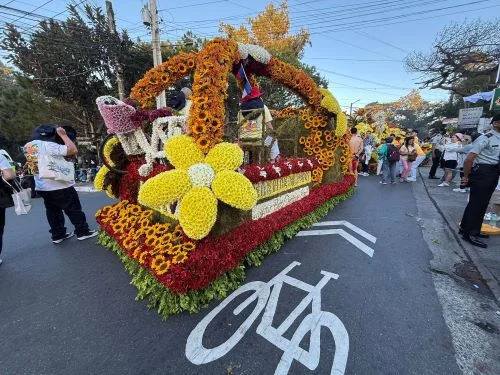
The Panagbenga Festival (meaning “a season of blooming” in Kankana-ey) is Baguio’s most spectacular annual event — a month-long celebration of the city’s famous highland flowers held throughout February. The festival began in 1996 to revive the city after the devastating 1990 Luzon earthquake and has grown into one of the Philippines’ largest and most beautiful festivals.
The two main parade events draw the biggest crowds: the Street Dancing Parade (first Saturday of February) and the Grand Float Parade (last Sunday of February) — enormous floats covered entirely in fresh flowers moving down Session Road. Both are free to watch from the street, though ticketed grandstand seats offer better views.
“During Panagbenga, Baguio transforms into the most beautiful city in the Philippines — a million flowers, cool mountain air, and a city celebrating its own resilience.”
Practical tips for Panagbenga: Book hotels 2–3 months in advance — the city fills completely during festival weekends. Arrive the day before the parade to secure a good street viewing spot. Expect heavy traffic on approach roads — consider the bus rather than driving. The flower market near Burnham Park runs throughout February with cut flowers, potted plants, and ornamental displays.
Accommodation
Where to Stay in Baguio
Real, bookable options across budget ranges — book 2–3 months ahead if visiting during Panagbenga in February, since Session Road hotels sell out completely.
Another strong upscale pick for travelers prioritizing comfort.
Beyond Baguio
Day Trips from Baguio
Baguio is an excellent base for exploring the Cordillera highlands. These destinations are within easy reach:
🏘️
Sagada, Mountain Province
~3.5–4 hrs from Baguio
The Philippines’ most famous highland escape — hanging coffins in Echo Valley, Sumaguing Cave spelunking, Kiltepan Peak sunrise, Bomod-ok Falls, and the most peaceful small-town atmosphere in the country. Strongly recommended for 1–2 nights.
🌾
Banaue & Batad Rice Terraces
~8–9 hrs from Baguio
The UNESCO-listed rice terraces of Ifugao province — better done as an overnight trip from Baguio rather than a day trip. Take the Banaue bus from Baguio terminal for around PHP 400–600. Stay overnight in Banaue and trek to Batad village the next morning.
🌸
Atok (Northern Blossom)
~2 hrs from Baguio
The highland flower farms of Atok, Benguet — fields of ranunculus, hydrangeas, roses, and sunflowers. A growing alternative to Baguio’s popular flower spots, with fewer crowds and stunning mountain backdrops. Best January to March during peak bloom.
🦅
Kabayan Mummy Caves, Benguet
~3 hrs from Baguio
The ancient Ibaloi fire mummies of Kabayan — among the oldest preserved mummies in Asia, some over 500 years old. A fascinating UNESCO-nominated heritage site combining history, trekking, and the extraordinary cultural traditions of the Ibaloi people of Benguet.
✦ Essential Tips for US & UK Visitors
Pack warm clothing — even if you’re coming from a tropical destination. At 12–22°C, Baguio is significantly cooler than anywhere else in the Philippines. A light jacket or sweater is essential, especially for evenings and early mornings.
Avoid Holy Week and long weekends — Baguio is the most popular domestic destination for Manila residents during long weekends. Traffic on Kennon Road and NLEX can turn a 5-hour trip into 10+ hours. If possible, visit on a weekday.
For Panagbenga Festival in February — book your hotel 2–3 months in advance. Session Road hotels sell out completely. Consider staying in La Trinidad (6 km away) for better availability.
Visit Good Shepherd Convent early — the famous ube jam, strawberry jam, and polvoron sell out quickly. Arrive by 8–9 AM to avoid finding empty shelves. Queue is normal but moves fast.
Explore beyond Session Road — most tourists stay within the Session Road–Burnham Park corridor. BenCab Museum, Tam-Awan Village, and Camp John Hay are all worth the jeepney ride and offer a more spacious experience.
Altitude can affect some visitors — at 1,540m, a small number of visitors experience mild altitude-related fatigue or headaches on the first day. Rest, drink water, and avoid overexertion on arrival day.
Baguio’s weather changes fast — fog and light rain can appear suddenly even on clear days. Always carry a light rain jacket especially if trekking or visiting hilltop attractions.
Best pasalubong to bring home: Good Shepherd ube jam, strawberry jam, fresh strawberries (in season), Baguio peanut brittle, and woven Cordillera handicrafts from the Public Market.
Frequently Asked Questions
Common questions about visiting Baguio City, Philippines.
What is Baguio City known for?+
Baguio is known as the Summer Capital of the Philippines — a cool highland city at 1,540 meters elevation with year-round temperatures of 12–22°C. Famous for pine forests, strawberry farms, the Panagbenga Flower Festival (February), BenCab Museum, Session Road dining and nightlife, Camp John Hay, and Burnham Park. It offers a uniquely non-tropical Philippines experience.
How do I get to Baguio from Manila?+
By bus — Victory Liner, Genesis, and Partas operate frequent daily services from Manila (PITX, Pasay, Cubao terminals). Journey: 4–6 hours. Tickets: PHP 400–1,500 (~USD 7–26). There is no commercial airport in Baguio — all travelers arrive by land. Driving takes 5–7 hours from Metro Manila via NLEX and Marcos Highway.
What is the best time to visit Baguio?+
The best time is November to May (dry season). February is especially worth visiting for the Panagbenga Flower Festival. December to February is the coolest and most comfortable. Avoid Holy Week and long weekends due to extreme traffic. June to October is rainy season — roads can flood and fog reduces visibility.
How much does it cost to visit Baguio?+
Baguio is very affordable. Most major attractions are free — Burnham Park, Camp John Hay, Wright Park, Baguio Cathedral. BenCab Museum costs PHP 200 (~USD 3.50). Mines View Park costs PHP 5. A budget hotel or guesthouse costs PHP 800–2,000 (~USD 14–35) per night. Daily budget: USD 30–60 / GBP 24–48 covering accommodation, food, and activities. Planning a longer Philippines trip? Use our Philippines Trip Budget Calculator to estimate your total costs.
Is Baguio City safe for tourists?+
Yes — Baguio is one of the safest cities in the Philippines. Well-governed, with visible police presence. Normal precautions apply: watch belongings at the Public Market and Night Market, avoid leaving valuables in cars. The city is family-friendly and significantly safer than Metro Manila.
What is the temperature in Baguio City?+
Baguio averages 12–22°C (54–72°F) year-round due to its 1,540m elevation. Coldest months: December to February (12–18°C / 54–64°F) — a jacket is essential. Warmest: April to May (18–22°C / 64–72°F). Even at its warmest, Baguio is 10–15°C cooler than Manila — making it an ideal highland escape.
When is the Panagbenga Flower Festival?+
Panagbenga runs throughout February in Baguio City. The main events are the Street Dancing Parade (first Saturday of February) and the Grand Float Parade (last Sunday of February) — both free to watch from the street along Session Road. Book hotels 2–3 months in advance as the city fills completely.
Born in Cebu City, raised between Cebu and Dumaguete City, currently residing in Labangan, Zamboanga del Sur. I have visited Baguio multiple times across different seasons — for the Panagbenga Festival, for strawberry season, and for the quiet off-peak months when the fog settles over Session Road. This guide is written from personal experience and verified 2026 research for US and UK travelers seeking a cool highland escape in the Philippines.