
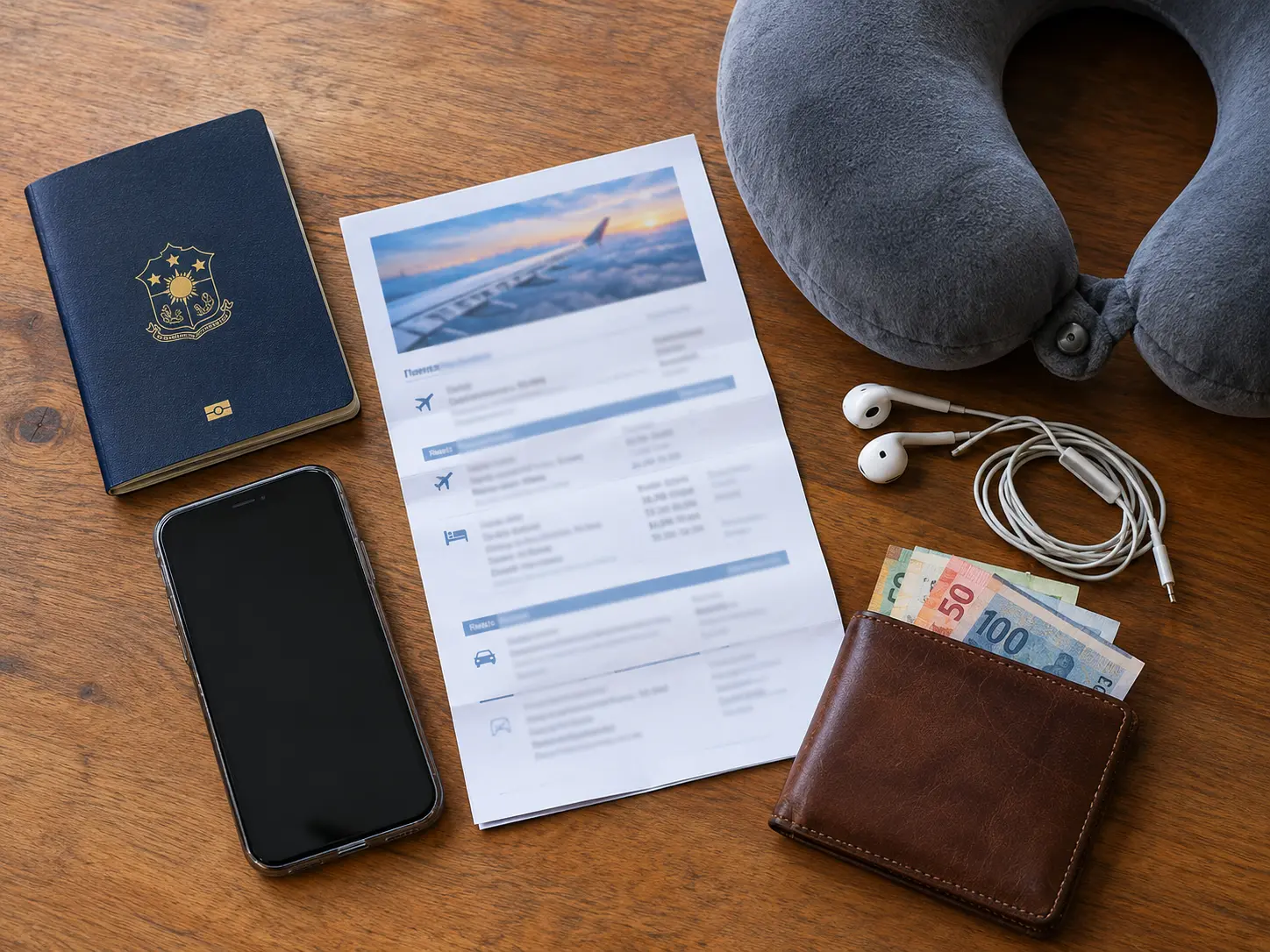
Visa rules can change at short notice and depend on your nationality. This is general information, not legal or immigration advice. Always confirm with the Department of Foreign Affairs, the Bureau of Immigration or your nearest Philippine embassy before you book.
Most tourists don’t need a visa for the Philippines. Citizens of about 157 countries, including the US, UK, Canada, Australia, the EU, Japan and South Korea, can stay visa-free for 30 days. Brazil and Israel get 59 days; India, China, Taiwan, Hong Kong and Macau get 14 days, with conditions. Everyone needs a passport valid at least 6 months beyond the stay, a return or onward ticket, and a free eTravel registration within 72 hours before arrival. Visa-free visitors on 30 days can extend with the Bureau of Immigration.
Entry sorted? Protect your trip and stay connected from the moment you land.
How long can tourists stay visa-free?
| Visa-free stay | Who it applies to | Extendable? |
|---|---|---|
| 30 days | About 157 nationalities on the official visa-free list (Executive Order 408), including the US, UK, Canada, Australia, New Zealand, most of Europe, Japan, South Korea and Singapore | Yes, with the Bureau of Immigration |
| 59 days | Brazil and Israel | Yes |
| 14 days | India (since June 2025) | No |
| 30 days | India, if you hold a valid visa or residence permit from the US, UK, Japan, Australia, Canada, Singapore or a Schengen country | Check with the Bureau of Immigration |
| 14 days | China (since January 16, 2026): tourism or business, arriving through NAIA (Manila) or Mactan-Cebu only, with a hotel booking and return ticket | No |
| 14 days | Taiwan (temporary, until June 30, 2027), Hong Kong SAR and Macau SAR passports | Varies |
Summary as of November 2026, based on DFA, Bureau of Immigration and Philippine e-Visa guidance. If your country isn’t on the visa-free list, apply for a visa or e-Visa before you travel at the official evisa.gov.ph portal or a Philippine embassy.
What documents do I need to enter the Philippines?
Use this checklist before you fly. Airlines check some of these at check-in and can refuse boarding if they’re missing.
- Passport valid 6 months beyond your stay Count from your planned departure date, not your arrival date.
- Return or onward ticket A flight out of the Philippines within your permitted stay. Airlines often ask for this at check-in.
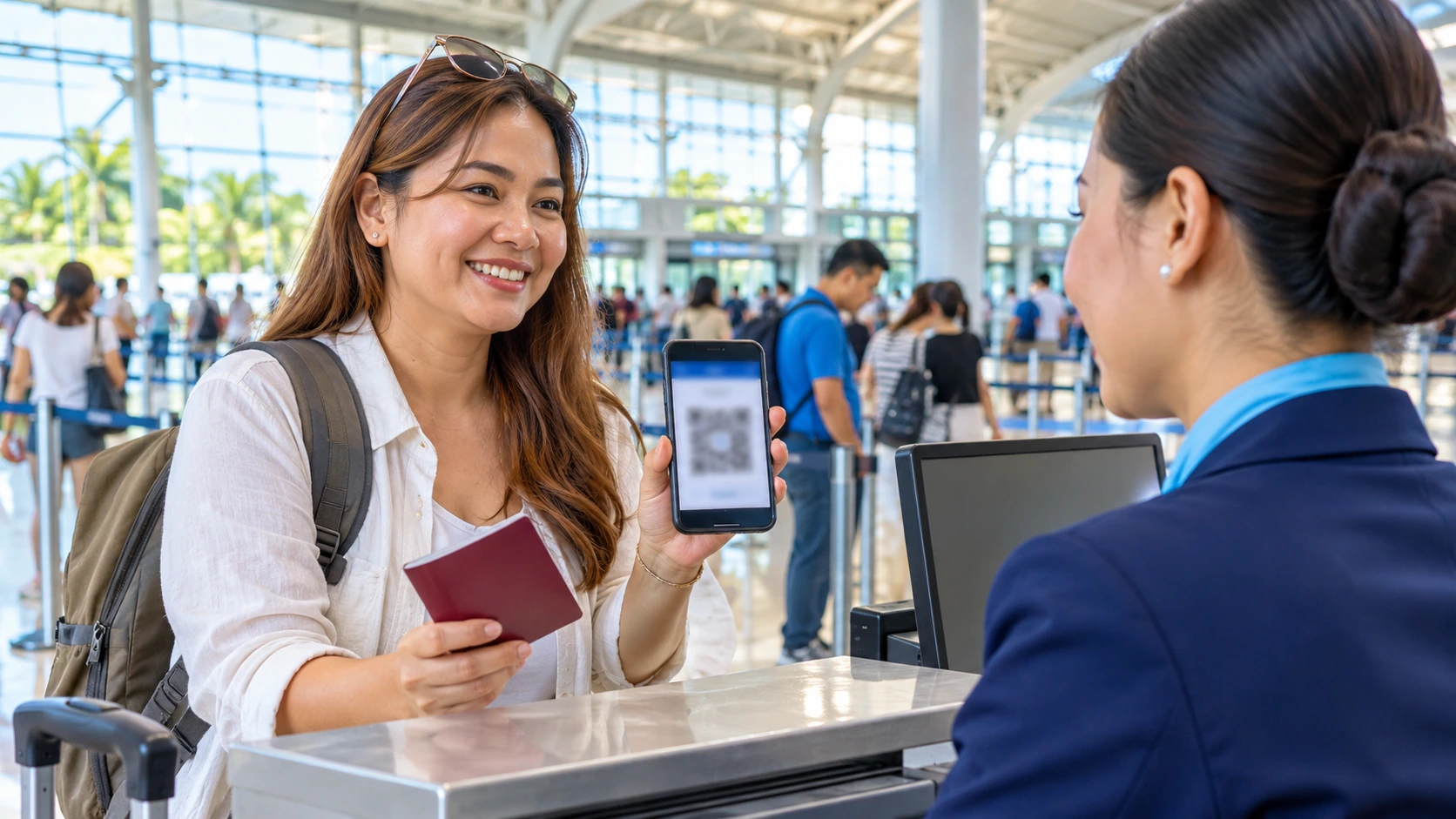
- eTravel registration Free, completed online within 72 hours before arrival; you’ll get a QR code to show. Use only the official site, etravel.gov.ph, since copycat sites charge fees. See our eTravel guide.

Show your free eTravel QR code at check-in and on arrival. Illustrative image. - Visa or e-Visa, if required Only if your nationality isn’t on the visa-free list, or you plan to stay longer than your visa-free period without extending.
- Proof of accommodation and funds Not always checked, but immigration officers may ask, especially for 14-day visa-free entries. Keep your hotel booking and a bank card or statement handy.
- Travel insurance Not required for entry, but strongly recommended. See our travel insurance guide.
Can I extend my stay?
Yes, if you entered on the standard 30-day visa-free stay. You can apply for a visa waiver extension online through the Bureau of Immigration’s e-services or at a BI office, before your current stay expires.
- First extension: usually an additional 29 days, bringing your stay to 59 days. Fees are typically around ₱3,000 for the first extension, but check the BI’s current rates.
- Further extensions: 1, 2 or 6 months at a time, up to a maximum total stay of about 36 months for most visa-free nationalities.
- Not extendable: the 14-day visa-free entries for India and China.
- Don’t overstay. Overstaying leads to fines, and longer overstays can affect future entry.
Planning to stay for months and work online? See our digital nomad guide for long-stay options.
Common entry mistakes to avoid
- No onward ticket: the most common reason travelers are stopped at check-in.
- Passport expiring too soon: under 6 months’ validity beyond your stay can mean refused boarding.
- Paying for eTravel: eTravel is free on the official site; fee-charging lookalike sites aren’t official.
- Assuming every nationality gets 30 days: India, China, Taiwan, Hong Kong and Macau have 14-day rules with conditions.
- Overstaying: track your permitted stay and extend before it ends.
- Ignoring travel advisories: a visa lets you in, but your government’s advice still matters for safety and insurance. See is the Philippines safe? and our Mindanao guide.
Before you leave the Philippines
- Foreign tourists staying less than a year don’t pay the Philippine travel tax. Filipinos and long-term residents usually do; see our travel tax guide.
- eTravel is also completed for departure; check the official site for the current rules.
- Customs: declare cash over US$10,000 or the equivalent. See money in the Philippines.
Add flights, hotels, tours and any visa extension fees in our free Philippines trip budget calculator.
Philippines visa requirements: FAQ
Do I need a visa for the Philippines?
Not if your passport is on the visa-free list, which covers about 157 countries, including the US, UK, Canada, Australia and the EU. Most visitors get 30 days visa-free; Brazil and Israel get 59 days, and India, China, Taiwan, Hong Kong and Macau get 14 days with conditions.
How long can tourists stay in the Philippines without a visa?
Most tourists can stay 30 days visa-free, and can then extend with the Bureau of Immigration. Brazilian and Israeli citizens get 59 days, while India, China, Taiwan, Hong Kong and Macau passport holders get 14 days.
Do US citizens need a visa for the Philippines?
No. US citizens can stay up to 30 days visa-free for tourism, with a passport valid 6 months beyond their stay, a return or onward ticket and an eTravel registration.
Do I need an onward ticket to enter the Philippines?
Yes. Visa-free visitors need a return or onward ticket out of the Philippines, and airlines often check it at check-in.
Is eTravel required for the Philippines?
Yes. All arriving travelers must register on the free official eTravel site, etravel.gov.ph, within 72 hours before arrival. Avoid lookalike sites that charge a fee.
Can Indian citizens visit the Philippines visa-free?
Yes. Since June 2025, Indian citizens can stay 14 days visa-free, which can’t be extended. Indians with a valid visa or residence permit from the US, UK, Japan, Australia, Canada, Singapore or a Schengen country can stay 30 days.
Can Chinese citizens visit the Philippines visa-free?
Yes. Since January 16, 2026, Chinese citizens can stay 14 days visa-free for tourism or business, arriving through NAIA in Manila or Mactan-Cebu, with a hotel booking and return ticket.
How do I extend my tourist stay in the Philippines?
Apply for a visa waiver extension online through the Bureau of Immigration’s e-services or at a BI office before your stay expires. The first extension usually adds 29 days, and further extensions can follow.
Your entry is planned. Now plan the fun part.

Cebu-born travel writer raised between Cebu and Dumaguete, now based in Zamboanga del Sur, Mindanao. Gio writes Best Philippines Travel Guide to help first-time visitors arrive prepared.