
Last updated: October 2026 · By Giovanni Carlo Bagayas
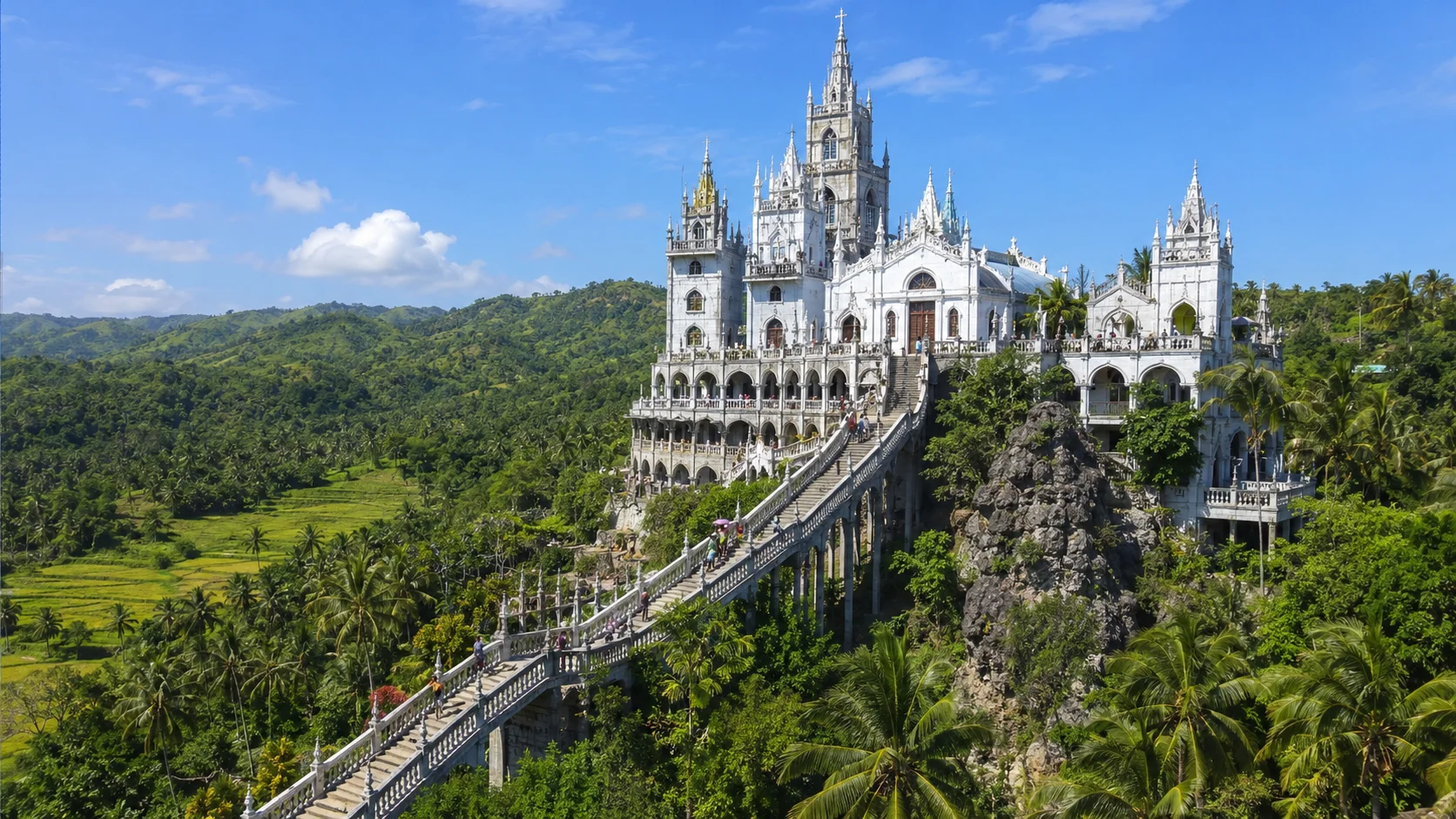
Quick answer: Simala Shrine, officially the Monastery of the Holy Eucharist, is a castle-like Catholic shrine on a hilltop in Barangay Lindogon, Sibonga, about 55 to 60 km (2 to 2.5 hours) south of Cebu City. Entrance is free, it’s open daily, and weekday mass is at 12 noon. Cover your shoulders and knees, arrive on a weekday morning to avoid crowds, and pair it with Oslob or Carcar to make the long drive south worth it. A private day tour from Cebu City is the easiest way to go if you don’t have a car.
Disclosure: some links in this guide are Klook affiliate links. If you book through them, I earn a small commission at no extra cost to you. I only recommend options that fit how I’d plan this trip myself.
📋 Simala Shrine at a Glance
| Official name | Monastery of the Holy Eucharist (Shrine of Our Lady of Lindogon) |
| Location | Barangay Lindogon, Sibonga, southern Cebu |
| Distance from Cebu City | About 55 to 60 km |
| Travel time | 2 to 2.5 hours by car; up to 3 hours by bus |
| Entrance fee | Free |
| Opening hours | Daily, early morning to late afternoon (arrive before 4 PM) |
| Weekday mass | 12:00 noon |
| Dress code | Shoulders and knees covered; no shorts or sleeveless tops |
| Time needed | 1.5 to 2 hours at the shrine |
| Best time to visit | Weekday mornings, 8 to 10 AM |
| Busiest days | Sundays, the 13th of each month, and September 8 |
🏰 What Is Simala Shrine?
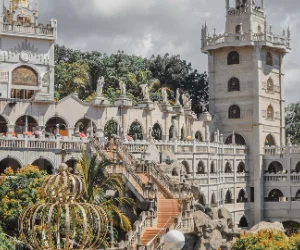
Simala Shrine is a Marian pilgrimage site in Sibonga, Cebu, known for its European castle-style architecture and for a Virgin Mary image that devotees say wept in 1998. White turrets, arches, and stained glass rise out of the rice fields and coconut groves of southern Cebu. It’s dedicated to Our Lady of Lindogon and run by the Marian Monks of Eucharistic Adoration, and it draws hundreds of thousands of visitors a year, making it one of the most visited religious sites in Cebu alongside the Basilica del Santo Niño.
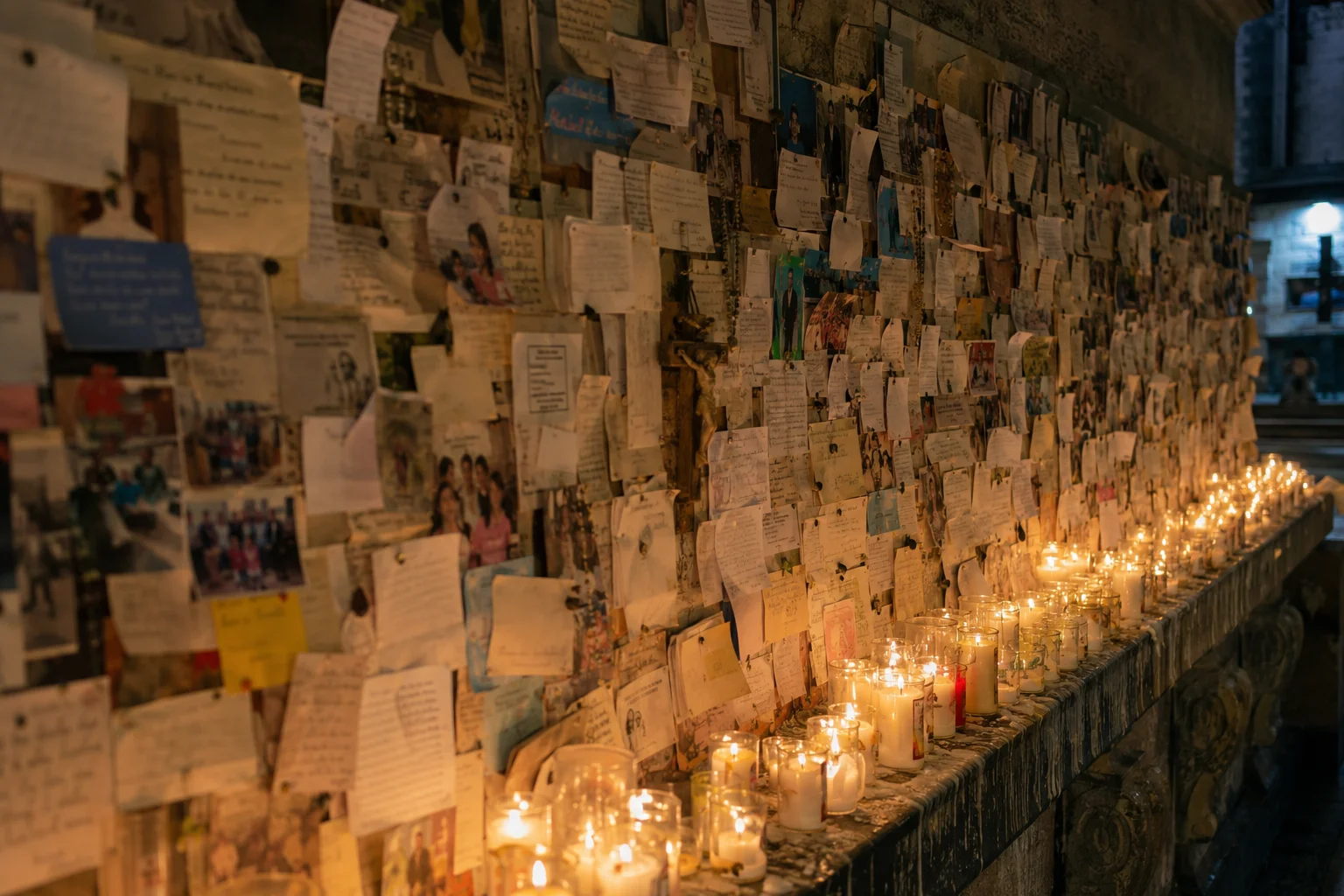
What sets Simala apart is the combination of visual drama and living devotion. Thousands of handwritten letters and photos line the interior walls, left by visitors thanking the Virgin Mary for answered prayers. It’s one of the stops in my full guide to the best things to do in Cebu, but it deserves a closer look on its own.
📜 What Is the History of Simala Shrine?
The monks behind Simala came from Pampanga, displaced by the 1991 Mount Pinatubo eruption, and settled in Sibonga, where they founded the monastery in the late 1990s. The land they chose was a quiet, barren hill in Barangay Lindogon that, according to local legend, a community elder had prophesied would one day become a holy site.
The shrine’s fame grew quickly in 1998, when the image of the Virgin Mary inside was reported to have shed tears during a dengue outbreak in the area, an event many devotees credit with healing the sick. The original church was modest; the castle-like complex you see today grew in stages from the mid-2000s, funded largely by devotees’ donations. That story, and the thousands of answered-prayer testimonies collected since, is why pilgrims travel to Simala from across the Philippines.
🖼️ What Does Simala Shrine Look Like Inside?
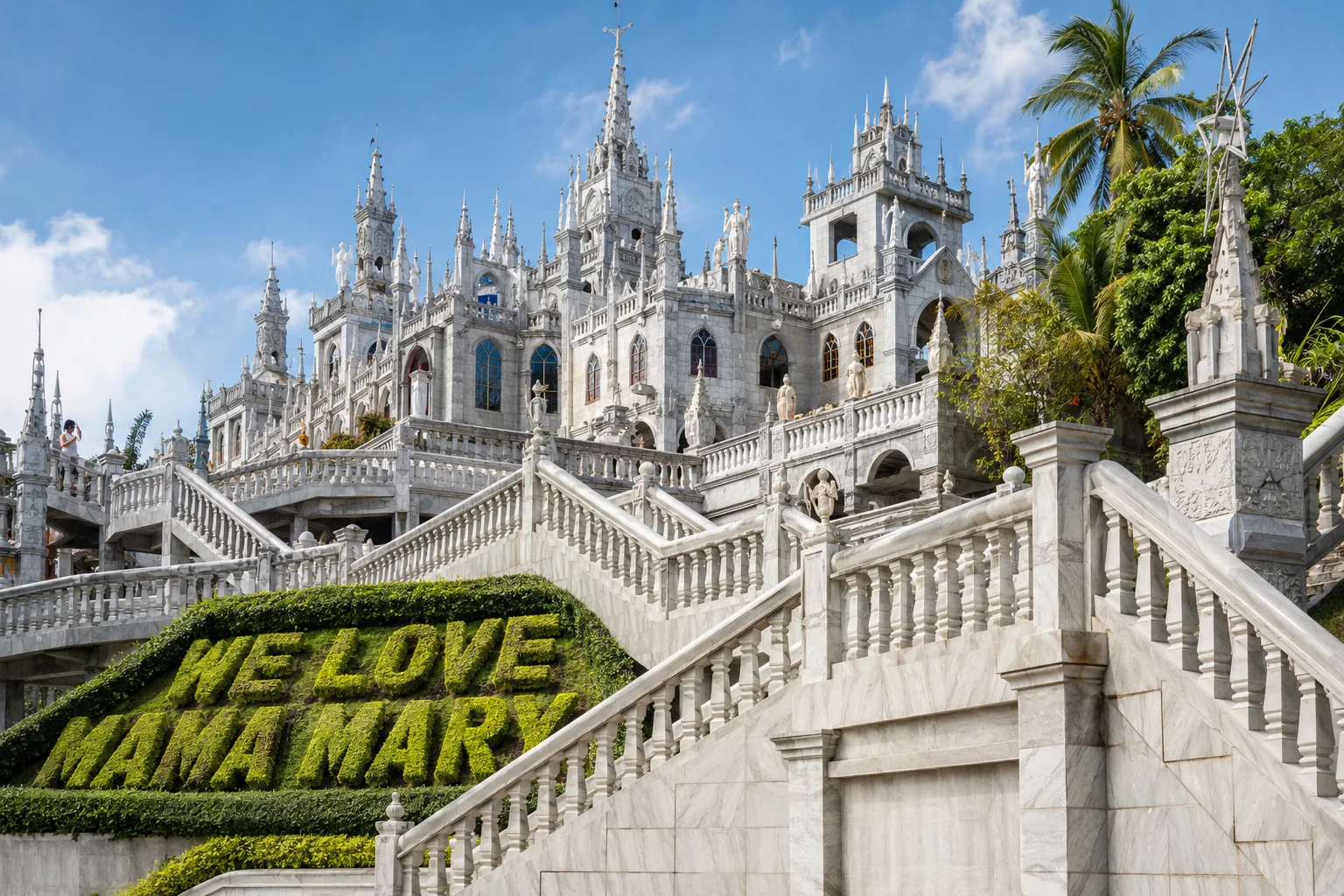
The exterior stops most visitors first: sweeping white staircases, Gothic-style turrets, and a facade that looks more like a European castle than a typical Filipino parish church. Near the entrance, a “We Love Mama Mary” message spelled out in grass greets you before you reach the main doors.
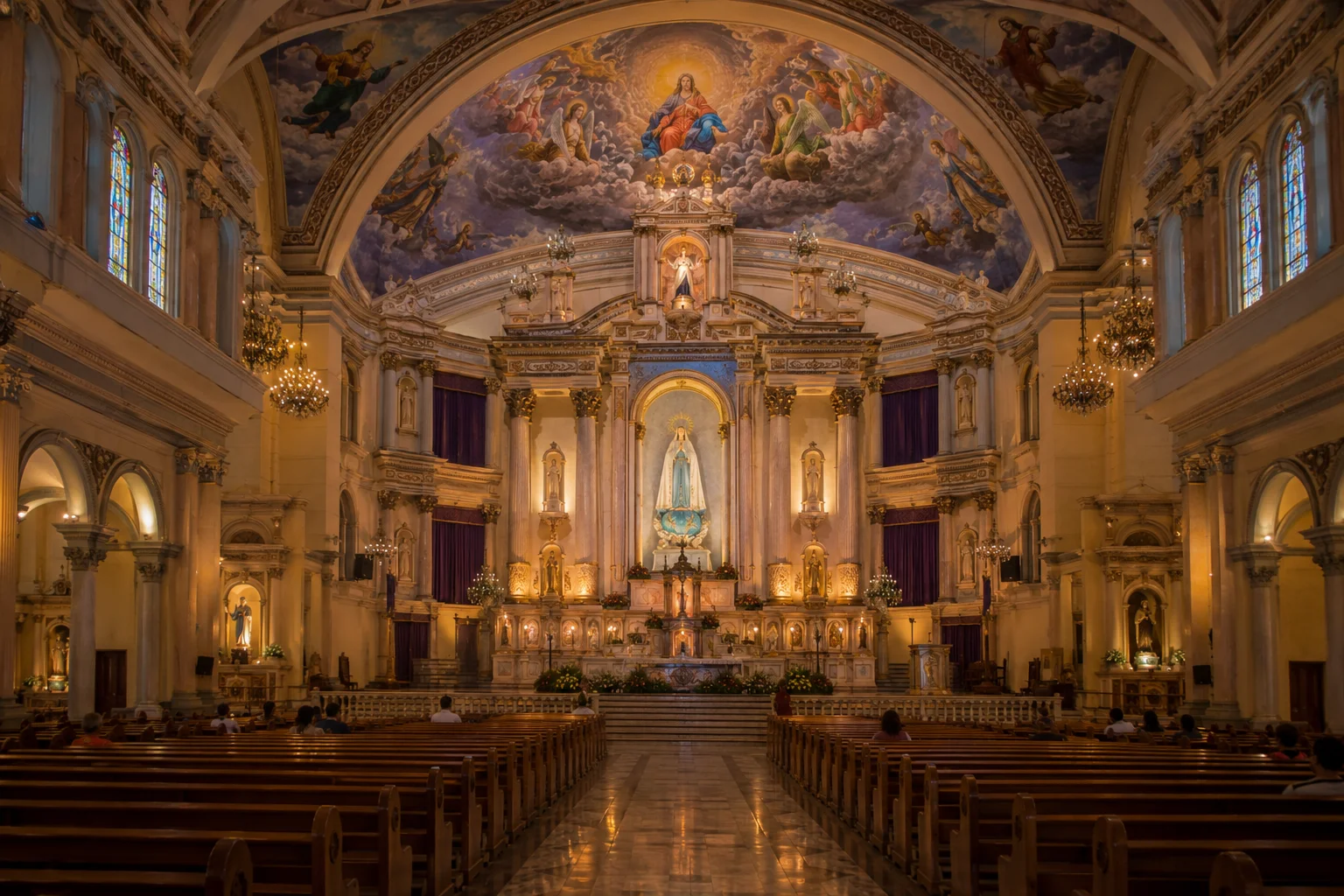
Inside, terraces and columns lead up to the central altar with the image of the Virgin Mary at the heart of the shrine’s story, framed by hand-painted ceiling art. The walls throughout the complex are covered with letters, photographs, and even medical records left by devotees. Whatever your beliefs, walking through this wall of gratitude is genuinely moving.
⏰ What Is the Simala Shrine Mass Schedule?
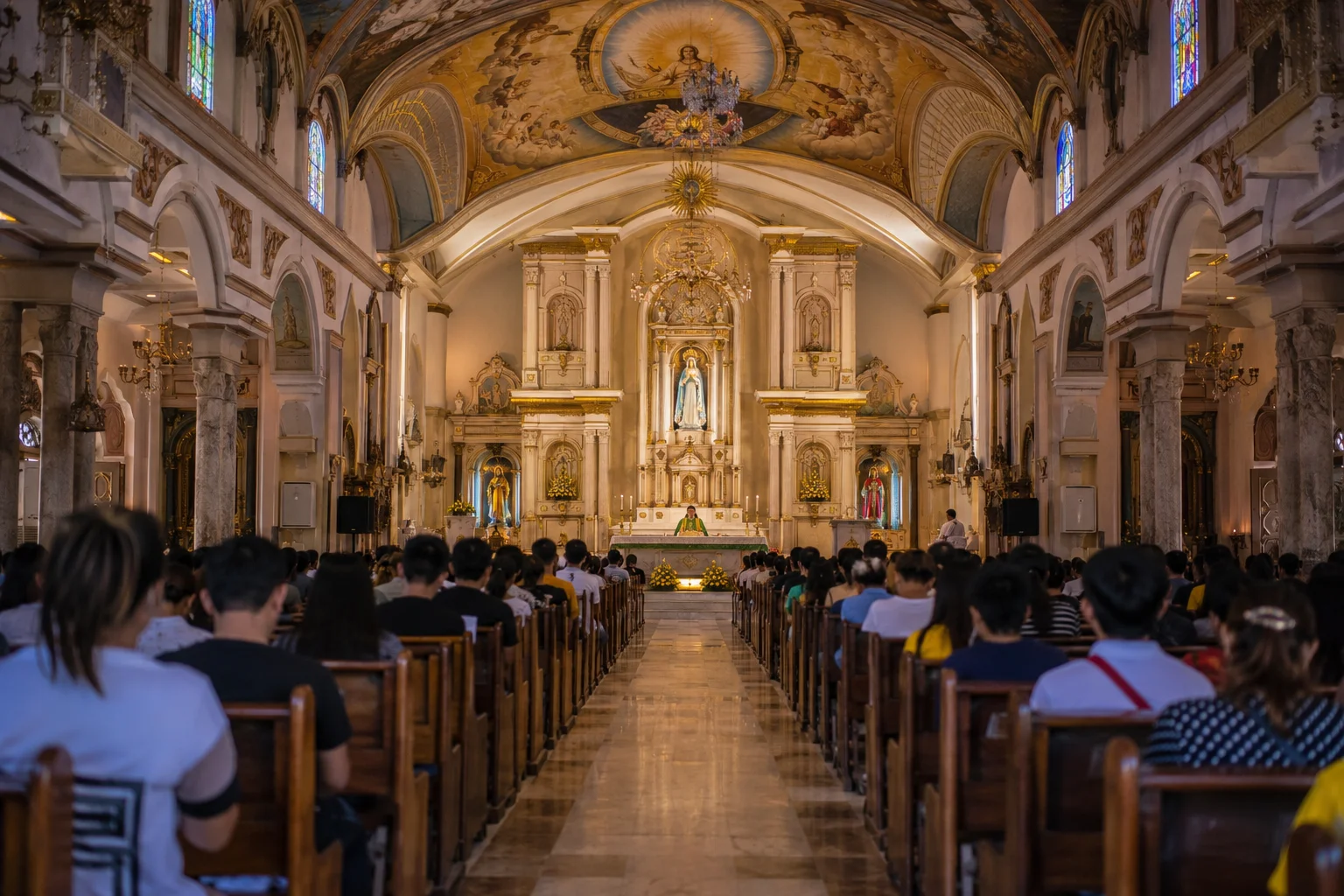
Weekday mass at Simala Shrine is at 12 noon, Saturday mass is at 10:30 AM, and Sunday has masses at 12 noon and 3:30 PM. Extra masses are held on the 13th of every month. Schedules can change on holy days, so check the shrine’s official Facebook page before a Sunday or feast-day visit.
| Day | Mass times |
|---|---|
| Monday to Friday | 12:00 noon |
| Saturday | 10:30 AM |
| Sunday | 12:00 noon and 3:30 PM |
| 13th of every month (anniversary) | 10:30 AM and 3:30 PM |
When should you go? For a quiet visit, arrive on a weekday between 8 and 10 AM. To see Simala at its most devotional, with packed pews and incense, plan around Sunday noon mass. The 13th of every month and the Feast of the Nativity of Mary on September 8 are the busiest days of the year, with buses arriving from across the Visayas. Avoid them unless you’re there for the celebration.
💰 How Much Is the Simala Shrine Entrance Fee?
Simala Shrine is free to enter, with no admission fee anywhere on the grounds. It’s open daily from early morning to late afternoon. Published hours vary between sources, so plan to arrive before 4 PM to have enough time inside. Candles, prayer letters, and religious souvenirs are sold separately if you want to take part in the shrine’s traditions.
What is the dress code at Simala Shrine?
The modest dress code is strictly enforced: shoulders and knees must be covered, so no sleeveless tops, shorts, or short skirts. If you arrive underdressed, vendors near the entrance rent or sell inexpensive shawls and long skirts. I’d still pack a light scarf in your day bag, since the walk from the parking area to the entrance is outdoors and sunny.
🚐 How Do You Get to Simala Shrine from Cebu City?
The easiest way to get to Simala Shrine is a private day tour or a hired car with driver; the cheapest is a Ceres bus from the Cebu South Bus Terminal to the Simala junction in Sibonga. The shrine is about 55 to 60 km south of Cebu City, so expect 2 to 2.5 hours each way by car.
| Option | Best for | Trade-off |
|---|---|---|
| Ceres bus or van | Budget travelers | Slowest, plus a tricycle or habal-habal ride up the hill |
| Grab or taxi | Small groups going one way | Hard to find a ride back from Sibonga |
| Car rental with driver | Families and custom stops | Costs more than the bus |
| Private day tour | First-timers and short stays | Fixed itinerary |
By public transport: Take a Ceres bus or van from the Cebu South Bus Terminal heading to Sibonga or Argao and tell the conductor you’re going to Simala. They’ll drop you at the junction, where a short tricycle or habal-habal ride takes you up to the entrance. Head back before late afternoon, when buses fill up.
By private car or Grab: Drive south via the South Road Properties (SRP), then follow the Cebu South Coastal Road toward Sibonga. The shrine is signposted from the highway; turn off toward Barangay Lindogon and follow the uphill road to the parking area.
By hired car with driver: This is my pick if you want flexibility without driving Cebu’s south road yourself. With Cebu Car Rental with Driver on Klook, listed from about US$40, you can leave early, spend as long as you like at Simala, and add stops the group tours skip, like a lechon lunch in Carcar on the way back.
🎟️ Which Simala Shrine Tour Should You Book?
Book the Cebu City private day tour if Simala is your main goal, or the Oslob combo tour if you also want to swim with whale sharks on the same day. Both include hotel pickup, which solves the hardest part of visiting Simala: getting back to the city.
Best for first-timers: Cebu City Private Day Tour with Simala Shrine
This is the tour I’d suggest for anyone with only a day or two in Cebu. It pairs Simala with two city landmarks, Magellan’s Cross and the Temple of Leah, so you see Cebu’s faith, history, and hilltop views in one trip without arranging any transport. Because it’s private, you’re not waiting on a group, which matters when Simala alone is a 4 to 5-hour round trip.
- Listed from about US$24 on Klook
- Round-trip hotel transfers included
- Good fit for couples, families, and older travelers
If you’d rather slow down and stay a night in the south, the 2 Day South Cebu Highlights Tour (listed from about US$129) spreads the region’s sights over two days. Check the itinerary on Klook to confirm which stops are included before booking.
🕯️ What Should You Expect When Visiting Simala?
If you’ve never visited a Filipino Catholic pilgrimage site, this part helps. Visitors light rows of candles, write prayer requests on slips of paper and drop them into boxes, and leave letters, photographs, and medical records on the walls. This is an ex-voto tradition: leaving a physical token of thanks for a prayer believed to be answered.
You don’t need to take part to visit respectfully. Many visitors simply walk through quietly and observe. If you want to light a candle or leave a note, vendors near the entrance sell candles and letter forms cheaply, and staff will show you where to place them.
House rules to know: photos are generally allowed, but not during mass and not of people actively praying. Some areas around the main Marian image ask visitors to remove their shoes. Eating isn’t allowed inside the shrine, so have snacks outside before you enter, and keep your phone on silent throughout.
🤔 Is Simala Shrine Worth Visiting If You’re Not Catholic?
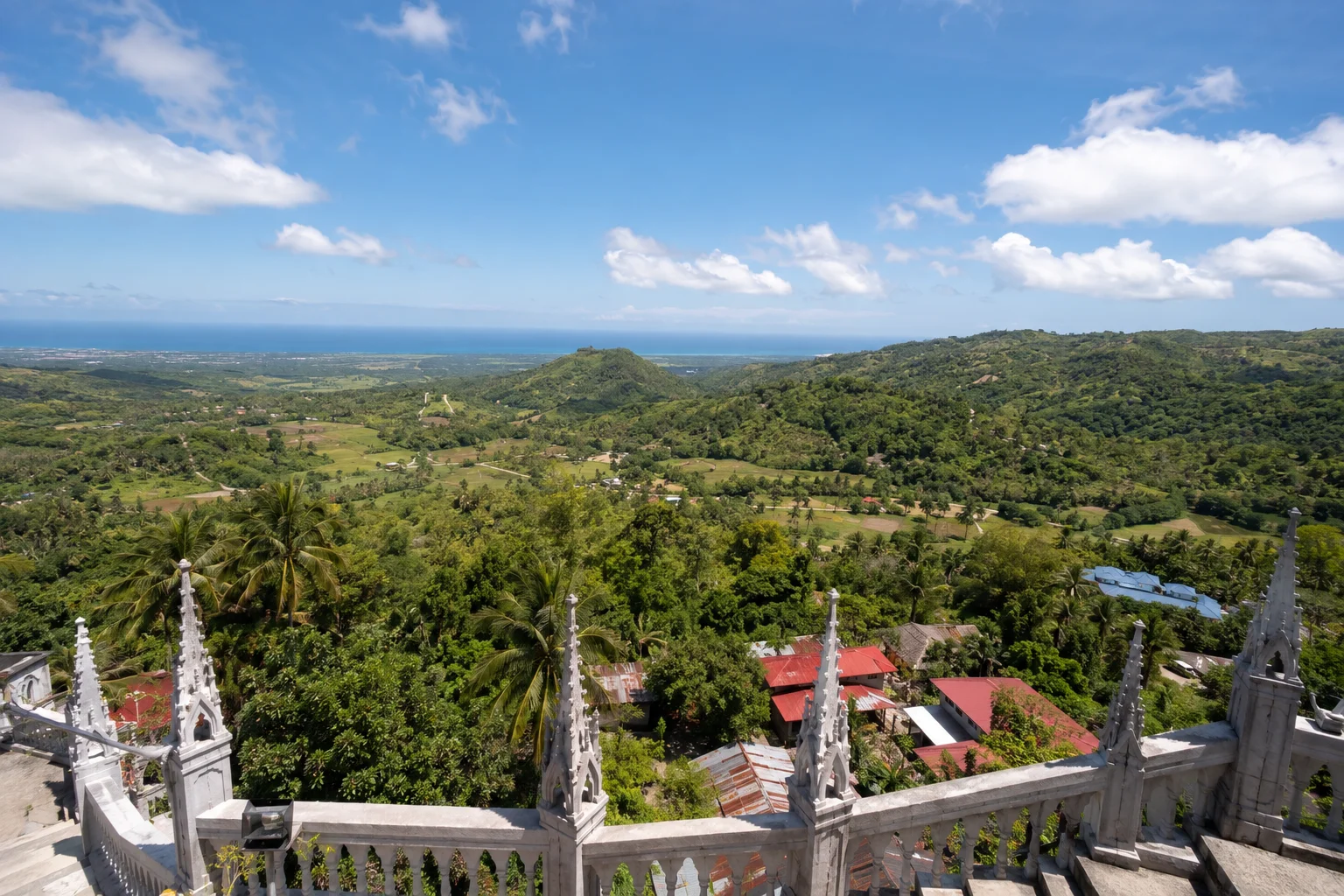
Yes. Most non-Catholic visitors come for the architecture, the hilltop views over southern Cebu, and the chance to see a living devotional tradition up close. Most guides to Simala are written for Filipino Catholic pilgrims and skip this question, but international travelers visit regularly. You don’t need to be religious to find the building remarkable or to be moved by the wall of gratitude letters. The only requirement is the one that applies at any active place of worship: dress modestly, keep your voice down, and be mindful during mass.
☕ Where Can You Eat Near Simala Shrine?
Sibonga is a small town with limited dining, so most visitors bring snacks or eat along the South Coastal Road. The best option is Carcar, about 20 minutes north, which is famous for its chicharon and lechon and makes a natural lunch stop on the way back to Cebu City. Food stalls near the shrine sell drinks and simple snacks, but don’t count on a full meal there.
🗺️ How Do You Combine Simala with a South Cebu Day Trip?
Simala sits on the same southbound route as several of Cebu’s biggest attractions, so it’s best treated as one stop in a longer day. A route that works well:
- Early morning: Leave Cebu City by 5 or 6 AM to beat traffic on the south road.
- Mid-morning: Visit Simala Shrine while it’s still quiet.
- Late morning: Continue south to Osmeña Peak in Dalaguete for a short hike and panoramic views.
- Afternoon: Return north through Carcar for a lechon and chicharon stop.
If you’re staying overnight in the south, swap Osmeña Peak for Oslob instead. Book the Oslob Whale Shark Watching Join-In Day Tour (listed from about US$46) for the next morning, then spend the afternoon on Sumilon Island’s white sandbar with a Bluewater Sumilon Island Resort day pass (listed from about US$33).
🏨 Where Should You Stay Before Visiting Simala?
Stay in central Cebu City the night before, since most Simala tours and buses leave from there early in the morning. These three options cover different budgets:
- Red Planet Cebu (from about US$31/night): simple, clean budget rooms near Ayala Center, fine for an early start.
- Bayfront Hotel Cebu, Capitol Site (from about US$44/night): central mid-range base with easy access to the south road.
- Marco Polo Plaza Cebu (from about US$53/night): a hillside hotel with city views if you want more comfort between day trips.
Prices are Klook’s listed starting rates and change by date; check the latest rate before booking.
✅ Simala Shrine Tips Before You Go
- Wear clothing that covers your shoulders and knees, or pack a scarf and long skirt or pants.
- Arrive on a weekday morning for the quietest visit.
- Bring small bills for candles, souvenirs, and the tricycle up the hill.
- Bring water, sunscreen, and an umbrella; much of the complex is outdoors.
- Don’t take photos during mass or of people praying.
- Plan your ride back before you arrive, especially if you came by Grab or taxi.
❓ Frequently Asked Questions About Simala Shrine
How much is the entrance fee at Simala Shrine?
Simala Shrine is free to enter. There is no admission fee; candles, prayer letters, and religious items are optional purchases inside and around the complex.
What is the mass schedule at Simala Shrine?
Mass is held at 12 noon Monday to Friday, 10:30 AM on Saturday, and 12 noon and 3:30 PM on Sunday. On the 13th of every month, masses are held at 10:30 AM and 3:30 PM for the shrine’s anniversary. Schedules can change on holy days.
How far is Simala Shrine from Cebu City?
Simala Shrine is about 55 to 60 km south of Cebu City in Barangay Lindogon, Sibonga. The drive takes 2 to 2.5 hours depending on traffic, and up to 3 hours by bus.
How do you get to Simala Shrine by bus?
Take a Ceres bus or van bound for Sibonga or Argao from the Cebu South Bus Terminal, ask to be dropped at the Simala junction, then ride a tricycle or habal-habal up the hill to the shrine entrance.
Is there a tour to Simala Shrine from Cebu City?
Yes. Private day tours from Cebu City include Simala Shrine with hotel transfers, often combined with Magellan’s Cross and the Temple of Leah. Combo tours also pair Simala with Oslob whale shark watching and Tumalog Falls in one day.
Can you visit Simala Shrine and Oslob in one day?
Yes. Simala and Oslob are on the same south Cebu route. Leave Cebu City very early, see the whale sharks in the morning when viewing happens, and stop at Simala on the way back north.
What is the dress code at Simala Shrine?
Shoulders and knees must be covered, so sleeveless tops, shorts, and short skirts are not allowed. Shawls and long skirts are available near the entrance for visitors who arrive underdressed.
How long should you spend at Simala Shrine?
Plan 1.5 to 2 hours at the shrine itself, or longer if you attend mass. Including travel from Cebu City, a Simala-only trip takes about 6 hours.
Is Simala Shrine worth visiting if you’re not Catholic?
Yes. Simala Shrine is one of the most architecturally striking buildings in the Philippines, with castle-like turrets, stained glass, and hand-painted ceilings. Non-Catholic visitors go for the architecture, the hilltop views, and to observe a living devotional tradition, while following the dress code and quiet-respect rules.
Written by Giovanni Carlo Bagayas
Gio is a Filipino travel writer born in Cebu City and raised between Cebu and Dumaguete. He covers the Philippines’ islands, cities, food, and culture on Best Philippines Travel Guide and YouTube. Read more about Gio