
3-Day Siquijor Itinerary: The Perfect Island Trip for First-Timers
Cambugahay Falls, Paliton Beach, the enchanted Balete Tree, cliff diving at Salagdoong — your complete day-by-day plan for the most magical island in the Philippines.
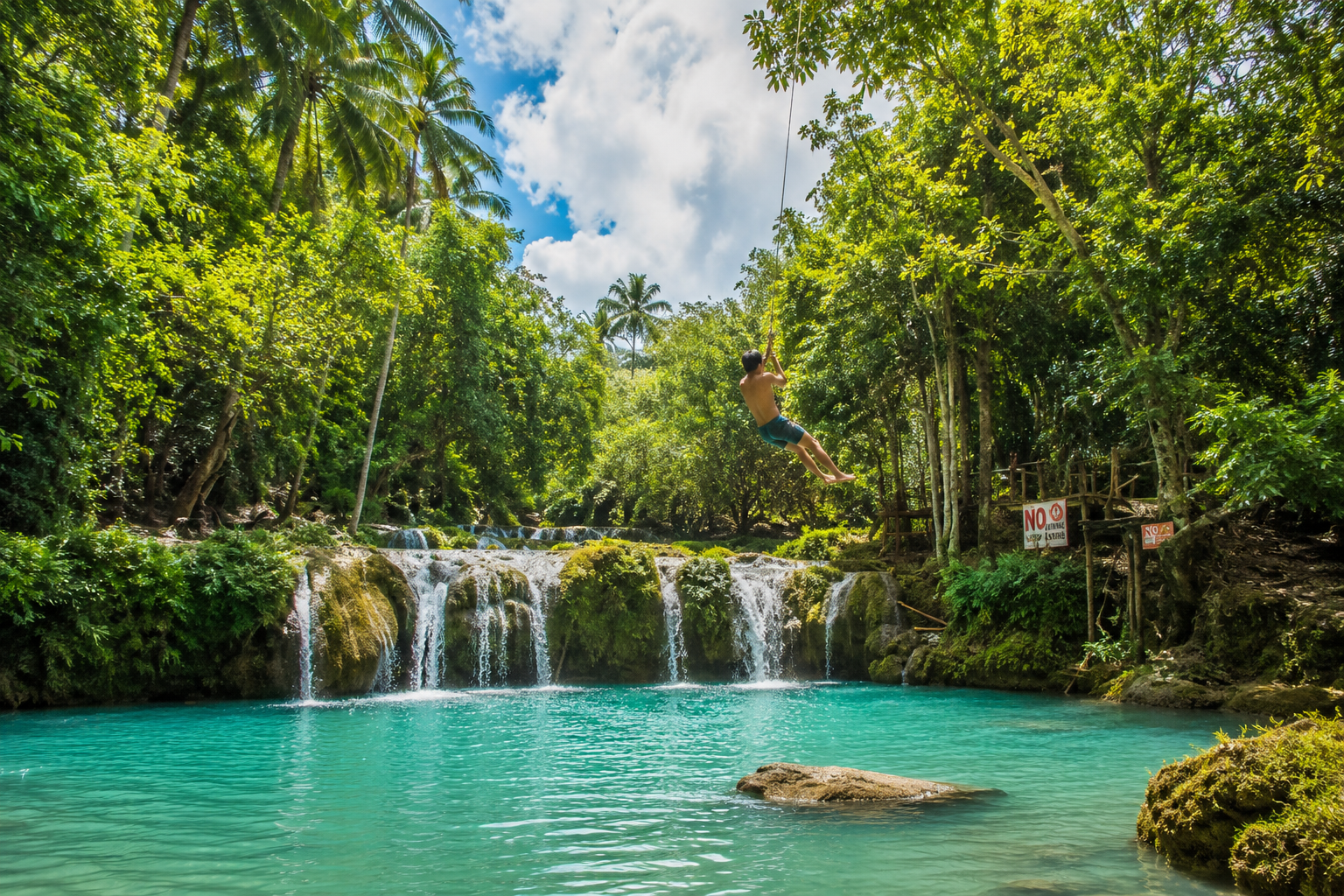
3 days in Siquijor is the perfect amount of time for first-time visitors. Day 1 covers the north — Paliton Beach and Tubod Marine Sanctuary. Day 2 is the highlight reel — Cambugahay Falls, the Enchanted Balete Tree, and Lazi Church. Day 3 takes you around the south and east — Salagdoong Beach, Lugnason Falls, and a sunset send-off at San Juan. Base yourself in San Juan and rent a scooter (₱300–₱500/day) for maximum freedom.
Before You Go: What to Know About Siquijor
Siquijor is a small island in the Central Visayas region of the Philippines, located just 45 minutes by fast ferry from Dumaguete. At only 343 square kilometers, it can be circumnavigated in a single day — but don’t be fooled by the size. This island packs in cascading waterfalls, pristine white-sand beaches, 400-year-old trees, Spanish colonial churches, marine sanctuaries, and a centuries-old mystical reputation that makes it unlike any other island in the archipelago.
For international visitors, Siquijor is still genuinely off the beaten path compared to Boracay or Palawan. The crowds are smaller, the prices are lower, and the experience is more authentic. Three days here is enough to see the highlights at a relaxed pace — though many visitors wish they’d stayed longer.
The dry season runs from November to May. February to April is peak — perfect weather, calm seas, and all waterfalls flowing. Avoid June to October when typhoons are possible and some waterfalls like Lugnason can dry up or flood.
How to Get to Siquijor
Siquijor has no commercial airport, so all visitors arrive by ferry. The most common and convenient gateway is Dumaguete City in Negros Oriental.
| From | Ferry operator | Travel time | Approx. fare |
|---|---|---|---|
| Dumaguete (most common) | Lite Shipping, Montenegro | 45 min – 1 hr | ₱200–₱280 |
| Cebu City | Oceanjet, Supercat | 3.5–4 hrs | ₱700–₱1,200 |
| Tagbilaran, Bohol | Lite Shipping | 2–2.5 hrs | ₱500–₱700 |
| Plaridel, Mindanao | Lite Shipping | 1.5 hrs | ₱250–₱350 |
The Dumaguete–Siquijor route is the most popular and has the most departures (roughly every 1–2 hours from 6 AM to 5 PM). Ferries arrive at Siquijor port in the town proper. From there, scooter rental shops are right at the pier — grab your wheels immediately.

Getting Around Siquijor
Siquijor has one main ring road that circles the entire island — it is well-paved, scenic, and almost traffic-free. This makes it one of the best islands in the Philippines for self-guided exploration.
Siquijor has arguably the best roads in the Philippines for beginner scooter riders. Traffic is light, the road is smooth, and the ring road is impossible to get lost on. If you’ve ever wanted to try riding a scooter, this is the place to do it. Always wear a helmet — it’s required by law and smart practice.
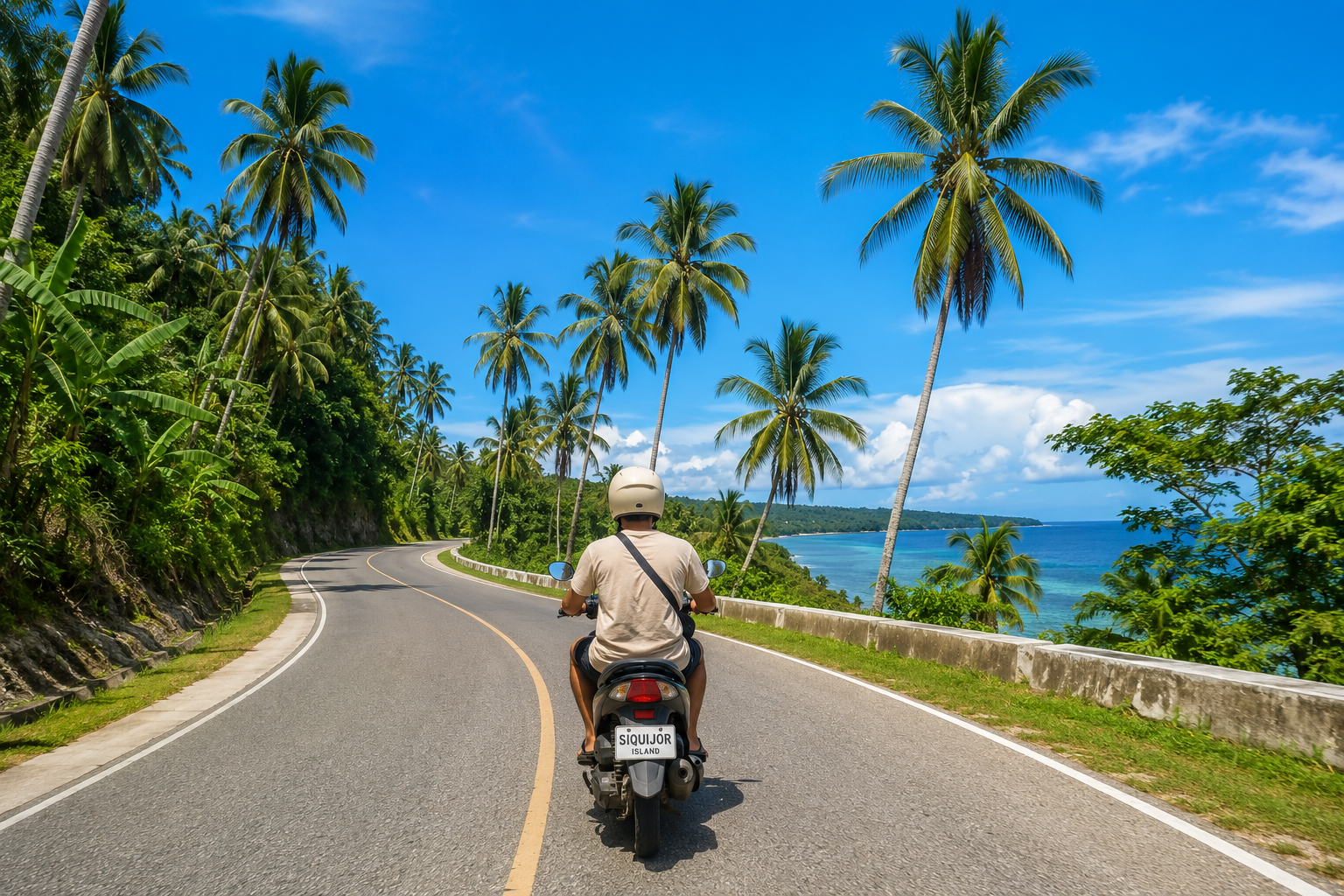
Your first day is all about easing into the island rhythm. Don’t rush. Siquijor rewards the slow traveler. Start early to beat the crowds at Paliton, spend the afternoon underwater at Tubod, and end the day watching the sun sink behind the mountains from the San Juan shoreline.
Start your Siquijor trip the right way — with fresh torta from a roadside bakery near the town proper. The golden sponge cake leavened with tuba (coconut wine) is the island’s signature delicacy and costs ₱10–₱25 per piece. Pair it with a strong cup of local barako coffee. Bakeries open before dawn and sell out by mid-morning, so 7 AM is perfect timing.
Paliton Beach in San Juan is Siquijor’s most photographed stretch of sand — white, powdery, fringed with coconut palms, and facing a spectacular sunset horizon. Arriving early (before 9 AM) means you may have it almost entirely to yourself. The water is calm and clear, perfect for a morning swim. By late morning tour groups arrive, so early arrival is key. No entrance fee.

A short ride from Paliton, Tubod Marine Sanctuary is one of the best beginner snorkelling spots in Siquijor. The protected reef is home to sea turtles, parrotfish, clownfish, and a dense, healthy coral garden. Entrance is ₱50–₱100 and snorkel gear can be rented on site for around ₱100. The turtles are almost guaranteed — they feed near the surface most mornings.

Head back to San Juan for lunch at one of the beachside restaurants along the strip. Fresh grilled fish, kinilaw (Filipino ceviche), and sutukil (a Visayan dining tradition of grilling, stewing, and eating raw seafood) are all staples here. Budget ₱150–₱300 per person for a full meal with rice and drinks.
A quiet, underrated stop — a small sanctuary in the hills of San Juan where dozens of native butterfly species flutter freely. Takes about 30–45 minutes. Small entrance fee of ₱30–₱50. Great for families or anyone who wants a gentle midday break away from the beach.
Return to Paliton for sunset — this is where it earns its reputation. The beach faces due west, making it one of the best sunset-watching spots in the Visayas. The sky turns orange, then pink, then deep purple behind the silhouetted coconut trees. Get there by 5 PM and stay until it’s dark. Locals bring coconuts and cold San Miguel. Do the same.

Day 2 is the one everyone comes to Siquijor for. Cambugahay Falls alone is worth the entire trip. Combine it with the island’s most iconic cultural and mystical stops — the enchanted Balete Tree, Lazi’s 19th-century stone church — and you have a near-perfect day.
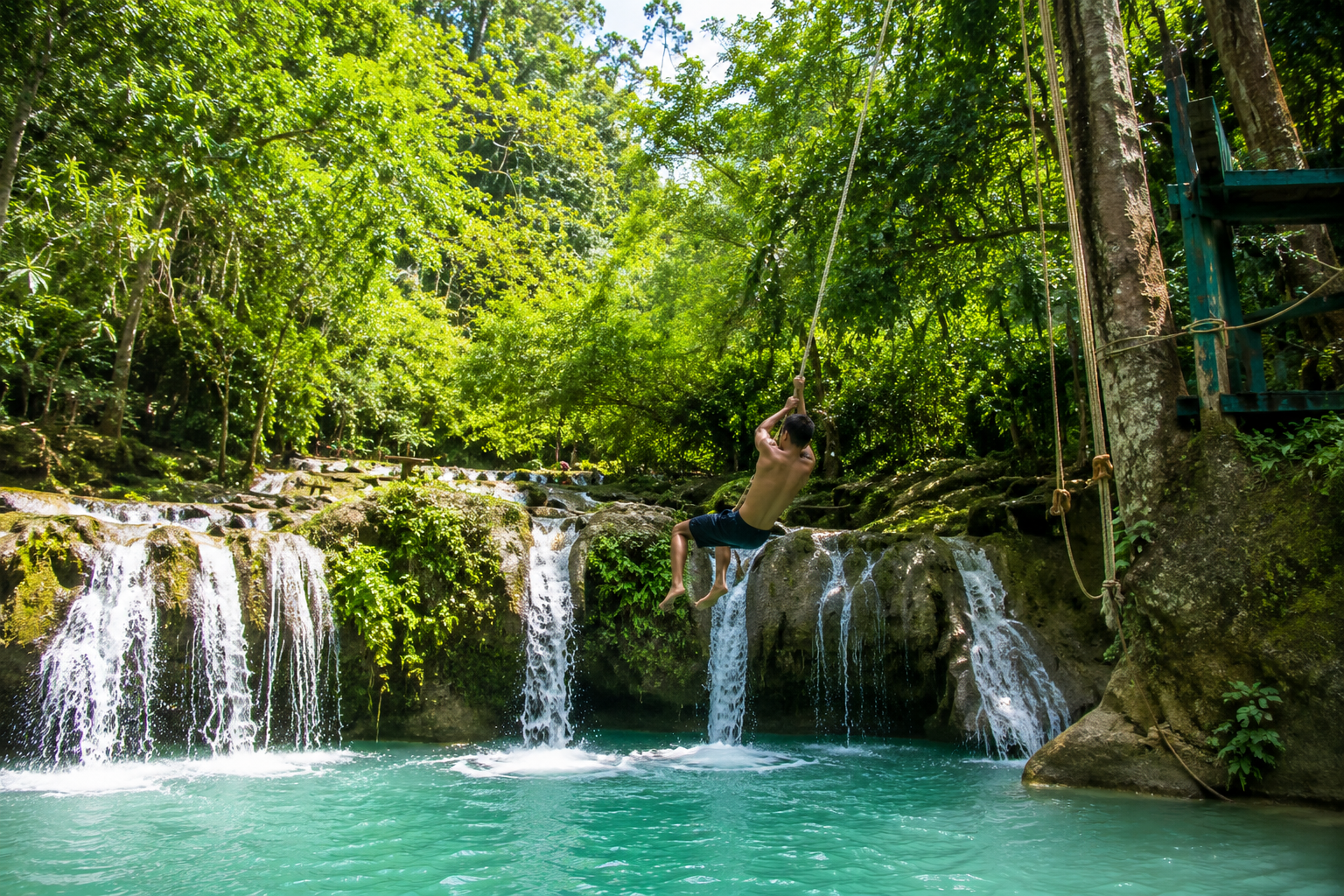
Go first thing in the morning. Seriously. Cambugahay Falls is Siquijor’s most visited attraction and for good reason — three tiers of turquoise cascading pools, rope swings, bamboo rafts, and some of the most photographed water in the Philippines. By 10 AM, tour buses start arriving. By 11 AM it’s crowded. Arriving at 7–7:30 AM means you’ll have the falls nearly to yourself for at least an hour.
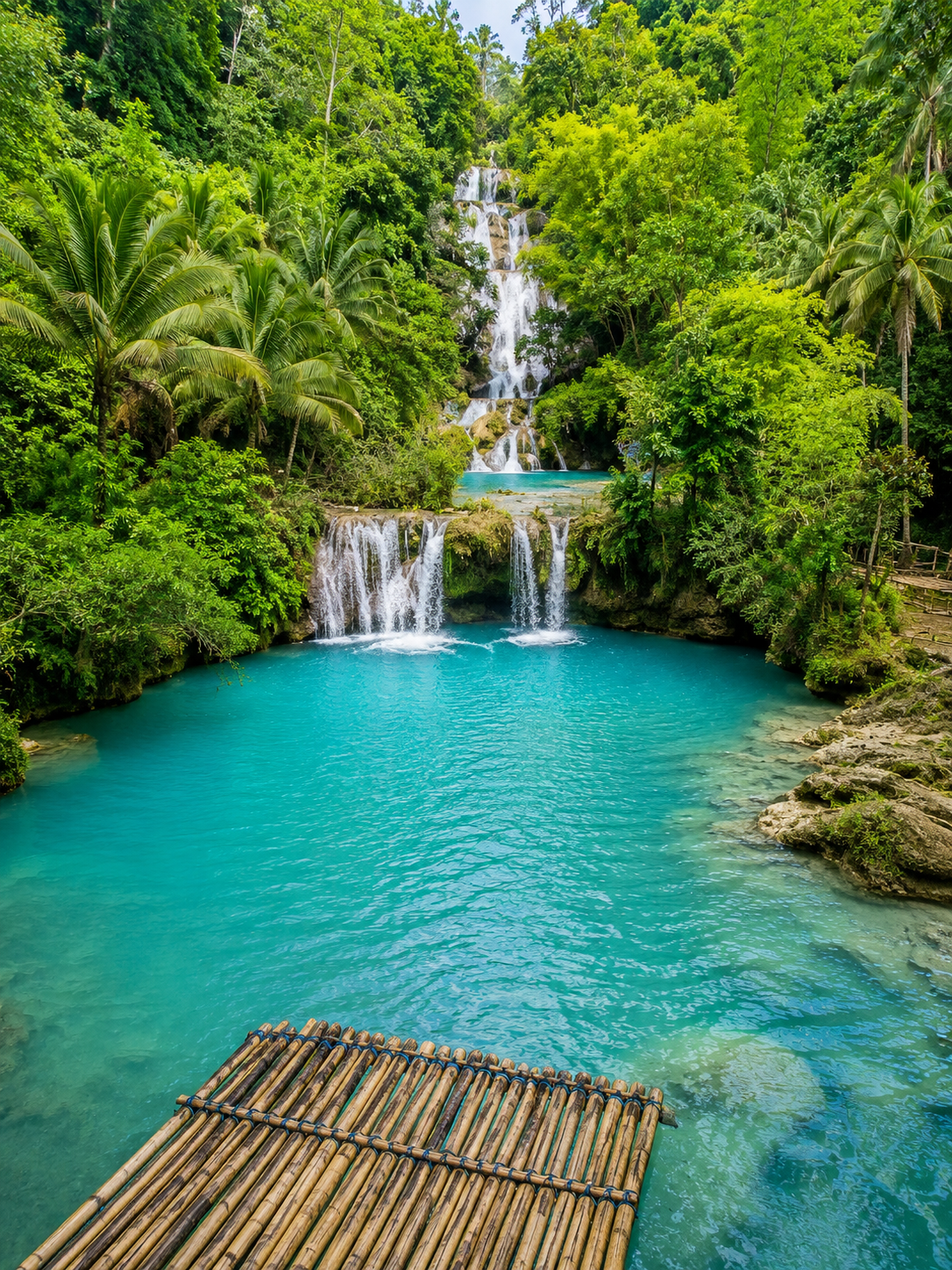
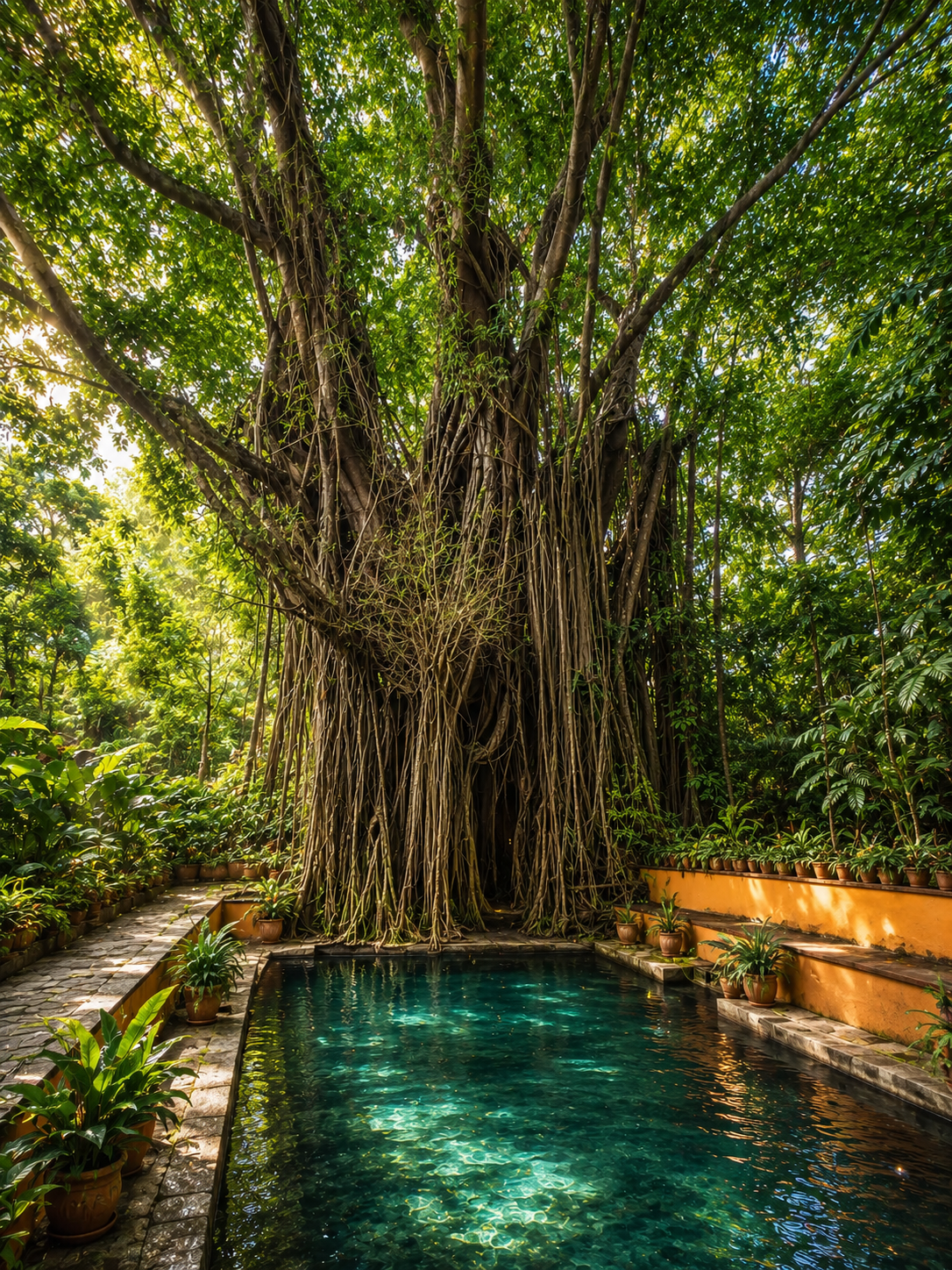
Just 15–20 minutes from Cambugahay, the 400-year-old Balete Tree is one of Siquijor’s most iconic and eerie attractions. Enormous aerial roots cascade to the ground, forming a living curtain around a natural freshwater pool at its base — where fish will nibble the dead skin off your feet in a natural fish spa. Entrance is ₱10. The tree has deep spiritual significance; local shamans still use it for rituals during Holy Week.
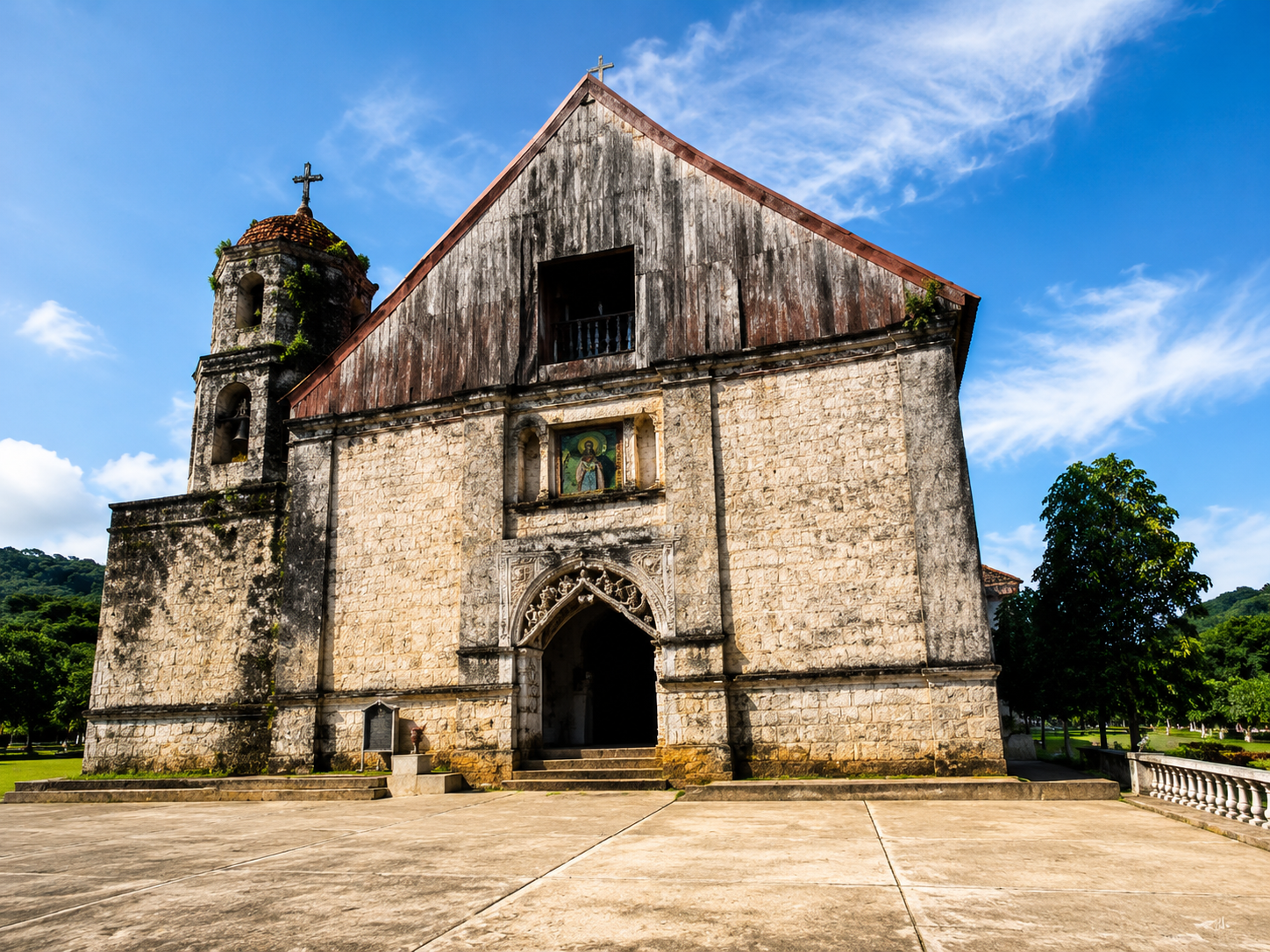
The San Isidro Labrador Parish Church in Lazi is the oldest and largest stone church on Siquijor, completed in 1884. Built from coral stone and hardwood, its thick walls, bell tower, and centuries of weathering give it a profound, atmospheric weight. Next door, the old Lazi Convent functions as a small museum holding colonial-era artifacts, antiques, and religious items. Worth 30–45 minutes.
Lazi has a small selection of local carenderias and restaurants near the church. Try fresh Visayan dishes — pinakbet, sinigang, or grilled fish with garlic rice. Budget ₱120–₱200 per person. Alternatively, pack a picnic from the San Juan market and eat at Lazi beach, which is quiet, local, and completely free of tourists.
Lagaan Falls is one of Siquijor’s most beautiful and least-crowded waterfalls, tucked into the forest near Lazi. The cascade drops dramatically into a deep, clear swimming hole. It requires a short hike (15–20 minutes) through the trees. Entrance fee is small and most visitors skip it entirely — which means you may have it to yourself. Best visited after Cambugahay so you can compare both.
Swing by Siquijor Town proper on your way back. The town square, the old church, and the heritage buildings along the waterfront give a quiet sense of the island’s Spanish colonial past. If you’re curious about Siquijor’s famous faith healers (mananambal), your guesthouse owner or a local guide can arrange a respectful visit — especially during Holy Week when healers gather to prepare their traditional potions.
Bring ₱200 in small bills — ₱50 entrance, ₱50 for the rope swing (unlimited jumps, worth every peso), ₱50 for a bamboo raft ride, and a little extra for the locals who will offer to take your photos from above. The lowest pool is the most photogenic. The middle pool has the best rope swing. The upper pool is quietest.
Your last full day takes you to the east side of the island — the wilder, quieter, less-touristed half. Salagdoong Beach is the main event: a stunning government-run beach with cliff diving platforms that will test your nerve. End the day with pasalubong shopping and a final sunset meal on San Juan’s beachfront.
Mount Bandilaan is the highest point on Siquijor and the island’s national park. An early morning drive to the summit rewards you with panoramic views of the entire island — and on clear days, glimpses of Negros, Cebu, and Bohol across the sea. The road up is paved but narrow. Entrance to the national park is minimal. Skip this if you’d rather sleep in and arrive at Salagdoong early instead.
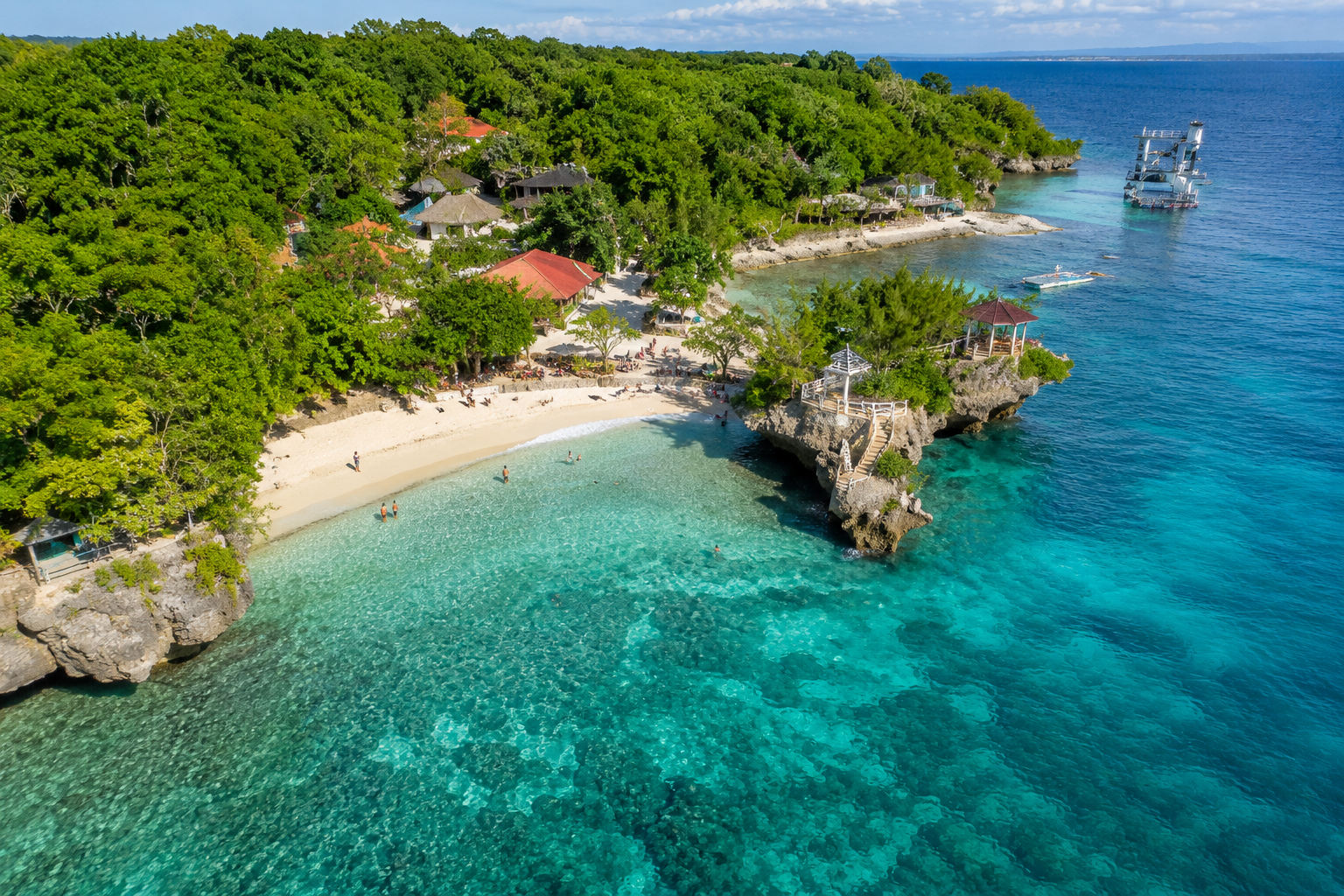
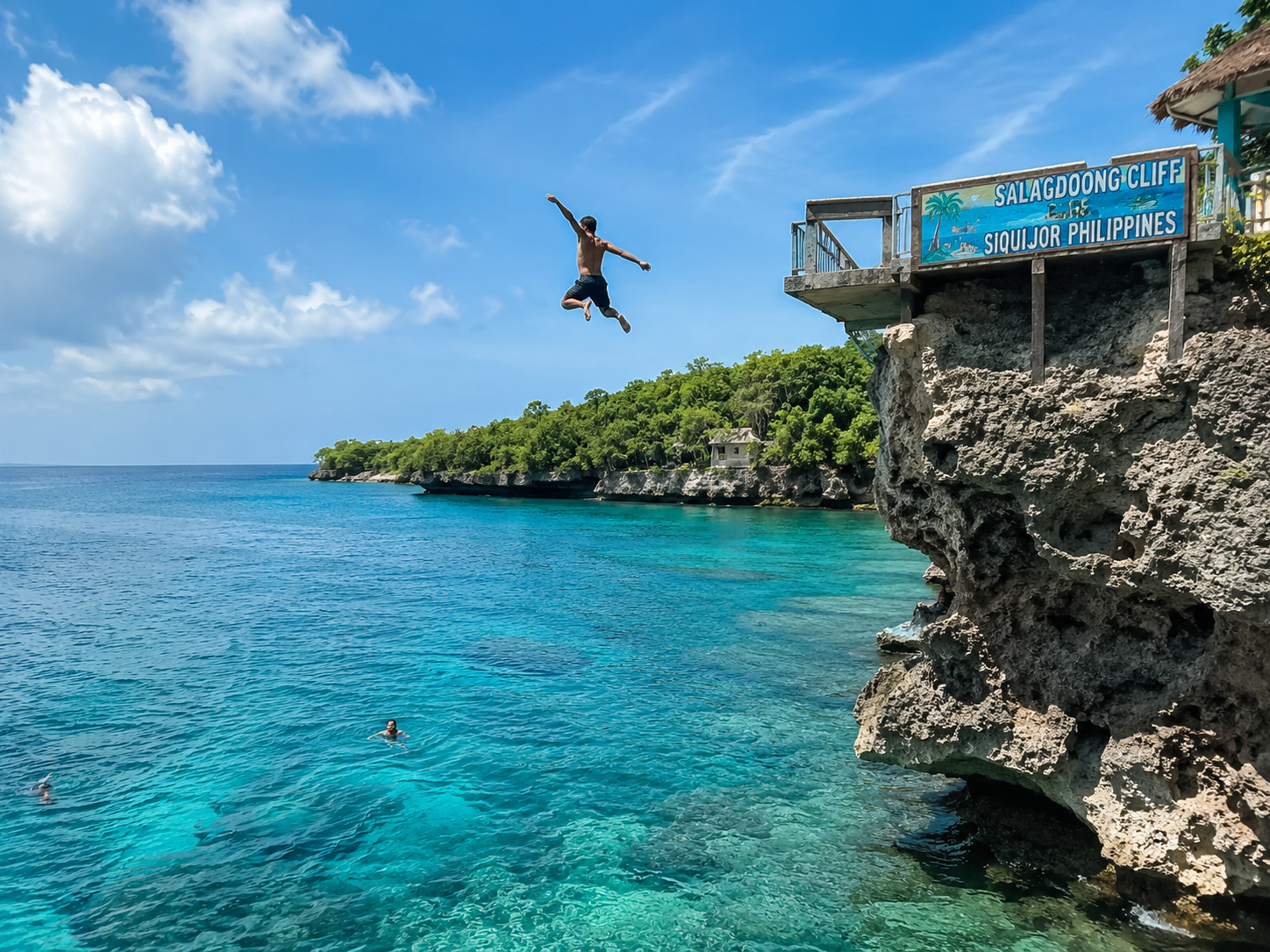
Salagdoong Beach on the east coast is Siquijor’s most dramatic beach — two wooden diving platforms rise above a stunning turquoise cove enclosed by pine trees and volcanic rock. The lower platform is about 5 meters, the upper around 8. The water is deep, clear, and inviting. Even if you skip the cliff diving, the beach itself is beautiful, far less crowded than Paliton, and has clean facilities. Entrance is ₱50.
Lugnason Falls is a spectacular waterfall near the south coast — tall, powerful, and set in a lush forested gorge. The catch: it only flows strongly during and just after the rainy season. In the dry season (February to April) it can be reduced to a trickle. If you’re visiting in the wetter months (October to January), this is unmissable. If not, you can skip it and spend more time at Salagdoong.
Head back along the ring road toward San Juan. Stop at any of the small beachside restaurants you pass — the east and south coasts have a handful of local spots with fresh catch, simple grilled food, and cold drinks. No rush. This is your last full afternoon on the island, so eat slowly and enjoy the view.
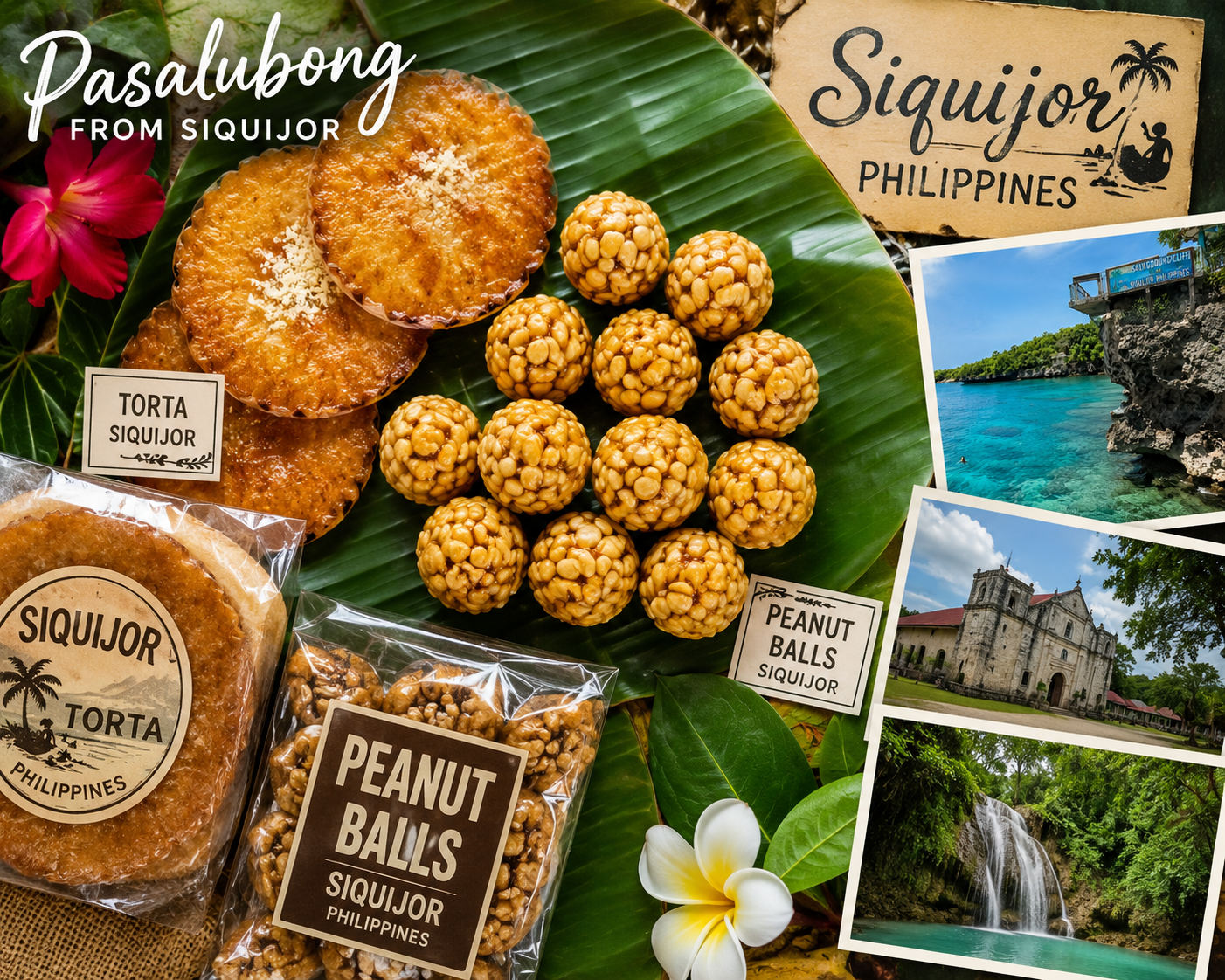
Your last afternoon is for pasalubong. Head to the Siquijor town market or the bakeries near the town proper. Pick up: torta Siquijor (₱10–₱25/piece), peanut balls in chupa-chupa (sugar-coated, ₱5–₱10/piece), banana crackers, and tuba-based vinegar if you can find it. All pack well for travel and make genuinely local gifts that you won’t find anywhere else.
End your Siquijor trip the way it deserves — at a beachfront table in San Juan, watching the sun drop behind the horizon with cold Pale Pilsen in hand and fresh seafood in front of you. Several restaurants along the San Juan strip are open until late and offer front-row sunset views. Budget ₱300–₱500 for a proper final dinner. Take your time. You’ll be back.
Where to Stay in Siquijor
San Juan is the best base for all visitors. It sits on the northwest coast, close to Paliton Beach, with good road access to every other attraction. Most accommodation is concentrated here, ranging from basic beach huts to comfortable mid-range resorts.
Siquijor accommodation books up fast during peak season (February–April) and Holy Week. Book at least 4–6 weeks ahead for mid-range and above. Budget guesthouses are usually walk-in friendly outside peak season. Most properties allow scooter rental — ask your host to arrange it so you avoid deposits.
3-Day Siquijor Budget Breakdown
Siquijor is one of the most affordable island destinations in the Philippines. Here’s a realistic breakdown for a 3-day trip per person:
| Expense | Budget traveler | Mid-range |
|---|---|---|
| Accommodation (2 nights) | ₱1,000–₱2,400 | ₱3,600–₱8,000 |
| Scooter rental (3 days) | ₱900–₱1,500 | ₱1,200–₱1,500 |
| Food & drinks (all meals) | ₱1,200–₱1,800 | ₱2,500–₱4,000 |
| Entrance fees (all attractions) | ₱300–₱500 | ₱500–₱700 |
| Activities (rope swings, snorkel gear, etc.) | ₱200–₱500 | ₱500–₱1,500 |
| Pasalubong & extras | ₱500–₱1,000 | ₱1,000–₱3,000 |
| Ferry to/from Dumaguete | ₱400–₱560 | ₱400–₱560 |
| TOTAL (per person) | ~₱4,500–₱8,000 | ~₱9,700–₱19,000 |
For international visitors, the budget range translates to roughly $80–$145 USD for 3 days — excluding flights to Dumaguete. By any measure, exceptional value for an island this beautiful.
What to Eat in Siquijor
Siquijor’s food scene is small but genuine. You’re not here for fine dining — you’re here for fresh seafood, local delicacies, and the kind of home cooking that only exists on small islands.
🏆 Must-eat Siquijor foods
- Torta Siquijor — golden sponge cake with tuba, the island’s signature delicacy. ₱10–₱25/piece at morning bakeries.
- Peanut balls (chupa-chupa) — sugar-coated peanut clusters, crispy and addictive. ₱5–₱10/piece at market stalls.
- Kinilaw — fresh raw fish cured in vinegar, coconut milk, ginger, and chili. Best eaten by the sea at lunchtime.
- Sutukil — the Visayan tradition of choosing live seafood and having it grilled (su), stewed (tu), or eaten raw/cured (kil). San Juan beachfront restaurants do this well.
- Grilled tuna belly — the Visayas is tuna country. Order it with garlic rice and calamansi for the definitive local meal.
- Buko juice — cold coconut water straight from a young coconut. ₱30–₱50 from roadside vendors. Drink it everywhere.
Essential Tips for Visiting Siquijor
Bring enough cash before arriving in Siquijor. There are a handful of ATMs in the town proper but they run out of cash frequently, especially during peak season. Most restaurants, guesthouses, and all market vendors are cash-only. Withdraw in Dumaguete before taking the ferry.
Mobile signal in Siquijor is decent in San Juan and town proper but patchy in remote areas. Smart and Globe both have coverage. Buy a local SIM in Dumaguete or Manila before arriving — a 7-day data package costs ₱100–₱200. WiFi at guesthouses is available but slow.
Siquijor’s marine sanctuaries (Tubod, Tulapos) are protected by local law. Do not touch or step on coral, do not feed the fish, and do not use sunscreen that is not reef-safe before entering the water. These ecosystems are what keep the island’s underwater world thriving — treat them accordingly.
Siquijor’s reputation as the “island of witches” is rooted in centuries of indigenous healing traditions, not black magic or danger. Local healers (mananambal) practice herbal medicine, not curses. Visitors are welcome and safe. If you’re curious about the healing culture, approach it with genuine respect — not as a tourist attraction to mock or exploit.