14 Best Dumaguete Delicacies: Local Food & Pasalubong Guide (2026)

By Giovanni Carlo Bagayas — Dumaguete local & travel writer  |  Updated: June 2026

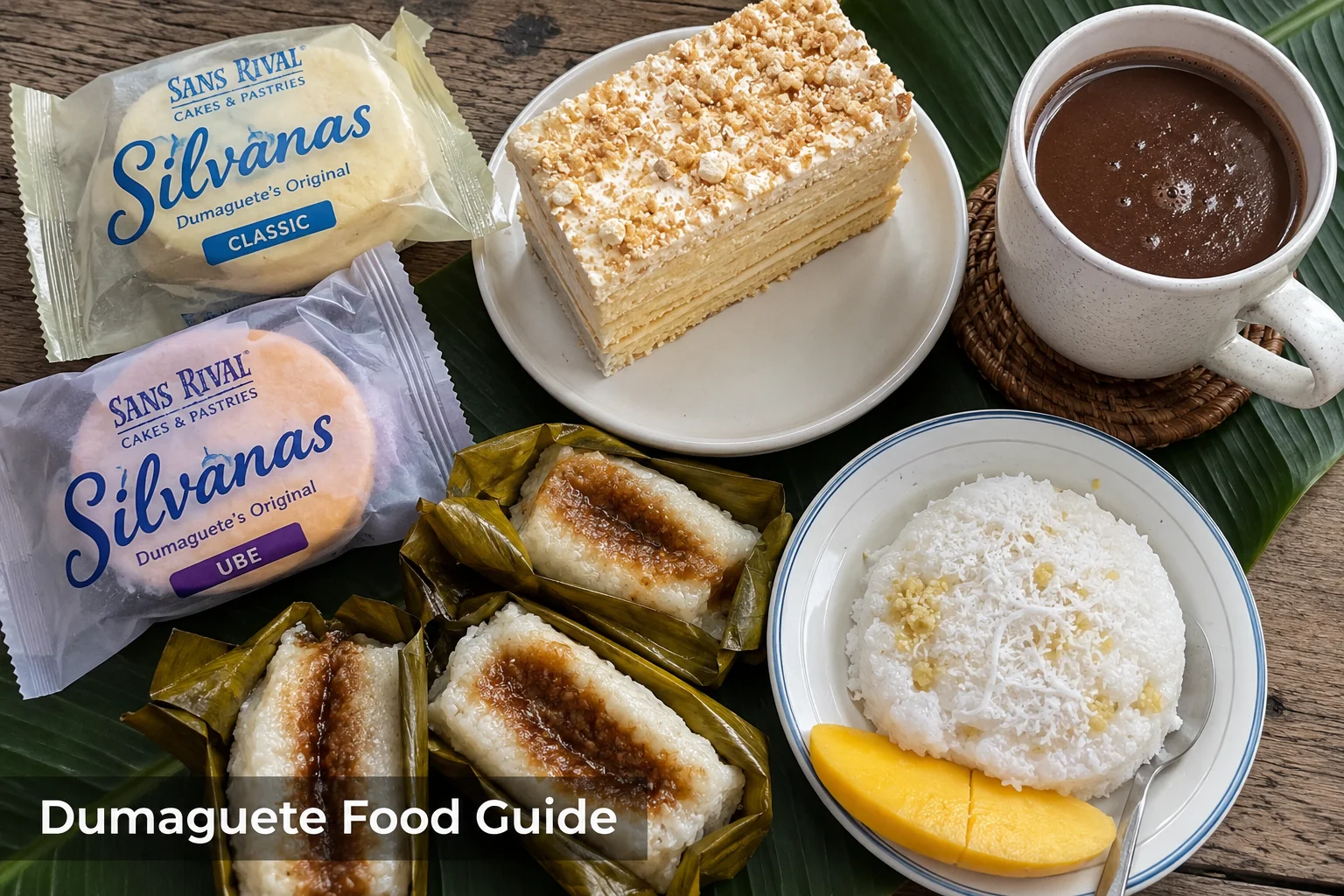
A spread of the best Dumaguete delicacies including silvanas, sans rival cake, budbud kabog, and puto maya — top local specialties and food gifts (pasalubong) from Dumaguete City, Philippines

The best Dumaguete delicacies — silvanas, sans rival, budbud kabog, puto maya, and more. Photo: Best Philippines Travel Guide

Quick answer

The best Dumaguete delicacies are silvanas (frozen cashew meringue cookie sandwiches), sans rival cake, budbud kabog (millet suman), budbud tres marias, puto maya, brazo de Mercedes, and street foods like tempura, kwek-kwek, and Bading’s halo-halo. Buy silvanas and sans rival at Sans Rival Cakes & Pastries on Rizal Boulevard; get budbud kabog at the Dumaguete Public Market in the morning.

I grew up in Dumaguete City, and I can tell you — no other city in the Visayas comes close when it comes to sweets. Dumaguete’s dessert culture runs deep, rooted in Spanish colonial traditions, native sticky-rice recipes, and generations of pastry-makers who turned this sleepy university town into one of the Philippines’ best food destinations.

In this guide I’ll walk you through every Dumaguete delicacy worth trying, with exact prices, the best places to buy them, and which ones travel well as pasalubong. Whether you’re visiting for a weekend or passing through on a ferry connection, this list will make sure you don’t miss a bite.

Dumaguete delicacies at a glance

DelicacyTypeBest place to buyPriceGood pasalubong?
SilvanasFrozen cookie sandwichSans Rival Cakes & Pastries₱15–₱25 each✅ Yes — pack frozen
Sans rival cakeLayered cashew meringue cakeSans Rival Cakes & Pastries₱350–₱600✅ Yes — refrigerated
Budbud kabogMillet sumanPublic market₱10–₱15 each✅ Yes — 2–3 days
Brazo de MercedesRolled custard cakeSans Rival, local bakeries₱280–₱450✅ Yes — boxed
Budbud tres mariasChocolate-ube sticky ricePublic market, local stalls₱20–₱30⚠️ Eat same day
Puto mayaSteamed sticky rice cakeSidewalk stalls — mornings₱10 each⚠️ Eat same day
Tempura (street style)Deep-fried fish cake on stickBoulevard sidewalk stalls₱10–₱15❌ Street food only
Kwek-kwekBattered quail eggsBoulevard night market₱10–₱15❌ Street food only
Bading’s halo-haloShaved ice dessertBading’s restaurant₱50–₱80❌ Dine-in only
Neva’s PizzaLocal specialty pizzaNeva’s Pizza restaurant₱150–₱350❌ Dine-in only
Silvanas ice creamIce cream on silvanas cookieSans Rival Cakes & Pastries₱60–₱80✅ Insulated bag
Bod-bodSticky rice in banana leafPublic market₱10–₱15⚠️ 1–2 days
Tsokolate (tablea)Native hot chocolate from cacao tabletsPainitan stalls, public market₱5–₱10❌ Drink on-site
Painitan breakfast setMarket breakfast — puto + sikwate + peanutsDumaguete Public Market painitan₱20 (10-5-5)❌ Market only, morning
Chicken inato (Jo’s)Charcoal-grilled marinated chickenJo’s Chicken Inato, Silliman Ave₱99–₱150/quarter❌ Dine-in only
BinakhawRaw fish kinilaw with dungon fruitLab-as Seafood Restaurant₱150–₱250❌ Dine-in only
Baked scallopsFresh scallops, garlic butter, cheeseHayahay Treehouse Bar₱200–₱350❌ Dine-in only

1. Silvanas — Dumaguete’s most famous delicacy

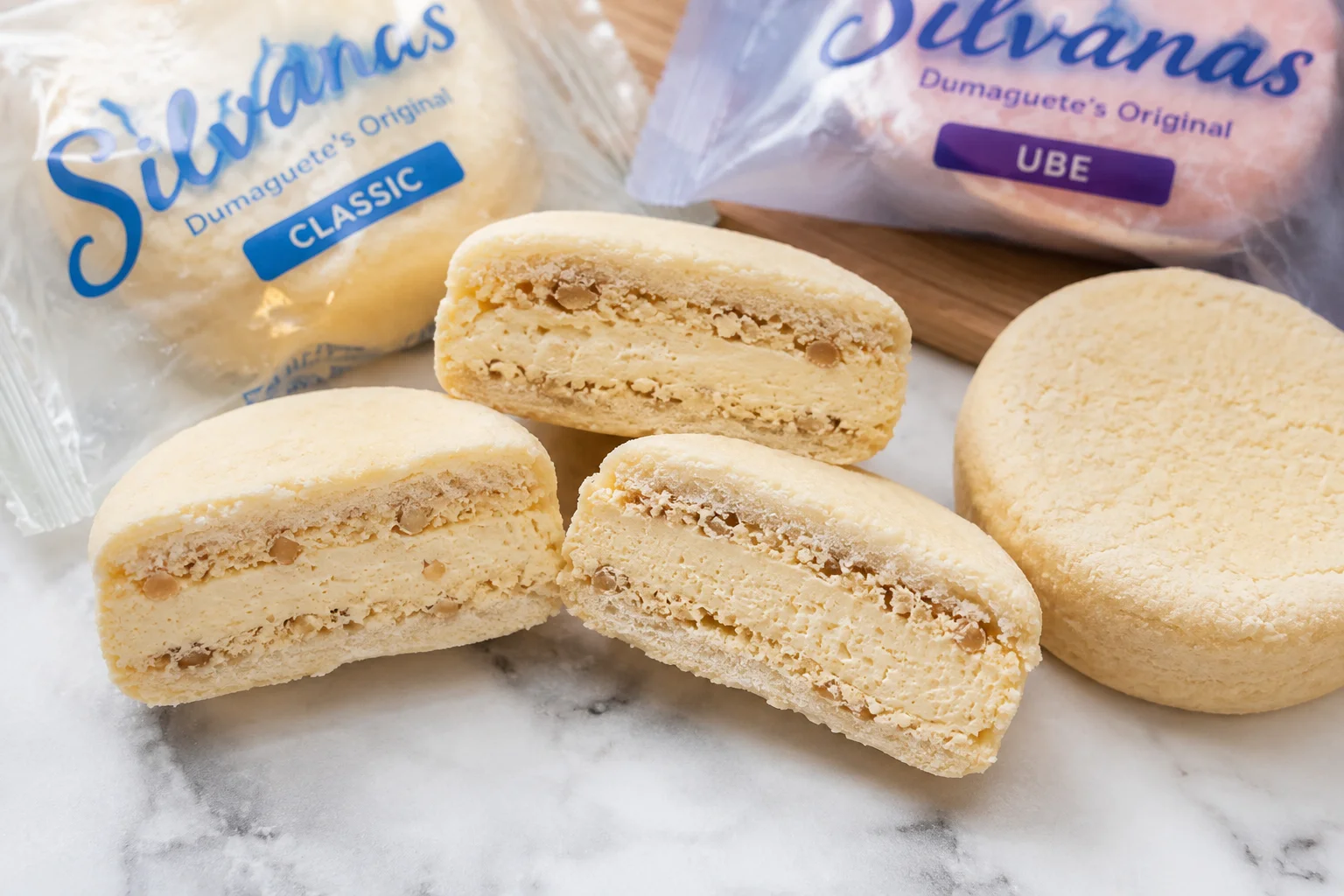
Silvanas cut in half showing the cashew meringue wafer layers and French buttercream filling — Dumaguete's most iconic food gift (pasalubong), sold at Sans Rival Cakes and Pastries on Rizal Boulevard

Cut open, a silvana reveals its layers: crispy cashew meringue wafer, creamy French buttercream, and a fine cookie crumb coating. Best eaten straight from the freezer.

Silvanas are the undisputed king of Dumaguete pasalubong. They are frozen cookie sandwiches made with two layers of cashew meringue wafers, filled with French buttercream, and coated in fine cookie crumbs. The texture is a revelation — crisp, creamy, and slightly icy all at once. You eat them straight from the freezer.

What makes Dumaguete silvanas different from silvanas you’ll find in Manila or Cebu is the quality of the cashew meringue. The cashew-to-meringue ratio here is generous, giving them a rich, nutty depth that cheaper versions skip. Sans Rival Cakes & Pastries has been making them this way for decades, and they are still the benchmark.

Where to buy
Sans Rival Cakes & Pastries (Rizal Blvd) · Cang’s Dept Store (Colon St) · Robinson’s Place Dumaguete
Price
₱15–₱25 per piece · ₱250–₱350 per box of 10
Travel tip
Buy insulated cooler bag at the shop — they last 2–3 days with ice
Best for
Pasalubong — the #1 gift to bring home from Dumaguete

2. Sans rival cake

Sans rival is Dumaguete’s signature layered cake and the dessert the city is most proud of. It is made from multiple layers of cashew dacquoise (meringue beaten with ground cashews) sandwiched with French buttercream and studded with whole roasted cashews on top. The name is French for “without rival” — and in Dumaguete, that claim holds up.

Unlike silvanas, which are handheld and frozen, sans rival is a full cake served by the slice. A single bite delivers the crunch of the meringue, the nuttiness of the cashews, and the richness of the buttercream all at once. It is sweet, but the cashews keep it grounded. Order a slice at Sans Rival Cakes & Pastries and pair it with their barako coffee.

Where to buy
Sans Rival Cakes & Pastries, Rizal Boulevard
Price
₱350–₱600 whole cake (serves 8–10) · ₱80–₱100 per slice
Travel tip
Lasts 3–5 days refrigerated · comes boxed for travel
Silvanas vs sans rival
Same flavors, different form — silvanas = handheld frozen; sans rival = full cake by the slice

3. Budbud kabog — the unique Dumaguete suman

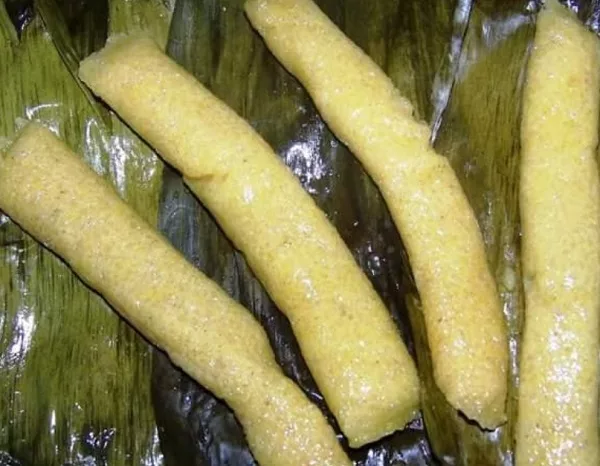
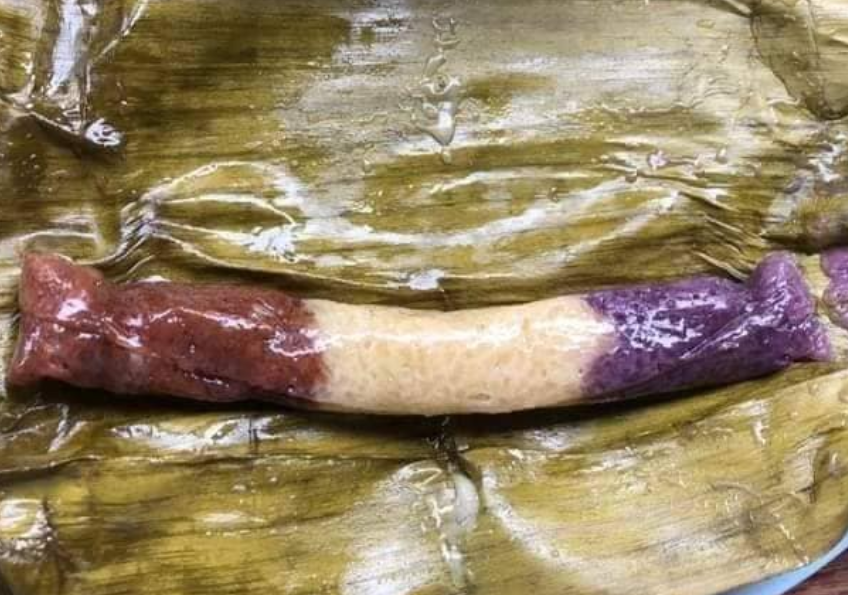
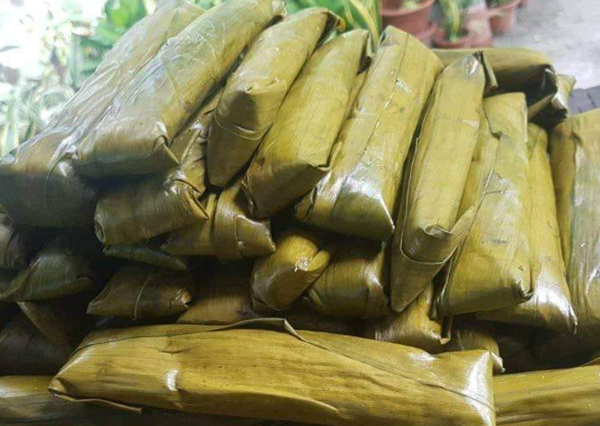
Budbud kabog — millet suman wrapped in banana leaf, a unique Dumaguete and Negros Oriental delicacy

Budbud kabog is made from millet (kabog) — not glutinous rice — giving it a distinctive nutty texture.

Budbud kabog Dumaguete delicacy — millet sticky rice cake cooked in coconut milk wrapped in banana leaves

Budbud kabog vendors set up at the Dumaguete Public Market every morning.

Of all the delicacies on this list, budbud kabog is the most uniquely Dumaguete. Unlike regular suman, which uses glutinous rice, budbud kabog is made from kabog — a type of millet seed — cooked in coconut milk and wrapped in banana leaves. The millet gives it a denser, nuttier texture with a delicate bite that regular suman can’t replicate.

I’ve eaten budbud kabog since I was a child growing up here. The best ones come from the public market early in the morning, still warm from cooking. The aroma of coconut milk and toasted grain hits you before you even unwrap the banana leaf. Pair it with a cup of hot tsokolate (native Filipino hot chocolate) — the richness of the chocolate balances the subtle sweetness of the millet perfectly.

Where to buy
Dumaguete City Public Market (mornings only) · Rizal Boulevard sidewalk vendors
Price
₱10–₱15 per piece
Best time
Early morning (6–9 AM) — sells out fast
Pair with
Hot tsokolate · fresh mango slices

4. Budbud tres marias

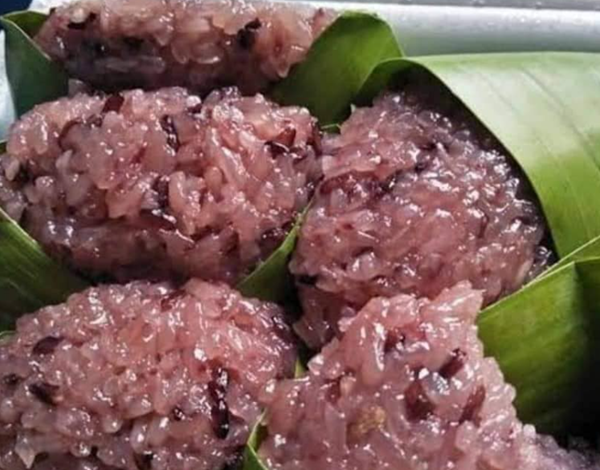
Budbud tres marias — Dumaguete delicacy with sticky rice balls in chocolate and ube sauce

Budbud tres marias — named for its three main elements: rice, chocolate (tablea), and ube.

Budbud tres marias is the more indulgent cousin of budbud kabog. The name translates to “three Marys” in Spanish, referring to its three main components: sticky glutinous rice balls, tablea (unsweetened ground cacao) chocolate sauce, and ube (purple yam). Each spoonful delivers the chew of the rice, the deep bitterness of tablea chocolate, and the earthy sweetness of ube — a combination that shouldn’t work but absolutely does.

It’s typically served warm as a breakfast or afternoon snack, and you’ll find it at the public market and some local carinderias. Unlike budbud kabog, this one doesn’t travel as well — eat it the same day for the best experience.

Where to buy
Dumaguete Public Market · local carinderias
Price
₱20–₱30 per serving
Key ingredients
Glutinous rice · tablea chocolate · ube (purple yam) · coconut milk
Travel tip
Eat same day — not suitable for pasalubong

5. Puto maya

Puto maya — steamed glutinous rice cake, a popular Visayan breakfast delicacy in Dumaguete

Puto maya is Dumaguete’s favorite breakfast — best paired with hot chocolate or fresh ripe mango.

Puto maya is the classic Visayan breakfast delicacy, and Dumaguete does it well. It is made from glutinous rice cooked in coconut milk and ginger, steamed until soft and slightly sticky. The ginger gives it a subtle warmth that separates it from regular puto (plain steamed rice cake). In Dumaguete, puto maya is almost always paired with ripe yellow mangoes or a cup of hot sikwate (native hot chocolate) — the contrast of sweet-savory rice with tropical fruit or rich chocolate is one of those combinations that’s hard to forget.

You’ll find puto maya vendors at the public market and sidewalk stalls around the city, but only in the morning. By 9 or 10 AM, most vendors have sold out. It costs just ₱10 per piece — one of the best value bites in Dumaguete.

Where to buy
Public market · sidewalk stalls (mornings)
Price
₱10 per piece
Best paired with
Ripe mango · hot tsokolate (sikwate)
Best time
6–9 AM — morning only

6. Tsokolate (tablea) — Dumaguete’s native hot chocolate

If you’re visiting from the US, UK, or Australia, tsokolate is not the hot chocolate you know. There is no powder, no Milo, no Swiss Miss. Tsokolate in Dumaguete is made from tablea — small discs of ground, roasted, and compressed cacao beans, grown in the Philippines and processed with minimal sugar. You melt the tablea in hot water, whisk it with a wooden batidor (a hand-held frother) until it’s thick and slightly frothy, and drink it as is. The result is dark, rich, faintly bitter, and deeply chocolatey in a way that commercial hot chocolate cannot replicate.

Growing up in Dumaguete, tsokolate was the morning drink before school. It was always paired with puto maya or budbud kabog from the market — the combination of the slightly sweet, sticky rice cake and the bittersweet chocolate is a flavour memory that every Dumagueteño carries for life. If you’re visiting and you only try one drink in the city, it should be this. Cafe Mamia near the boulevard serves a good version if you can’t make it to the painitan stalls at the market.

What is tablea
Ground roasted cacao tablets — the base ingredient for native Filipino hot chocolate
Where to try
Painitan stalls, Dumaguete Public Market · Cafe Mamia, Rizal Boulevard
Price
₱5–₱10 per cup at the market
Best paired with
Puto maya · budbud kabog · pan de sal

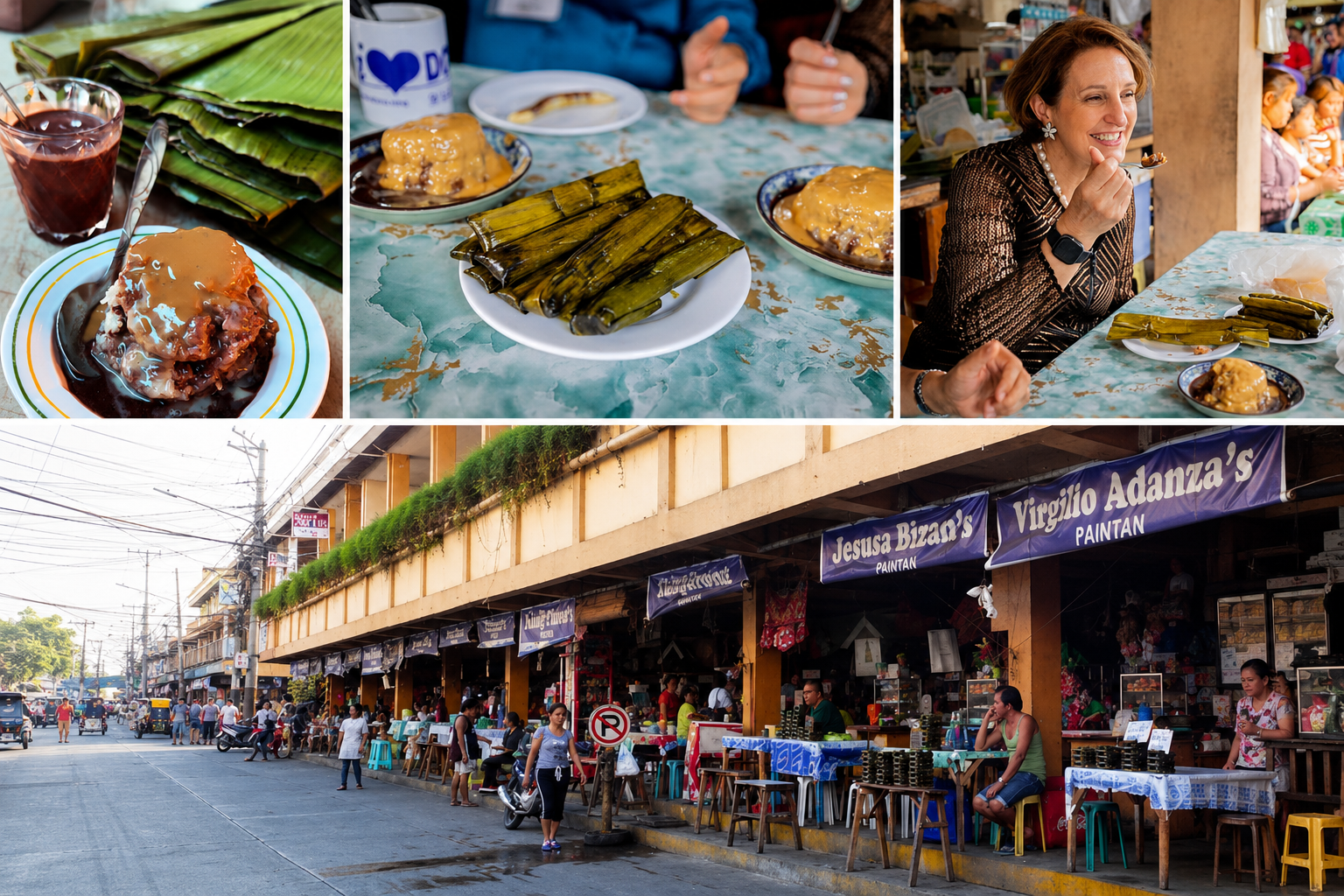
7. Painitan — the real Dumaguete breakfast experience

Painitan is not a dish — it’s a place and a morning ritual. The word comes from the Visayan word init, meaning “heat,” and refers to the row of small breakfast stalls inside or just outside the Dumaguete City Public Market where locals start their day. Painitan stalls open before sunrise and are usually sold out by 9 AM.

Here’s what the experience looks like: you sit on a low wooden bench at a narrow communal table, and for around ₱20 total you get the classic “10-5-5” set — a piece of puto maya (₱10), a small cup of hot tsokolate (₱5), and a handful of roasted peanuts (₱5). Some stalls also serve budbud kabog, bod-bod, and fried eggs alongside garlic fried rice and tinola. The puto is always warm and slightly sticky. The tsokolate is always made fresh from tablea. The peanuts add a crunch and saltiness that pulls everything together.

This is the meal that Dumaguete locals eat every morning before work, before school, and before going to the market. No tourist guide captures it quite right because it’s not a restaurant — it’s a lifestyle. If you want to experience Dumaguete the way locals do, arrive at the public market before 7 AM, find a painitan stall, and order the 10-5-5. It will cost you ₱20 and it will be the most memorable meal of your trip.

Where
Painitan stalls, Dumaguete City Public Market · Painitan Perla Tumulak (most well-known)
The 10-5-5 set
Puto maya ₱10 + tsokolate ₱5 + peanuts ₱5 = ₱20 total
Best time
5:30–8:30 AM — most stalls sell out before 9 AM
Note
Eat at the stall — this is a market breakfast, not takeaway
Gio’s local tip: The painitan stalls at Dumaguete Public Market are the single best ₱20 you will spend in the entire Philippines. I’ve been eating there since childhood. Arrive before 7 AM — the budbud kabog and puto maya go first. Bring exact change, sit at the communal bench, and don’t rush. That’s how locals do it.

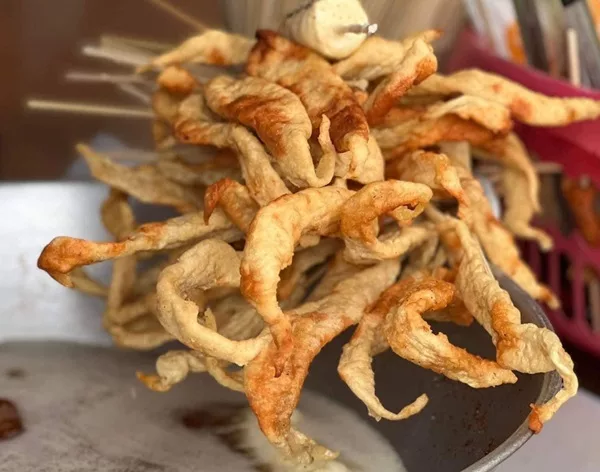
8. Tempura — Dumaguete street style

Dumaguete street tempura — deep-fried battered fish cake on bamboo skewer, boulevard street food

Dumaguete tempura is nothing like Japanese tempura — it’s a deep-fried battered fish cake on a stick.

Don’t be confused by the name — Dumaguete tempura has nothing to do with the Japanese dish. Here, tempura refers to a deep-fried battered fish cake skewered on a bamboo stick, similar to fishballs but denser and more substantial. It’s a boulevard staple, sold by sidewalk vendors who keep a pot of oil bubbling all day and evening. The crispy batter gives way to a savory fish filling, and it’s served with a sweet-vinegar dipping sauce that’s somewhere between sweet-and-sour and a mild sukang pinakurat.

The best tempura stalls line Rizal Boulevard, especially in the late afternoon and evening when the sea breeze comes in and the boulevard fills with locals and tourists. Bossing’s Tempura is the most well-known, but most of the boulevard vendors are equally good.

Where to buy
Rizal Boulevard sidewalk stalls · Bossing’s Tempura
Price
₱10–₱15 per skewer
Best time
4–9 PM — evening boulevard stroll
Note
Street food only — not suitable for pasalubong

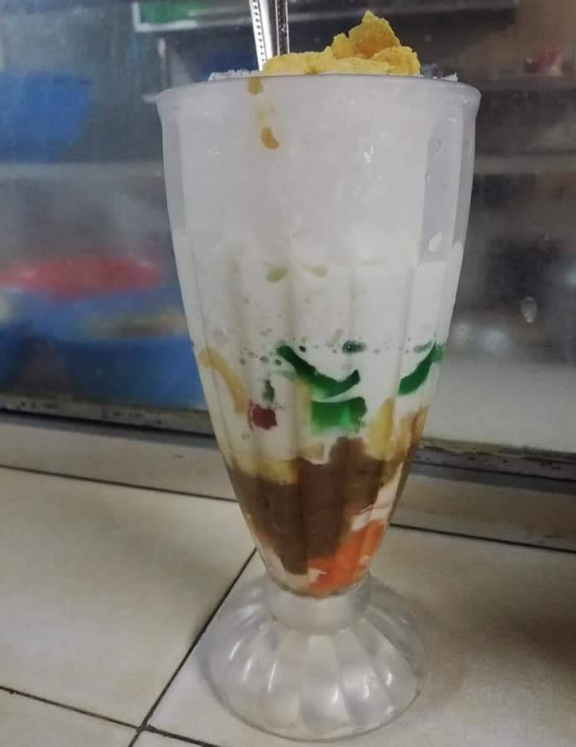
9. Bading’s halo-halo

Bading's halo-halo Dumaguete — famous shaved ice dessert with beans, jelly, leche flan and ube ice cream

Bading’s halo-halo is widely considered one of the best in the entire Visayas region.

Bading’s halo-halo has been a Dumaguete institution for decades. Halo-halo (meaning “mix-mix”) is the Philippines’ most famous dessert — a tall glass of shaved ice, evaporated milk, and a generous pile of toppings including sweetened beans, nata de coco, kaong, sweetened jackfruit, leche flan, and a scoop of ube ice cream. At Bading’s, the shaved ice is finer than average, the toppings are more generous, and the ube ice cream on top is rich and deeply flavored.

On a hot Dumaguete afternoon — and most afternoons here are hot — a Bading’s halo-halo is the best ₱50–₱80 you’ll spend. Mix everything together before eating to get the full effect.

Where
Bading’s — ask locals for the current location on the boulevard area
Price
₱50–₱80 per glass
Best time
Any time of day — especially midday heat
Note
Dine-in only

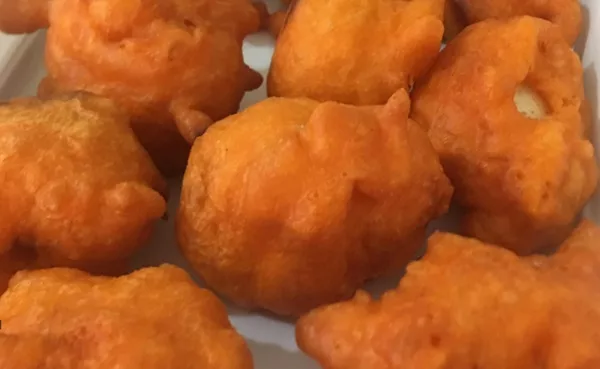
10. Kwek-kwek

Kwek-kwek — deep-fried orange-battered quail eggs, Dumaguete boulevard street food

Kwek-kwek — quail eggs in bright orange batter, one of Dumaguete’s most popular boulevard snacks.

Kwek-kwek are deep-fried quail eggs coated in a bright orange batter and served on skewers with a sweet-sour dipping sauce or spiced vinegar. They’re not unique to Dumaguete — you’ll find them all over the Philippines — but the boulevard vendors here have been perfecting their batter for years, and a freshly fried skewer of kwek-kwek by the waterfront at sunset is a very specific kind of happiness.

The orange color comes from a combination of annatto (achuete) and egg yolk in the batter. At ₱10–₱15 for three pieces on a stick, they’re one of the most affordable snacks on the boulevard.

Where to buy
Rizal Boulevard sidewalk vendors · night market stalls
Price
₱10–₱15 per skewer (3 pieces)
Best time
Afternoon and evening
Note
Street food — eat immediately

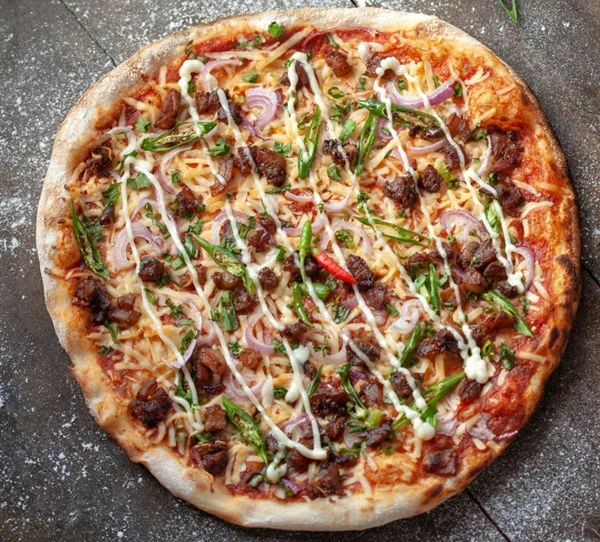
11. Neva’s Pizza

Neva's Pizza Dumaguete — local specialty pizza restaurant with unique Filipino-inspired toppings

Neva’s Pizza is a Dumaguete institution — known for unusual toppings like squid ink and longganisa.

Neva’s Pizza is a beloved Dumaguete local restaurant that’s been serving its own interpretation of pizza for years. The toppings go well beyond the standard — squid ink pizza, longganisa pizza, kimchi pizza — combinations that shouldn’t work but somehow find a following among locals and curious visitors. It’s not trying to be Italian; it’s proudly Dumaguete. If you’re traveling with people who want something more familiar but still local, Neva’s is the answer.

Where
Neva’s Pizza, Dumaguete City (check current address — multiple locations)
Price
₱150–₱350 per pizza
Must-try
Squid ink pizza · longganisa pizza
Note
Dine-in and takeout — not a pasalubong item

12. Chicken inato — Jo’s Chicken Inato

If silvanas is Dumaguete’s most famous sweet, chicken inato is its most famous savoury dish — and Jo’s Chicken Inato on Silliman Avenue is where every visitor ends up eventually. Inato (literally “chicken” in Visayan) is a whole style of cooking: the bird is marinated in a local blend of vinegar, calamansi juice, soy sauce, fish sauce, garlic, and sugar, then cooked over live charcoal until the skin is slightly charred and the meat pulls cleanly off the bone.

What sets Dumaguete’s chicken inato apart from Bacolod’s inasal — the other great grilled chicken of the Visayas — is the marinade. Inato is tangier and less oily, and the charcoal char is more pronounced. You eat it with your hands, a mound of garlic rice, pickled papaya (achara), and a dipping sauce you mix yourself from the condiments on the table: vinegar, soy sauce, fish sauce (patis), calamansi, and siling labuyo. A quarter chicken (pecho for breast, paa for thigh-leg) costs ₱99–₱150 and is one of the most satisfying meals in the Philippines at any price point.

Jo’s has been on Silliman Avenue for over 18 years, walking distance from Rizal Boulevard and Silliman University. It’s packed every lunch and dinner. Go before noon or after 8 PM if you want to avoid queues.

Where
Jo’s Chicken Inato, Silliman Avenue (near Silliman University · close to Rizal Blvd)
Price
₱99 (pecho — breast) · ₱99 (paa — thigh/leg) · comes with rice and achara
Hours
~9 AM – 9:30 PM daily
Order tip
Mix your own dip from the condiment tray — vinegar + patis + calamansi + siling labuyo

13. Binakhaw — Dumaguete’s unique kinilaw

Binakhaw is the dish that separates serious Dumaguete food explorers from casual visitors. On the surface it looks like kinilaw — the Filipino ceviche made from raw fish cured in vinegar and citrus. But binakhaw has one ingredient that makes it entirely its own: dungon fruit, extracted from the dungon tree (Heritiera littoralis), a mangrove species that grows along the Dumaguete coastline. No dungon, no binakhaw. You cannot make this dish anywhere else in the Philippines in the traditional way.

The dungon extract adds a distinctive astringent depth to the vinegar base — earthy, slightly tannic, with a flavour that’s hard to describe but impossible to forget. The fish — usually fresh bangasi (milkfish) or whatever is freshest at the market that morning — is drained of its marinade before serving, making binakhaw drier and more concentrated in flavour than regular kinilaw. It’s often garnished with sliced green mangoes, chicharrón, and fresh ginger. Lab-as Seafood Restaurant is the most recommended spot for a traditional version.

This is the food I’d tell any international visitor to eat first — before silvanas, before chicken inato. Nothing else on this list is as specific to Dumaguete and as impossible to replicate anywhere else.

Where to try
Lab-as Seafood Restaurant, Dumaguete City
Price
₱150–₱250 per serving
Key ingredient
Dungon fruit — from local mangrove, impossible to find outside Dumaguete region
Best with
Sinangag (garlic fried rice) · cold San Miguel beer

14. Baked scallops at Hayahay Treehouse

Dumaguete sits on the coast of the Tañon Strait, one of the richest fishing waters in the Philippines, and the city’s seafood reflects that. The best single expression of Dumaguete’s coastal bounty is the baked scallops at Hayahay Treehouse Bar and View Deck — a restaurant perched on a stilted structure over the ocean at Piapi Beach, a short tricycle ride south of the city centre.

The scallops arrive in their shells, topped with garlic, butter, and melted cheese, baked until golden. They are fresh from local waters — sweet, plump, and briny — and the butter-garlic combination is simple enough to let the scallop itself do the work. Hayahay’s second-floor open deck looks directly out over the Tañon Strait toward the mountains of Cebu on the horizon. Eating baked scallops up there at sunset, with a cold beer and live music coming from the ground floor, is one of the great low-cost dining experiences in Southeast Asia.

Hayahay also does excellent chili garlic crab, grilled tuna belly, and fresh buko (coconut) juice. Budget ₱500–₱800 per person for a full seafood meal with drinks.

Where
Hayahay Treehouse Bar and View Deck · Flores Ave, Piapi (Escano Beach) · ~₱12 tricycle from city centre
Baked scallops price
₱200–₱350 per order
Also order
Chili garlic crab · grilled tuna belly · fresh buko juice
Best time
Late afternoon – sunset for the view · live music most evenings

Best Dumaguete pasalubong to bring home

Not everything on this list travels well, so here’s a focused guide to the best Dumaguete pasalubong by how far and how long you’re traveling.

Gio’s local tip: If you’re taking a ferry or a long bus ride, pack your silvanas in the shop’s insulated cooler bag with a small ice pack. Sans Rival Cakes & Pastries sells the bags at the counter. Budbud kabog wraps are naturally protected by the banana leaf and travels fine for 2 days without refrigeration.

Top 5 Dumaguete pasalubong picks

  1. Silvanas — The #1 pasalubong from Dumaguete. Insulated cooler bags available at the shop. Lasts 2–3 days. Price: ₱250–₱350 per box of 10.
  2. Sans rival cake — Best for special occasions. Comes boxed, lasts 3–5 days refrigerated. Price: ₱350–₱600 whole cake.
  3. Budbud kabog — Lightweight, affordable, authentically Dumaguete. Buy fresh at the market in the morning. Price: ₱10–₱15 each.
  4. Brazo de Mercedes — A rolled custard log cake, great as a gift box. Available at most local bakeries and Sans Rival. Price: ₱280–₱400.
  5. Silvanas ice cream — The fun, individually wrapped version of silvanas. Comes insulated for transport. Price: ₱60–₱80 each.

Where to buy Dumaguete delicacies

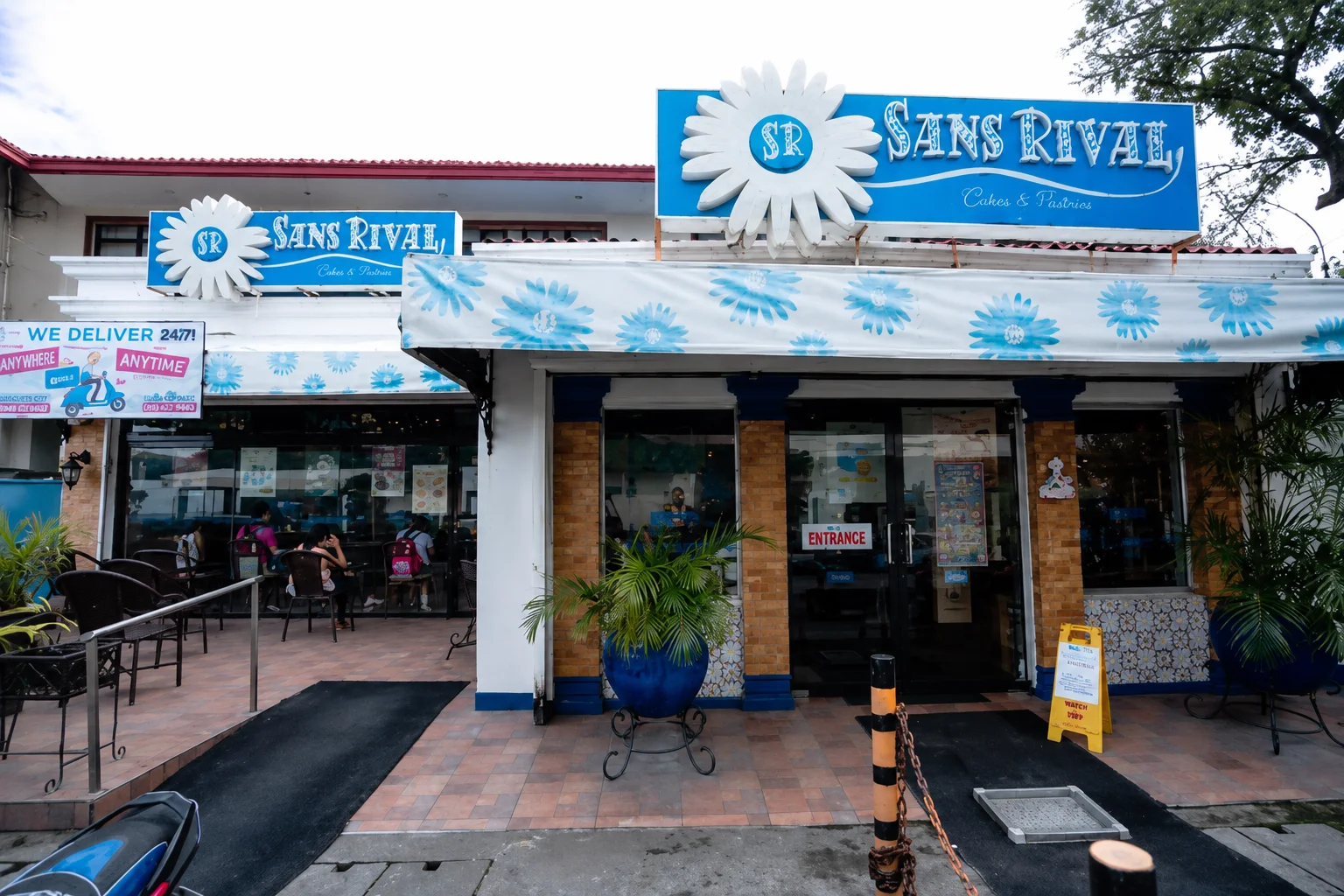
Sans Rival Cakes & Pastries — Rizal Boulevard

Sans Rival Cakes and Pastries shop on Rizal Boulevard Dumaguete — display case showing silvanas, sans rival cake and brazo de Mercedes boxes for pasalubong

Sans Rival Cakes & Pastries on Rizal Boulevard — the most important pasalubong stop in Dumaguete. Look for the display case packed with silvanas boxes near the entrance.

The most important stop for Dumaguete pasalubong. This is where you buy silvanas, sans rival cake, brazo de Mercedes, and silvanas ice cream. The shop is on Rizal Boulevard near the waterfront, easy to reach from most hotels and the ferry terminal. They pack everything for travel.

Cang’s Department Store — Colon Street

A Dumaguete institution that has been selling silvanas from their bakery section for generations. Slightly cheaper than Sans Rival and equally good — locals often prefer Cang’s for bulk pasalubong orders.

Dumaguete City Public Market

The place to go for budbud kabog, budbud tres marias, puto maya, and bod-bod. Come early — by 9 AM most of the morning vendors have sold out. The public market is also the best place to find tablea (native chocolate tablets) and dried mango products.

Rizal Boulevard sidewalk stalls

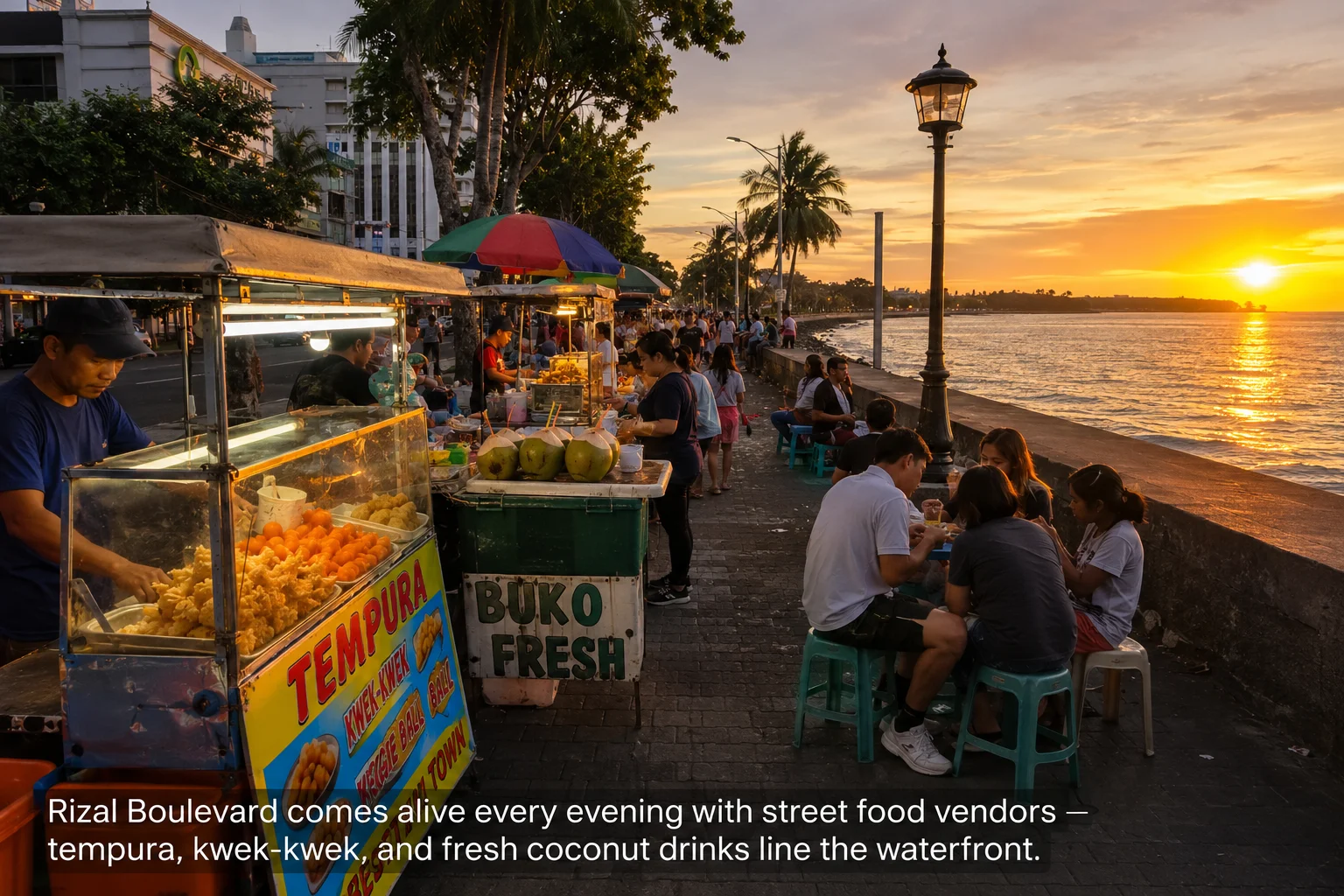
Street food vendors along Rizal Boulevard Dumaguete at sunset — tempura skewers, kwek-kwek and local snacks sold along the waterfront promenade every evening

Rizal Boulevard at golden hour — the best time to eat street food in Dumaguete. Tempura, kwek-kwek, and fresh coconut drinks line the waterfront every afternoon and evening.

For street food — tempura, kwek-kwek, and fresh coconut drinks. Best in the late afternoon and evening when the boulevard comes alive with locals and tourists.

Robinson’s Place Dumaguete

Convenient pre-departure stop if you’re near the mall before your ferry. Carries commercial versions of silvanas and some local bakery products, though selection is more limited than Sans Rival or Cang’s.

Frequently asked questions about Dumaguete delicacies

What are the best Dumaguete delicacies?
The best Dumaguete delicacies are silvanas (frozen cashew meringue cookie sandwiches), sans rival cake (layered cashew dacquoise), budbud kabog (millet suman), budbud tres marias, puto maya, brazo de Mercedes, and street foods like tempura, kwek-kwek, and Bading’s halo-halo. Silvanas are the most iconic and the most popular pasalubong to bring home.
What is the most famous pasalubong from Dumaguete?
Silvanas are the most famous pasalubong from Dumaguete. They are frozen cashew meringue cookie sandwiches made by Sans Rival Cakes & Pastries on Rizal Boulevard. A box of 10 costs ₱250–₱350 and they come packed in an insulated cooler bag for travel.
Is sans rival the same as silvanas?
No. Sans rival is a full layered cake made from cashew dacquoise and French buttercream, served by the slice. Silvanas use the same flavors but in a smaller, handheld, frozen cookie sandwich format. Both are made at Sans Rival Cakes & Pastries and are considered Dumaguete’s most iconic desserts.
What is budbud kabog?
Budbud kabog is a type of suman (sticky rice cake) unique to Dumaguete and Negros Oriental. Unlike regular suman which uses glutinous rice, budbud kabog is made from kabog (millet seeds) cooked in coconut milk and wrapped in banana leaves. It has a nuttier, denser texture than regular suman and costs ₱10–₱15 per piece at the public market.
Where can I buy Dumaguete delicacies?
The best places are Sans Rival Cakes & Pastries on Rizal Boulevard (silvanas, sans rival cake, brazo de Mercedes), Cang’s Department Store on Colon Street (silvanas), the Dumaguete Public Market in the morning (budbud kabog, puto maya, bod-bod), and the Rizal Boulevard sidewalk stalls in the evening (tempura, kwek-kwek).
How do silvanas travel for pasalubong?
Silvanas must be kept cold — they are designed to be eaten straight from the freezer. Sans Rival Cakes & Pastries provides insulated cooler bags for transport. With an ice pack, they last 2–3 days, making them suitable for travel between Dumaguete and other cities by bus or ferry. Ask for extra ice packs at the counter if you’re traveling long distance.
What is Dumaguete’s most unique delicacy?
Budbud kabog is Dumaguete’s most unique delicacy because it uses millet (kabog) instead of glutinous rice, which is unusual even within the Philippines. It is a specialty of Negros Oriental and not easily found anywhere else in the country. Puto maya paired with ripe mango is also distinctly Visayan and hard to find outside the region.
What is binakhaw and why is it unique to Dumaguete?
Binakhaw is Dumaguete’s version of kinilaw (Filipino ceviche made from raw fish cured in vinegar). What makes it unique is the addition of dungon fruit, extracted from the dungon tree — a mangrove species that grows along the Dumaguete coastline. The dungon extract adds an earthy, slightly astringent depth that cannot be replicated elsewhere. Lab-as Seafood Restaurant is the best place to try it.
What is painitan in Dumaguete?
Painitan refers to the traditional breakfast stalls inside the Dumaguete City Public Market. The word comes from “init” (heat in Visayan). At these stalls, locals eat the classic “10-5-5” breakfast set — a piece of puto maya for ₱10, a small cup of tsokolate (native hot chocolate made from tablea) for ₱5, and roasted peanuts for ₱5 — a complete breakfast for ₱20. Painitan stalls open before sunrise and usually sell out by 9 AM.
What is tsokolate and how is it different from regular hot chocolate?
Tsokolate is Filipino native hot chocolate made from tablea — small discs of ground, roasted, and minimally processed cacao beans. Unlike commercial hot chocolate powder, tablea is melted directly in hot water and whisked with a traditional wooden batidor until frothy. The result is dark, rich, and slightly bitter — much more intense than any powdered hot chocolate. In Dumaguete, tsokolate is always paired with puto maya or budbud kabog at the morning painitan stalls.
Where is Jo’s Chicken Inato in Dumaguete?
Jo’s Chicken Inato is on Silliman Avenue in Dumaguete City, within walking distance of Rizal Boulevard and Silliman University. It has been open for over 18 years and is Dumaguete’s most famous dine-in restaurant. A quarter chicken (pecho or paa) with garlic rice and achara costs ₱99–₱150. The restaurant is open approximately 9 AM to 9:30 PM daily.
Giovanni Carlo Bagayas — Dumaguete local and author of Best Philippines Travel Guide
Giovanni Carlo Bagayas
Dumaguete local · Philippines travel writer · 30+ years experience

I was born in Cebu City and raised in Dumaguete — the city behind this entire guide. I’ve been eating silvanas from Sans Rival, buying budbud kabog at the public market, and watching the kwek-kwek vendors set up on the boulevard since I was a child. Everything in this article comes from firsthand experience living and eating in Dumaguete for decades. I now write full-time about the Philippines at Best Philippines Travel Guide and run the Giobel Koi Center.