
Apo Island Day Trip from Dumaguete: Swim with Turtles in the Philippines’ Best Marine Sanctuary
650 fish species. 400 coral species. Sea turtles at arm’s length. One of the world’s most successful community-managed marine sanctuaries — and it’s just 30 km from Dumaguete.
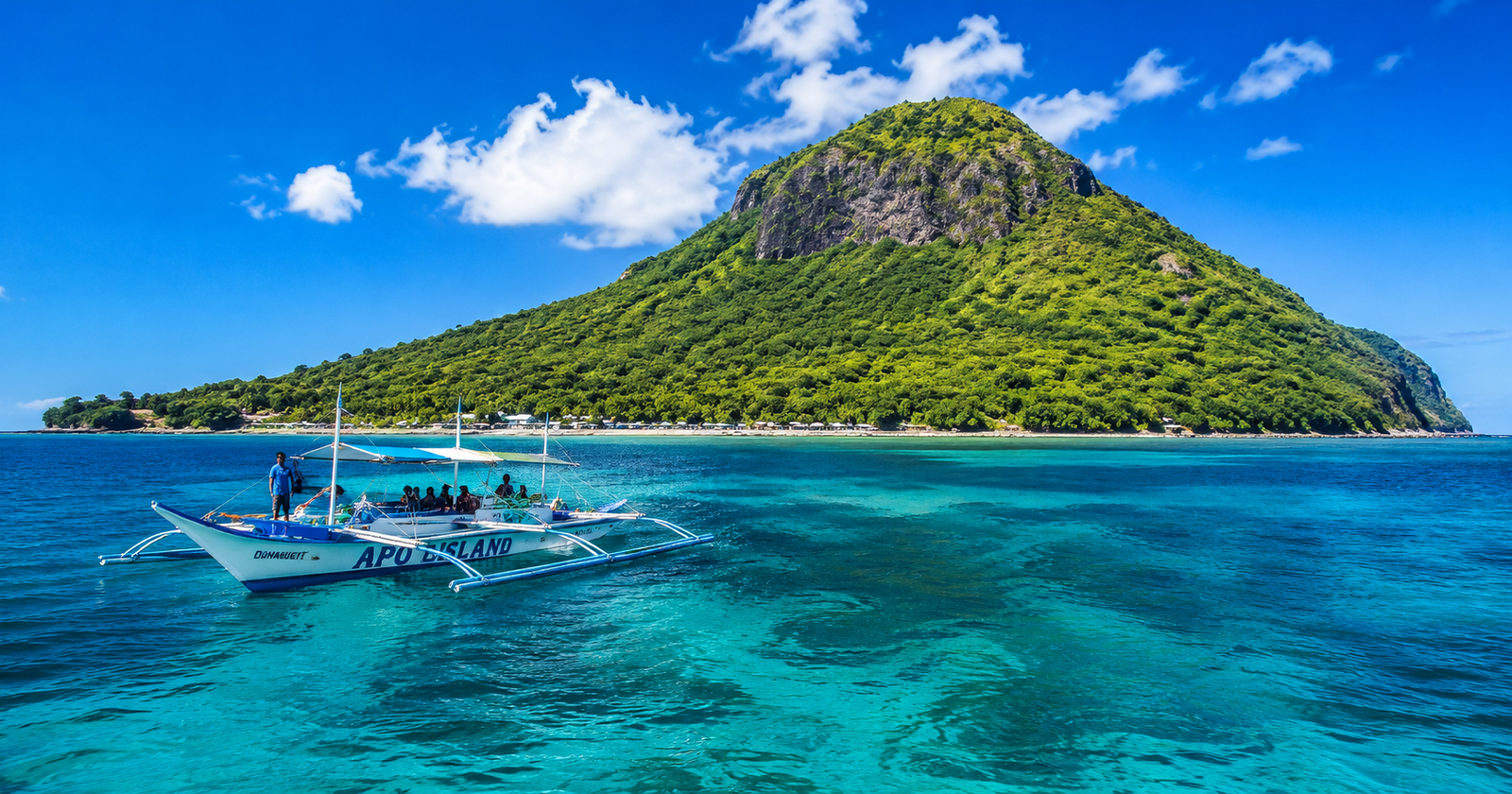
Apo Island is a tiny volcanic island 30 km south of Dumaguete, home to one of the oldest and most successful community-managed marine sanctuaries in the Philippines. A day trip takes about 8–10 hours total. Get to Malatapay by jeepney (₱20, 45 min), then take a bangka boat to the island (30 min, ₱300–₱500/person shared). Pay the environmental fee (₱100 Filipinos / ₱300 foreigners), then snorkel or dive. Sea turtles are virtually guaranteed. Last boats back leave around 4:00–4:30 PM. Best visited November to May.
What is Apo Island?
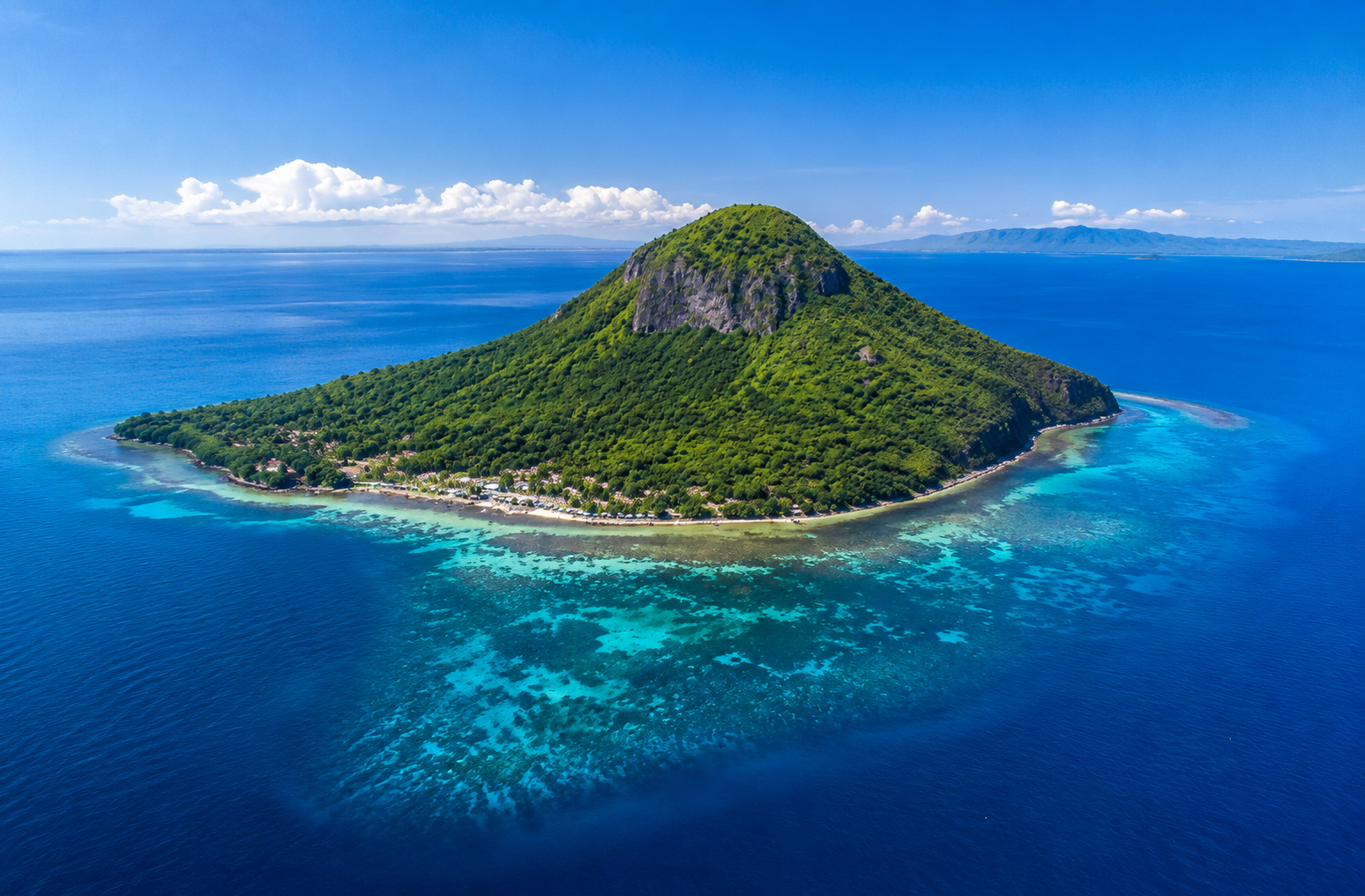
Apo Island is a small volcanic islet nestled in the Bohol Sea off the southeastern coast of Negros Oriental, about 30 kilometers south of Dumaguete City. It is tiny — just 0.74 square miles of land — but what surrounds it underwater is extraordinary.
In 1982, the island’s roughly 920 residents made a radical decision: they banned all fishing within a portion of the reef and established one of the first community-managed marine sanctuaries in the Philippines. Over four decades later, the results speak for themselves. The sanctuary spans approximately 7 square kilometers of vibrant coral reef, home to over 650 species of fish and around 400 species of hard coral — nearly all the coral species found in the Philippines. Fish populations have increased eightfold since protection began.
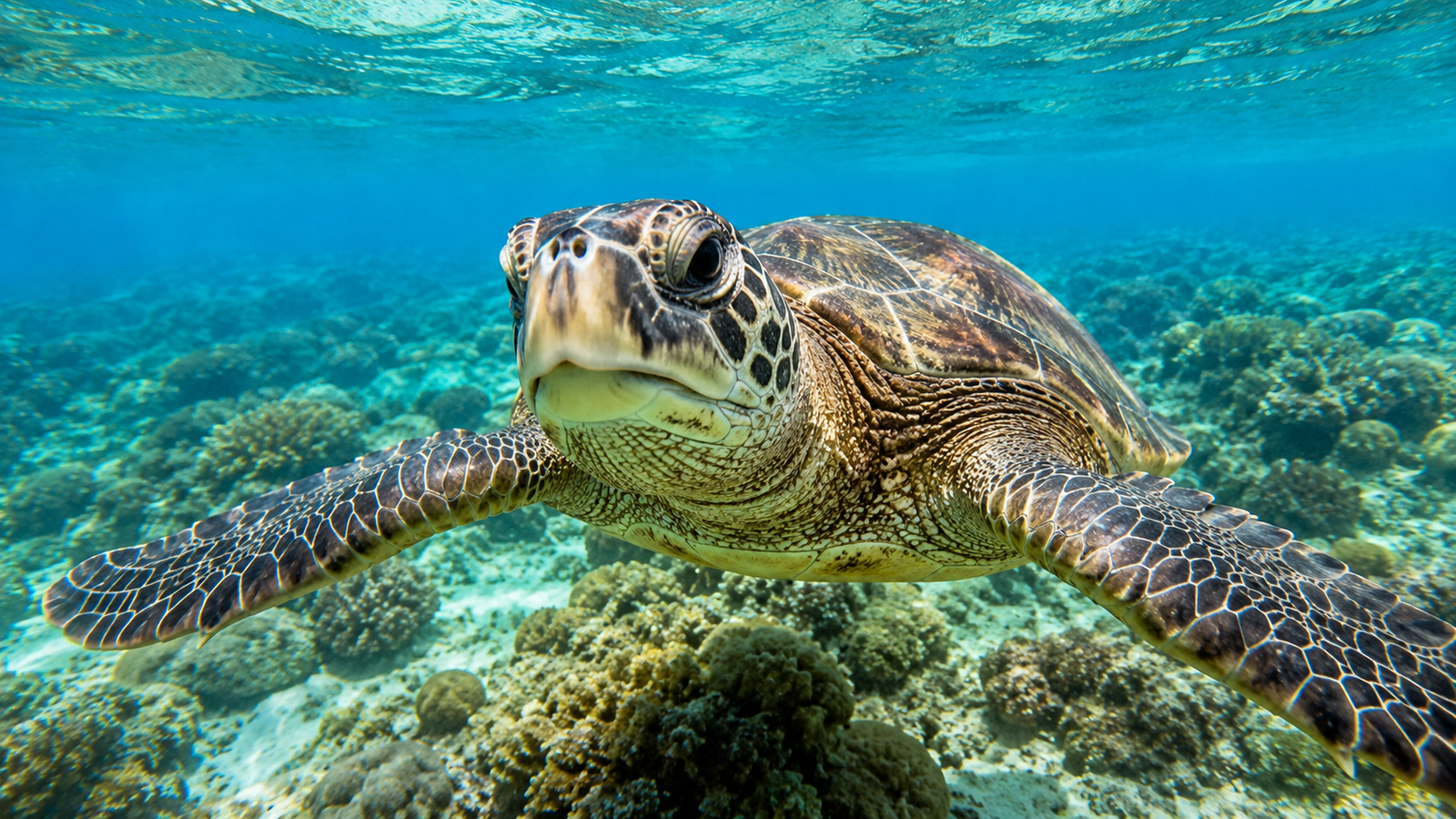
For visitors, Apo Island delivers one experience above all others: swimming with sea turtles. Both green sea turtles and hawksbill turtles are permanent residents of the sanctuary and feed in shallow water just meters from snorkelers. It is one of the most reliable places in Southeast Asia to see wild sea turtles at close range, without cages, feeding, or manipulation — just nature doing its thing.
How to Get to Apo Island from Dumaguete
Getting to Apo Island requires two legs: first, a road journey south from Dumaguete to Malatapay in Zamboanguita, then a short bangka (outrigger boat) crossing to the island. The whole journey takes about 1.5 hours each way.
Step-by-step: Dumaguete → Malatapay → Apo Island
From Dumaguete City, take a southbound jeepney or bus toward Bayawan and tell the driver you want to get off at Malatapay in Zamboanguita. The journey takes about 45 minutes. Jeepney fare is ₱20 per person. Bus fare is ₱55–₱110. Leave by 7:30–8:00 AM to make the most of your day.
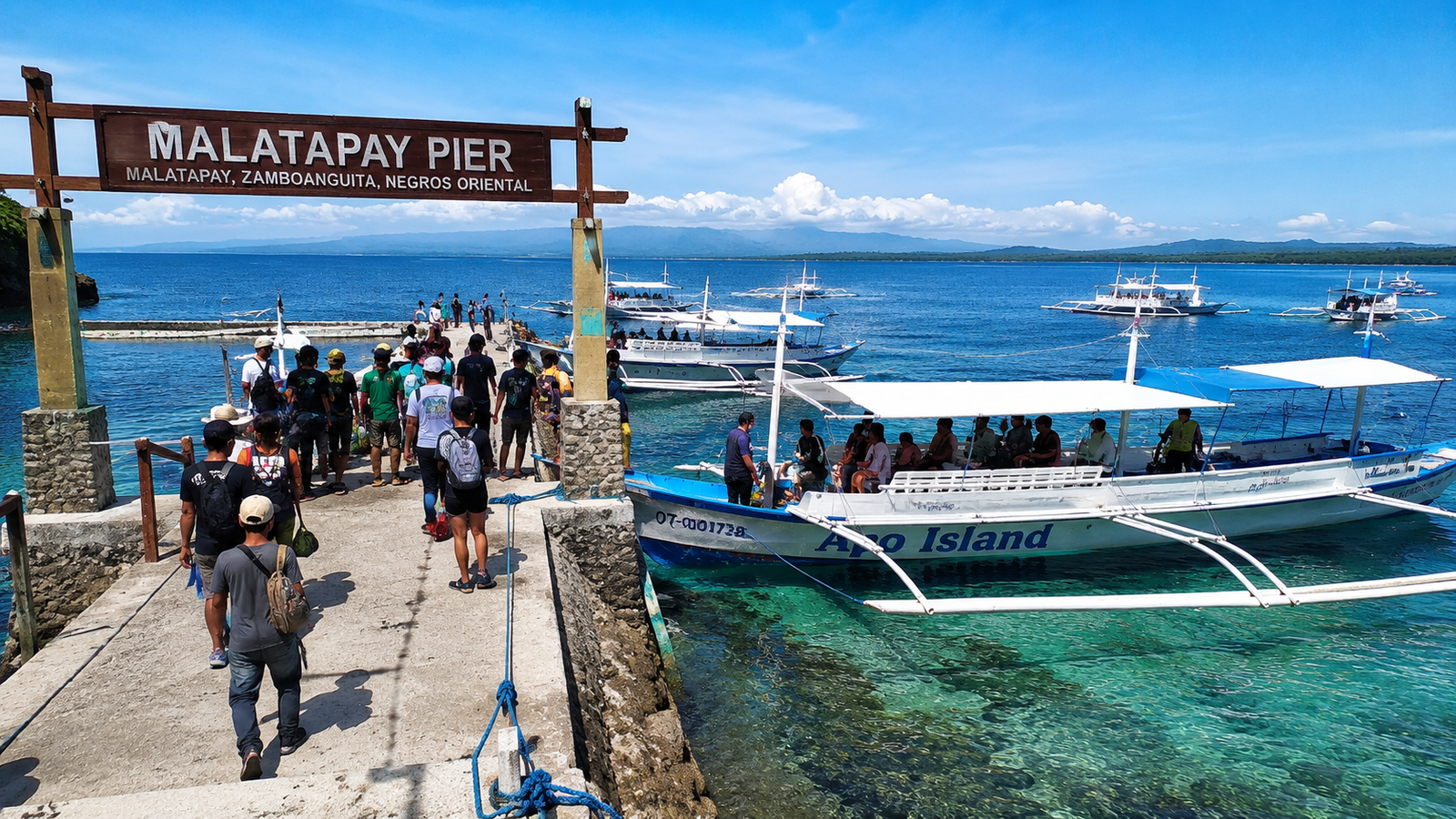
From the Malatapay highway drop-off, the pier is a short walk or ₱20–₱30 tricycle ride through the market road toward the coast. Follow the signs. At the pier you’ll see the coast guard post and the bangka boats ready for departure.
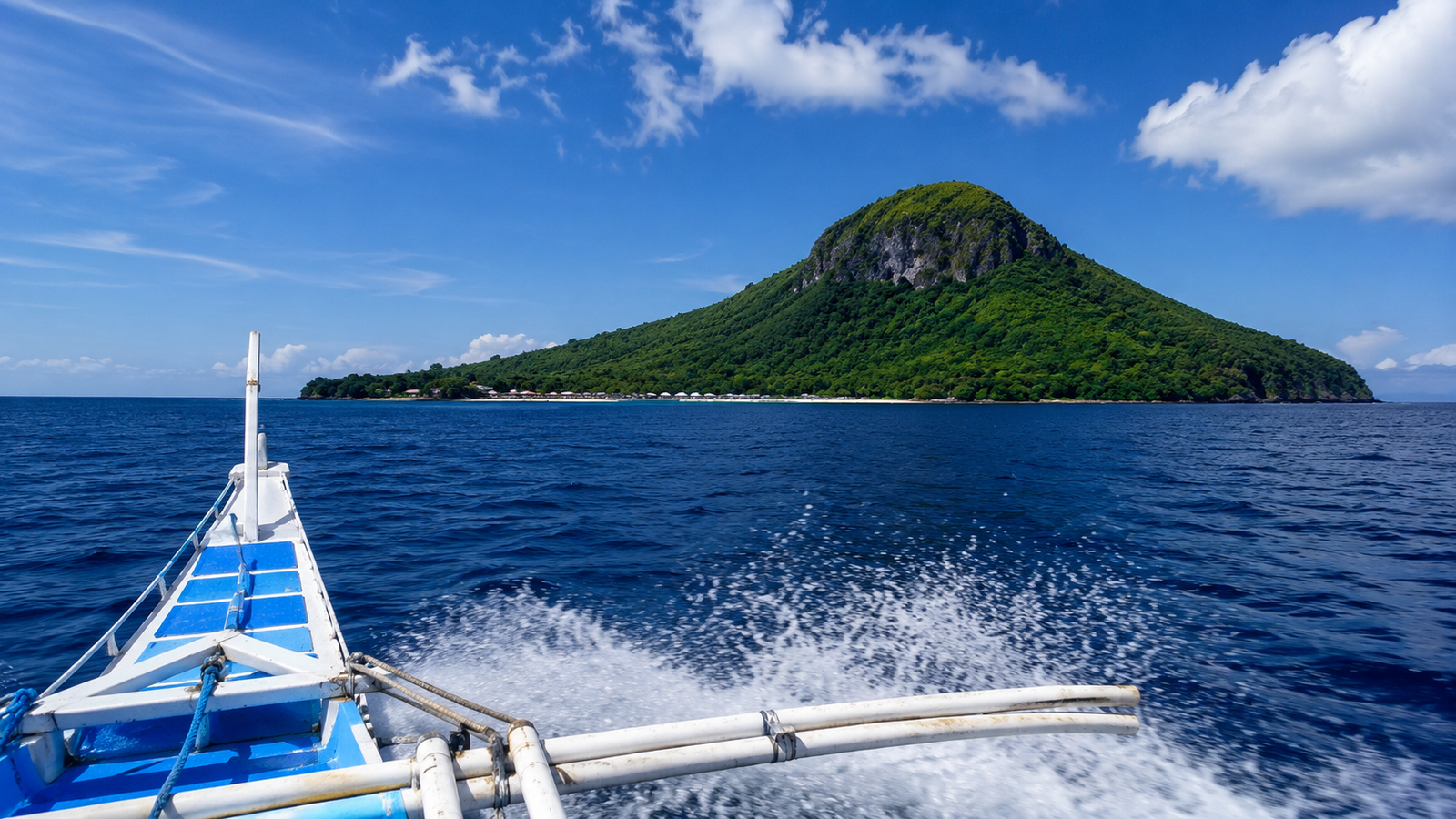
Small bangka outrigger boats depart from Malatapay throughout the day depending on demand. A shared boat costs ₱300–₱500 per person each way. A private boat charter (fits 3–9 people) costs ₱2,000–₱3,500 round trip. Note: you’ll need to wade out to board the boat — you may get your feet or knees wet.
Upon arriving at Apo Island beach, go to the registration office to register your party and pay the environmental and sanctuary fees. Keep your receipt — it may be checked at entry points to the snorkeling area.
| Route leg | Option | Duration | Cost |
|---|---|---|---|
| Dumaguete → Malatapay | Jeepney (southbound) | ~45 min | ₱20/person |
| Dumaguete → Malatapay | Bus to Bayawan | ~45 min | ₱55–₱110 |
| Dumaguete → Malatapay | Private car / Grab | ~40 min | ₱400–₱700 |
| Malatapay → Apo Island | Shared bangka boat | ~30 min | ₱300–₱500/person |
| Malatapay → Apo Island | Private boat charter | ~30 min | ₱2,000–₱3,500 total |
Leave Dumaguete by 7:00–7:30 AM at the latest. Boats back from Apo Island leave for Malatapay at around 4:00–4:30 PM. If you miss the last boat, you’ll need to stay overnight on the island. Arriving early also means you beat the day-tripper crowds and get the reef to yourself for the first hour.
If you’re staying at a dive resort in Dauin (20 minutes south of Dumaguete), most resorts like Atlantis Dive Resort and Atmosphere Resort run their own morning boat transfers directly to Apo Island — often including gear, guide, and lunch in a package. This is the most comfortable and efficient option for divers.
Entrance Fees & Day Trip Budget
| Fee / Expense | Filipino | Foreign visitor |
|---|---|---|
| Environmental / Marine sanctuary fee | ₱100 | ₱300 |
| Snorkeling guide fee (up to 4 persons) | ₱200–₱300 per group | |
| Snorkel gear rental (mask + fins) | ₱100–₱200 | |
| Bangka boat — shared (each way) | ₱300–₱500/person | |
| Bangka boat — private charter (round trip) | ₱2,000–₱3,500 | |
| Jeepney Dumaguete–Malatapay | ₱20/person each way | |
| Lunch on the island | ₱150–₱300/person | |
| Diving (if certified) | ₱1,500–₱2,500/dive incl. gear | |
💰 Estimated total budget per person
Budget DIY (shared boat, own gear): ₱800–₱1,200 per person
Mid-range (private boat, rented gear, lunch): ₱1,500–₱2,500 per person
Organized tour package from Dumaguete: ₱1,500–₱3,500 per person (all-in)
Dive package from Dauin resort: ₱3,000–₱5,000 per person (incl. 2 dives)
Full Day Trip Itinerary
Here’s a realistic schedule for a DIY day trip from Dumaguete. Organized tours follow a similar flow but with transport and meals included.
Catch a southbound jeepney from the Dumaguete terminal toward Bayawan. Tell the driver “Malatapay” — it’s a well-known stop. Fare is ₱20. Journey takes about 45 minutes along the coastal road.
At the pier, negotiate with boat operators for a shared or private boat. Shared boats depart when they have enough passengers — arriving early means more people to share with and a lower cost. The 30-minute crossing is open sea, so expect some spray. Keep your valuables in a dry bag.
Walk up the beach to the registration office. Pay your environmental fee (₱100 Filipino / ₱300 foreign) and register your group. If you need snorkel gear, rent here. Hire a snorkeling guide (mandatory for the sanctuary zone, ₱200–₱300 per group of up to 4) — they know exactly where the turtles feed each morning.
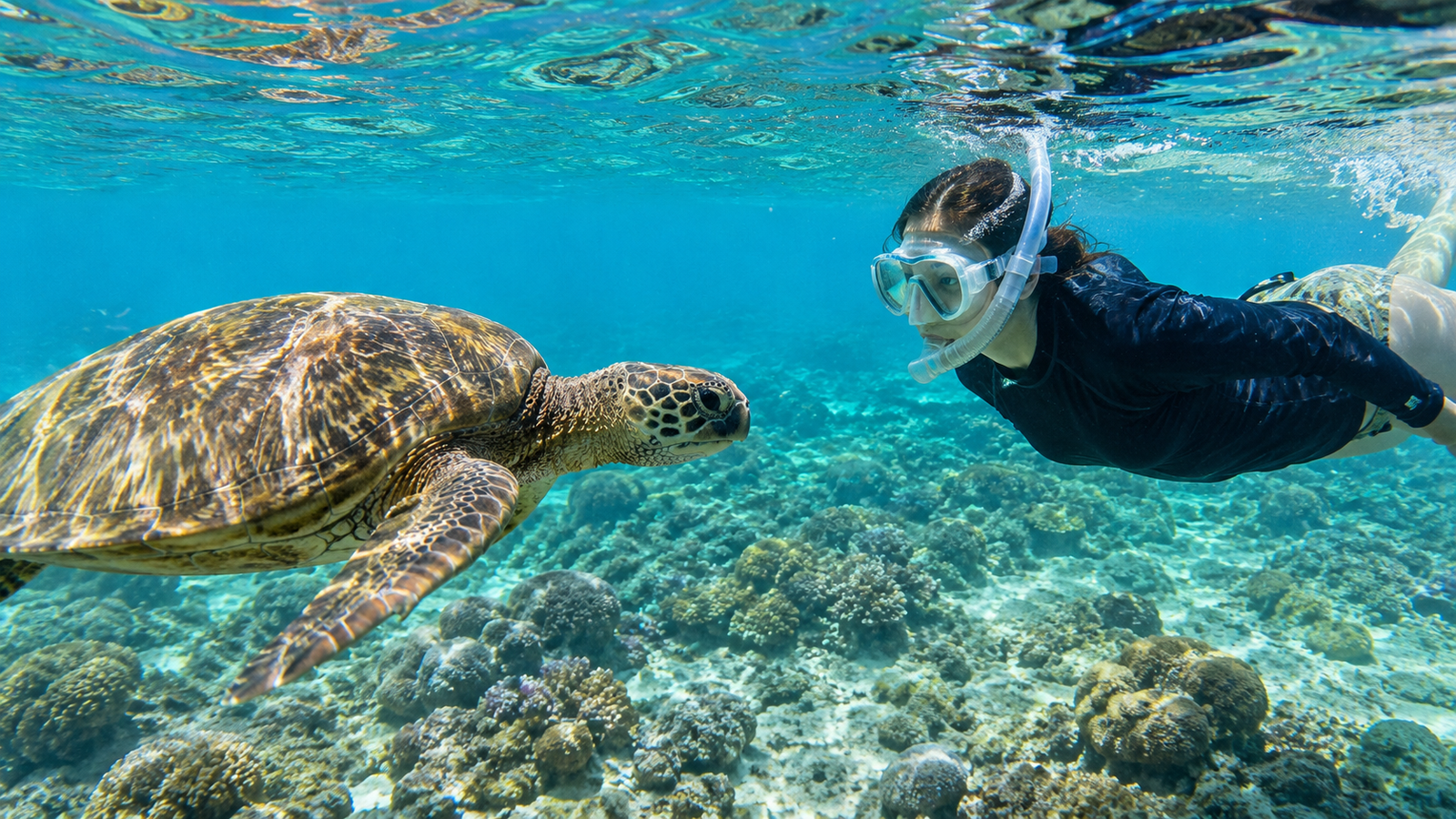
This is the highlight of the entire trip. Turtle Point is just a short swim from the beach, where green sea turtles graze on seagrass and coral algae in 1–4 meters of water. Most mornings you’ll spot multiple turtles within minutes of entering the water. The reef here is dense, colorful, and full of fish. Spend at least 1.5–2 hours here. Do not touch the turtles — observe from a respectful distance and let them come to you.
The island has several small eateries and family-run food stalls. Lunch is typically grilled fish caught outside the sanctuary boundaries using sustainable methods, served with rice, vegetables, and fresh buko juice. Expect to pay ₱150–₱300 per person. It’s simple, fresh, and genuinely local. Sit under the coconut palms, dry off, and refuel.
After lunch, explore the island on foot. Walk through the small fishing village — fishermen repair nets under coconut palms, children play in sandy courtyards, and the pace of life is beautifully unhurried. For the adventurous, hike the 369 steps up to the lighthouse for a panoramic view of the marine sanctuary and surrounding sea. Takes about 30–45 minutes round trip.
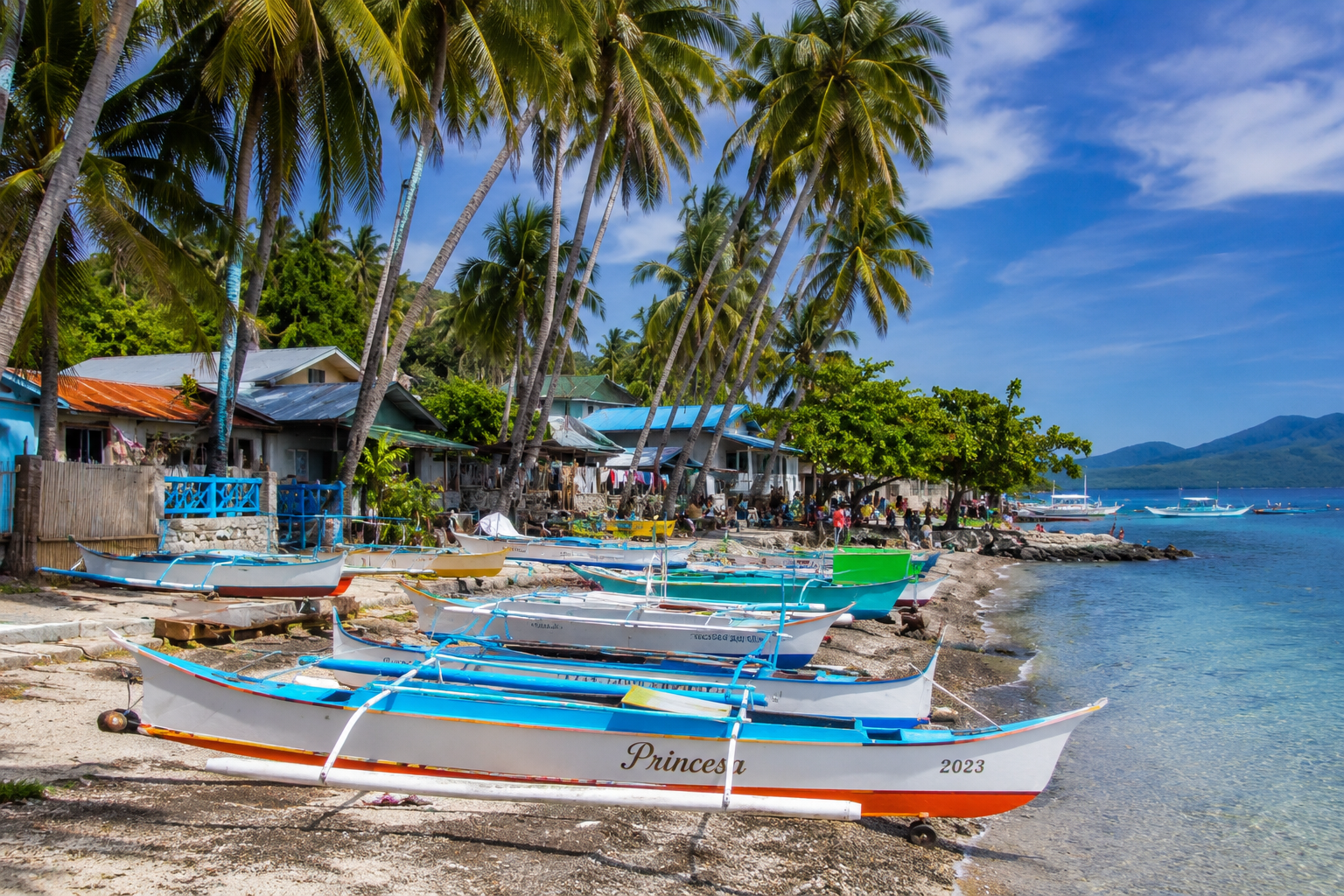
The afternoon light is different — lower angle, longer shadows across the coral, often stunning. Many visitors go for a second snorkel session after the village walk. The crowds from day-tripper boats have thinned by early afternoon. Try snorkeling on the other side of the village for a different reef section with fewer people.
Be at the beach and ready to board by 3:45–4:00 PM. The last boat back to Malatapay typically departs around 4:00–4:30 PM. Missing it means spending the night — the island has limited and basic accommodation. From Malatapay, catch a jeepney or bus back to Dumaguete (another 45 minutes). You’ll be back in town before dark.
Snorkeling at Apo Island: What to Expect
You do not need to be a diver to have a world-class experience at Apo Island. The snorkeling here is as good as it gets in the Philippines — arguably better for turtles than anything in Palawan or Boracay.
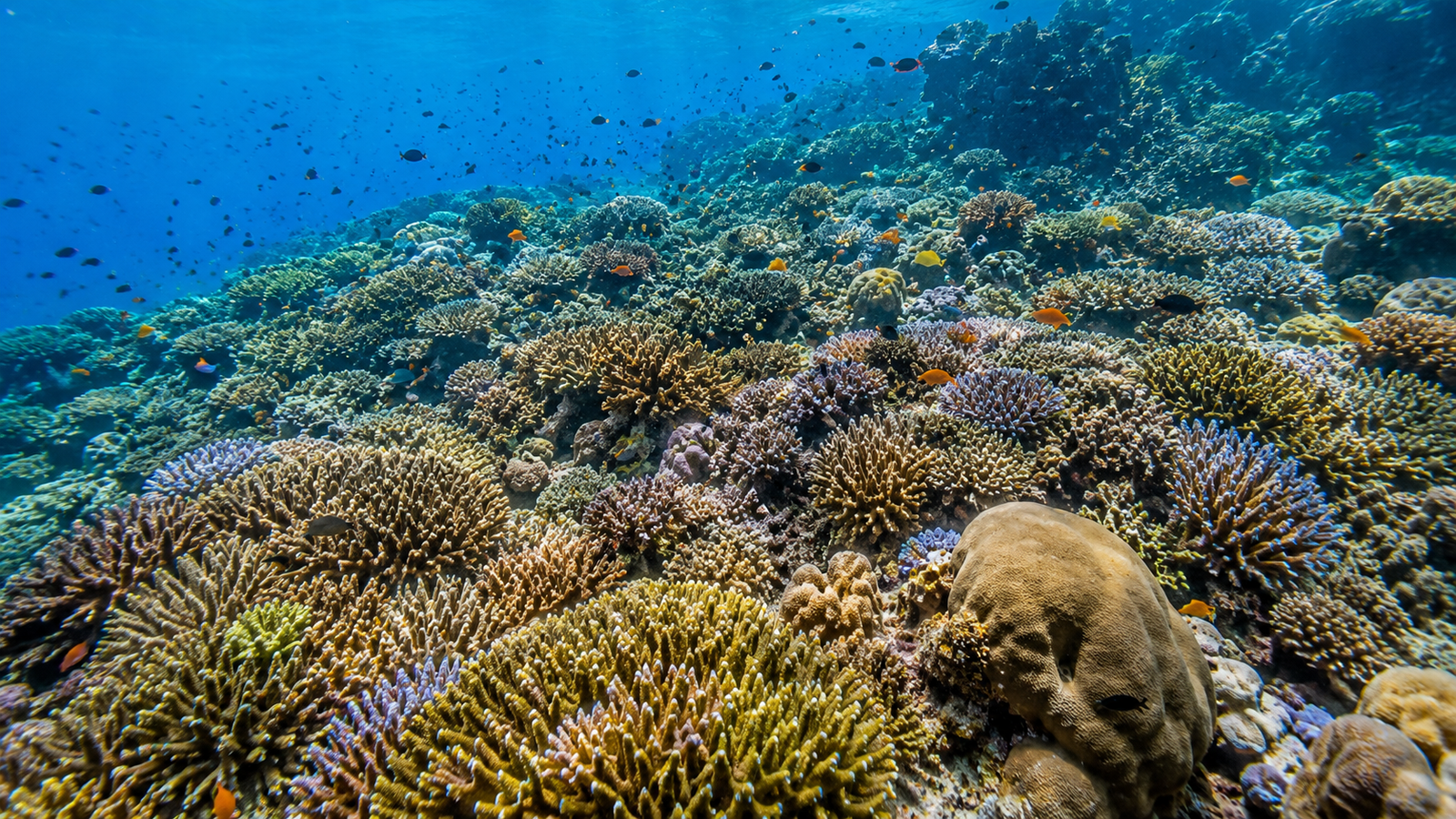
Snorkeling is done in the zones just outside the sanctuary’s inner boundary, marked by floating buoys. The water depth ranges from 1–5 meters in the main snorkeling areas, making it accessible for beginners. The sanctuary protects over 400 coral species, nearly 90% of all Philippine coral varieties — including massive brain corals, delicate staghorn formations, and colorful soft corals visible from the surface.
Key snorkeling spots
| Spot | Depth | Best for |
|---|---|---|
| Turtle Point | 1–4 m | Sea turtles grazing on seagrass — the #1 spot |
| Main reef (west side) | 2–5 m | Hard coral gardens, clownfish, parrotfish |
| East side reef | 3–6 m | Less crowded, more diverse fish life |
| South corner | 4–8 m | Deeper coral formations, occasional reef sharks |
Green sea turtles and hawksbill turtles are permanent residents of the Apo Island sanctuary — not seasonal visitors. They feed on seagrass and coral algae in the shallow reef zone daily. Most morning snorkelers spot multiple turtles within the first 15 minutes. The turtles are completely accustomed to human presence and often swim directly toward snorkelers out of curiosity. Never touch, chase, or block their path to the surface to breathe.
Diving at Apo Island
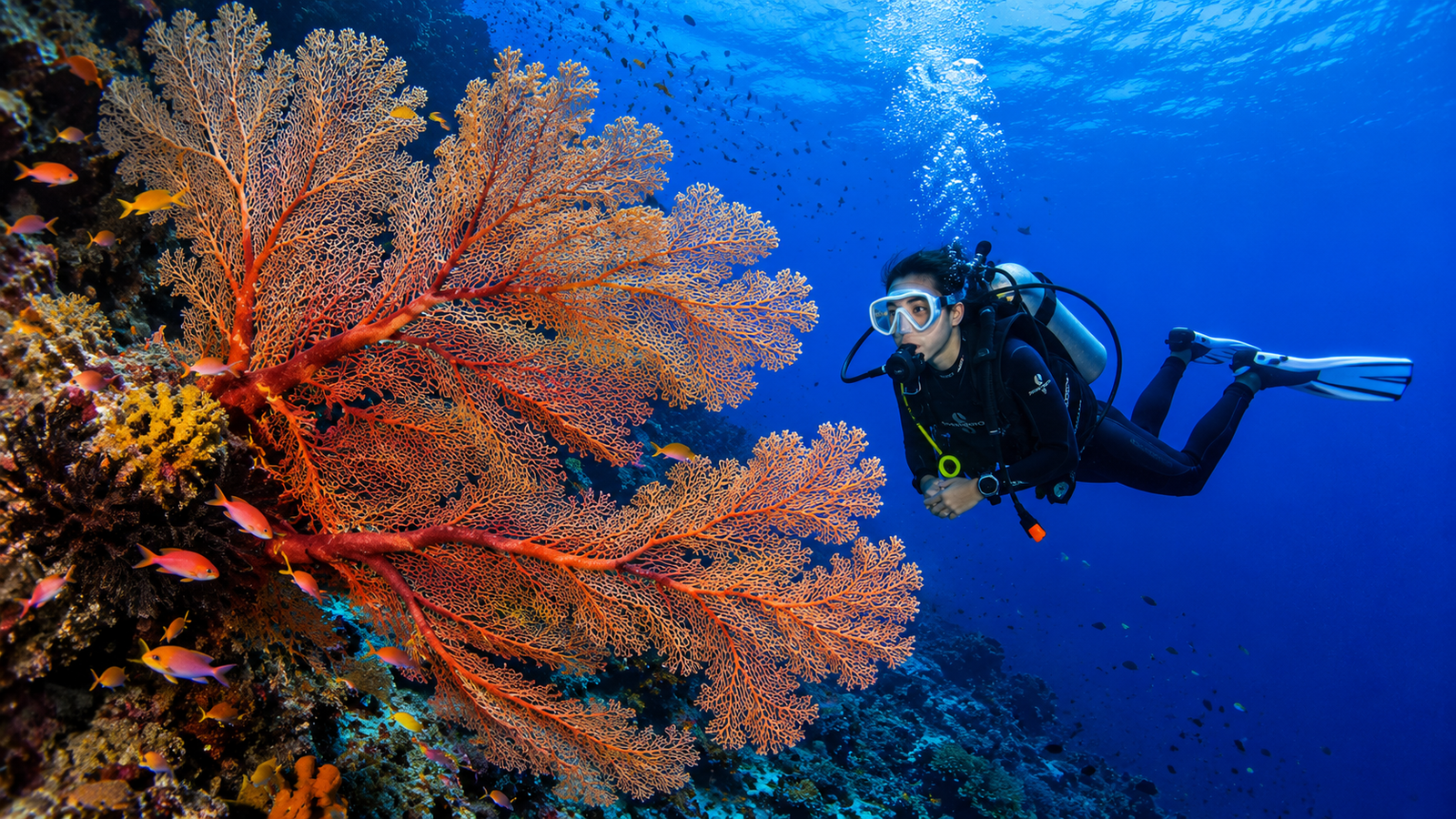
Apo Island is one of the top dive destinations in the Philippines and has been in every serious diver’s bucket list for decades. While snorkeling covers the top 1–5 meters, diving reveals the full spectacle: dramatic walls, gorgonian sea fans, swim-throughs, and marine life density that surprises even experienced divers.
Best dive sites
| Dive site | Depth | Highlights |
|---|---|---|
| Coconut Point | 5–30 m | Classic wall dive, gorgonian fans, abundant fish life, excellent visibility |
| Rock Point East | 5–28 m | Coral bommies, schooling jacks, turtles at depth |
| Mamsa Point | 8–25 m | Frogfish, nudibranchs, macro photography paradise |
| Chapel Point | 5–20 m | Soft corals, sea fans, hawksbill turtles |
| Katipanan | 10–30 m | The wall dive — sheer drop with sea fans and sponges |
Diving at Apo Island is best arranged through a dive resort in Dauin (20 min from Dumaguete), such as Atlantis Dive Resort or Atmosphere Resort. They provide equipment, dive guides, boat transfers, and marine sanctuary fees in their packages. Walk-in diving from the island is also possible with the local dive operators based at Apo Island Beach Resort. A single dive with full equipment typically costs ₱1,500–₱2,500.
Marine Life You’ll See at Apo Island
The clear waters and healthy coral cover, averaging 50–70%, support over 650 species of fish and more than 300 species of corals. Here’s what to look for:
Rules & Conservation at Apo Island
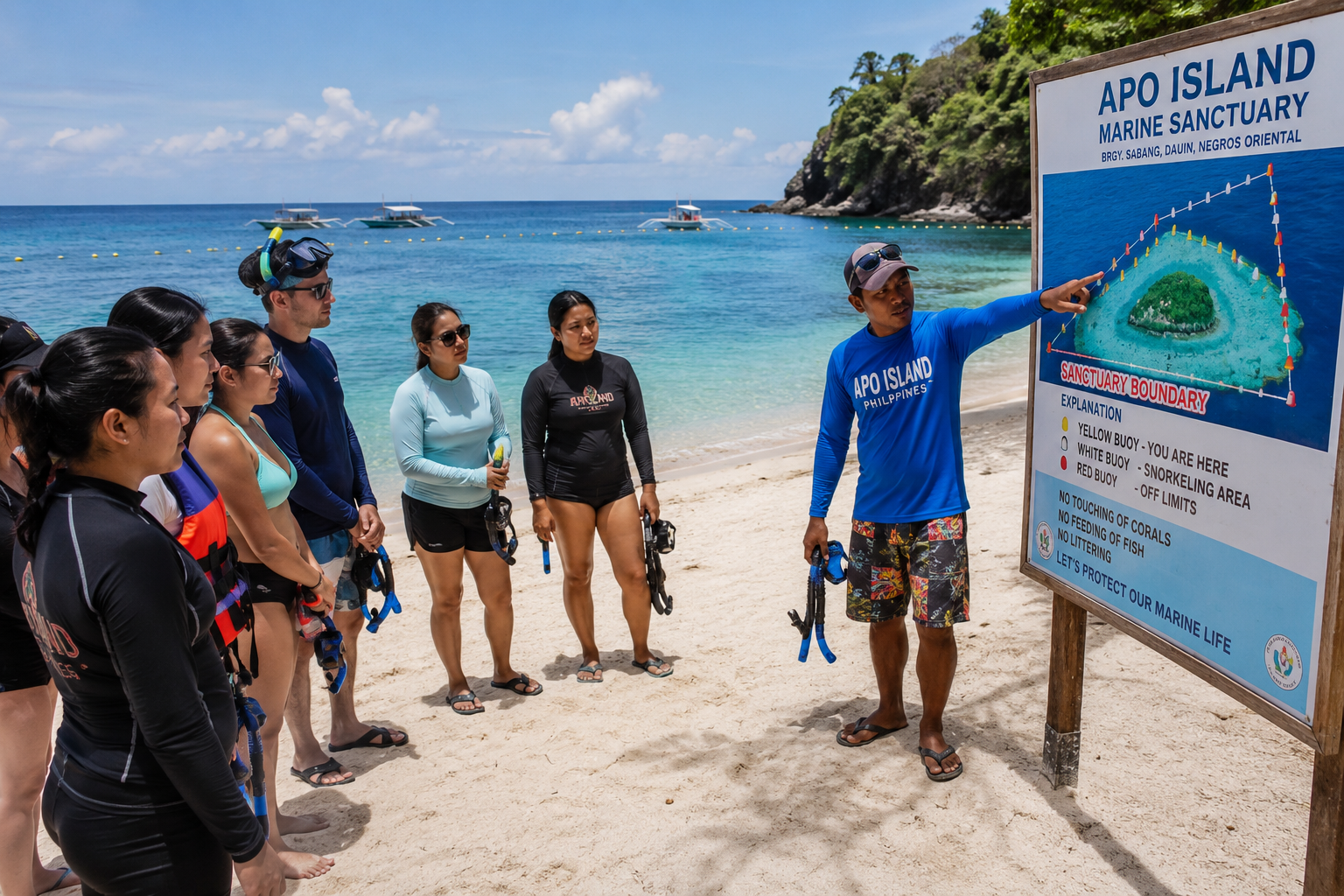
Apo Island’s marine sanctuary is the oldest continuously operating community-managed marine protected area in the Philippines, established in 1982. The locals are fully invested in the project, having seen fish stocks blossom and revenue from tourists dramatically increase. The rules are strictly enforced by local rangers and fellow visitors. Breaking them is not just illegal — it’s a genuine harm to an ecosystem that has taken 40 years to build.
What is and isn’t allowed
- Snorkeling and swimming outside the sanctuary boundary markers
- Watching turtles from a respectful distance (at least 1–2 meters)
- Underwater photography and videography
- Hiring a local snorkeling guide (encouraged and often required)
- Buying food and souvenirs from local vendors on the island
- Touching, riding, or feeding sea turtles or any marine life
- Standing on or touching coral — even dead coral
- Collecting shells, coral, or any material from the reef
- Using non-reef-safe sunscreen (chemical sunscreen damages coral)
- Fishing of any kind within the sanctuary zone
- Throwing trash anywhere on the island or in the water
- Entering the inner sanctuary zone (inside the buoy markers)
Standard chemical sunscreens (containing oxybenzone and octinoxate) are proven to bleach coral and disrupt turtle endocrine systems. Use only reef-safe, mineral-based sunscreen (containing zinc oxide or titanium dioxide) before entering the water at Apo Island. Better yet, wear a UV-protective rash guard and avoid sunscreen in the water entirely. This is not just etiquette — it’s enforced.
What to Eat on Apo Island
Apo Island has no restaurants in the commercial sense — just a handful of family-run eateries and food stalls operated by local residents. The food is simple, fresh, and exactly right for the setting.
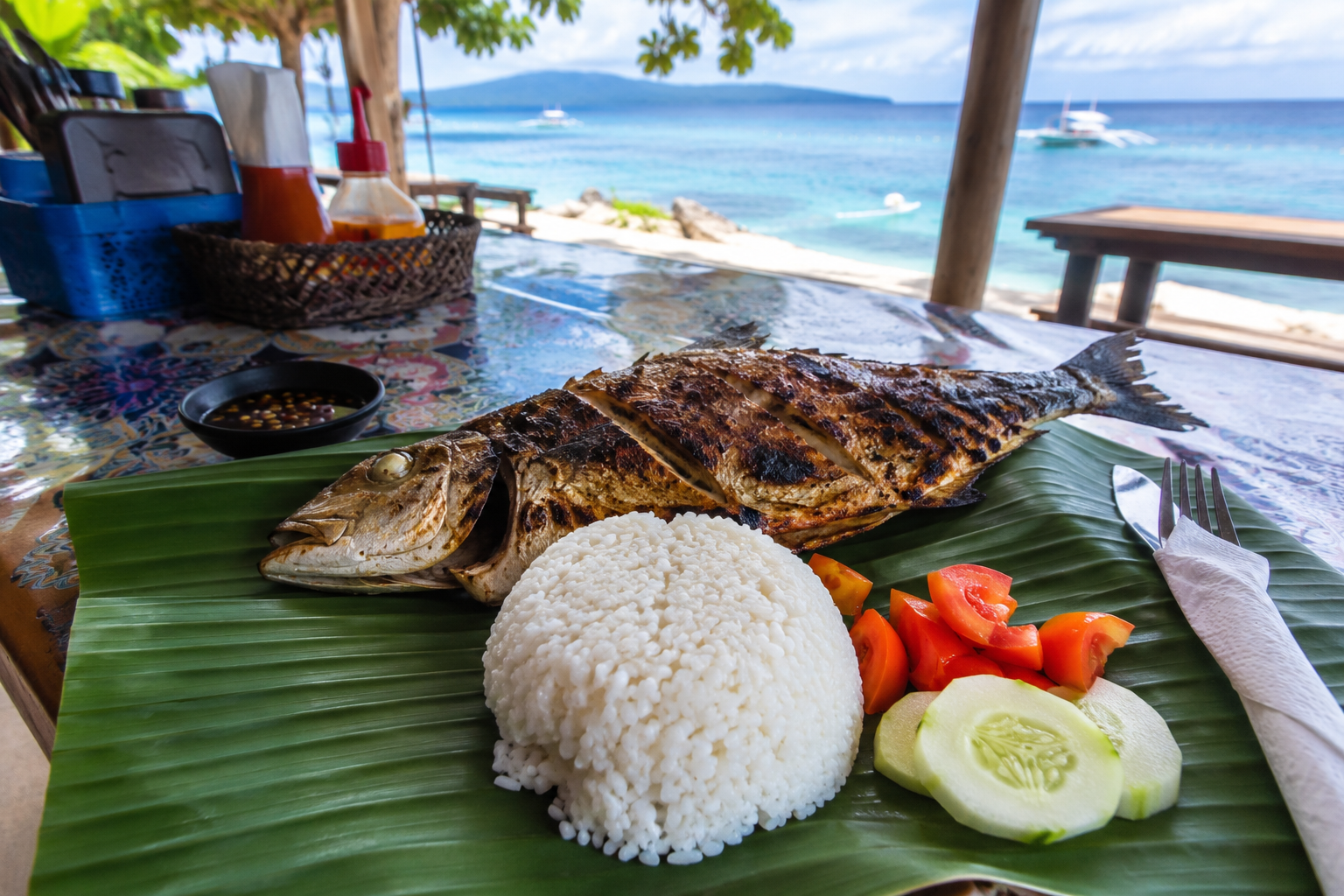
All fish served on the island is caught outside the sanctuary boundaries using sustainable line fishing — not from the protected reef. Expect grilled fish, kinilaw (raw fish ceviche in vinegar and coconut milk), garlic rice, and fresh buko (coconut water) straight from the tree. Budget ₱150–₱300 per person for a full meal.
Food options on the island are limited and sell out by early afternoon on busy days. Bring your own snacks and plenty of water — at least 1.5 liters per person. The crossing can be rough, snorkeling is physical, and the island has no convenience stores. Pack fruit, crackers, and electrolytes alongside your dry bag.
Organized Tour vs DIY — Which is Better?
| DIY (independent) | Organized tour | |
|---|---|---|
| Cost | ₱800–₱1,500/person | ₱1,500–₱3,500/person |
| Flexibility | High — go at your own pace | Fixed schedule |
| Convenience | You arrange everything | Everything handled for you |
| Best for | Experienced travelers, groups | First-timers, solo travelers, families |
| Lunch | Buy on the island | Usually included |
| Gear | Rent on the island | Usually included |
| Boat stress | You negotiate at the pier | Pre-arranged, stress-free |
First-timers and solo travelers: book an organized day tour. The price difference is small and the stress savings are significant — no pier negotiation, no transport figuring-out, gear included. Couples and small groups: DIY is worth it. Charter a private boat (₱2,000–₱3,500 total for up to 6 people), split the cost, and enjoy maximum flexibility on the island.
Best Time to Visit Apo Island
The best time to visit Apo Island is during the dry season from November to May. March and April offer the calmest seas and best visibility, with water temperatures around 82°F — perfect for extended snorkeling without a wetsuit. Water visibility on a good day reaches 30–40 meters.
Avoid June to October when typhoons and the southwest monsoon bring rough seas. Boat trips can be cancelled with little notice during this period, and underwater visibility drops significantly.
Within any day, arrive as early as possible — before 9 AM if you can. Turtles are most active feeding in the morning. By 11 AM, organized tour boats arrive and the snorkeling areas get crowded. The first hour of the day at Apo Island, with calm water and few other visitors, is an experience worth waking up for.
| Month | Conditions | Recommendation |
|---|---|---|
| Nov – Jan | Dry, some northeast swell | ✅ Good — good visibility, fewer crowds |
| Feb – Apr | Driest, calmest seas | ⭐ Best — peak conditions, peak visibility |
| May | Transition, still mostly dry | ✅ Good — excellent before rains arrive |
| Jun – Oct | Rainy, rough seas, typhoon risk | ⚠️ Avoid — boats may cancel, poor visibility |
Practical Tips for Your Apo Island Day Trip
Dry bag (essential for phone and valuables on the boat), reef-safe sunscreen, rash guard or wetsuit, water shoes for the pier wade-in, at least 1.5L of water, snacks, cash (₱2,000+ per person recommended), underwater camera or GoPro, prescription swim goggles if needed.
There are no ATMs on Apo Island and no card payments accepted anywhere. Bring enough cash for boat fare (both ways), entrance fee, snorkel guide, gear rental, lunch, and a little extra for souvenirs. ₱2,000–₱3,000 per person covers most scenarios comfortably.
Both at Malatapay pier and Apo Island beach, you’ll need to wade through shallow water to reach or leave the bangka boat. The seabed can be rocky. Water shoes or old sandals you don’t mind getting wet are highly recommended. Flip flops tend to come off in the surf.
The 30-minute boat crossing can be rough, especially from December to February when the northeast swell picks up. If you’re prone to motion sickness, take sea sickness medication 1 hour before departure. Ask locals at Malatapay pier about current conditions — they’ll tell you honestly if the crossing is too rough that day.