
This guide contains affiliate links. If you sign up or book through them, Best Philippines Travel Guide may earn a small commission at no extra cost to you. No bank or app sponsored this guide.
The Philippines still runs largely on cash, so carry Philippine pesos (₱, PHP) for jeepneys, tricycles, markets, small eateries and island fees. Use cards in malls, hotels and chain restaurants, and always choose to pay in pesos. Foreign-card ATM withdrawals usually cost about ₱200–₱250 per withdrawal on top of your home bank’s fees, with limits of around ₱10,000–₱20,000 per withdrawal, so take out the maximum each time. GCash is everywhere, but tourist access is limited, so don’t rely on it as your only way to pay.
Estimate your daily food, transport, hotels and tours in our free Philippines trip budget calculator.
How to pay in the Philippines at a glance
| Payment | Works for | Watch out for |
|---|---|---|
| Cash (pesos) | Jeepneys, tricycles, markets, carinderias, small resorts, island and environmental fees | Carry small bills; big notes are hard to break in the provinces |
| Debit card at ATMs | Getting cash | ₱200–₱250 local fee per withdrawal, ₱10,000–₱20,000 limits |
| Credit or debit card | Malls, hotels, chain restaurants, airlines, supermarkets | Foreign transaction fees; always pay in PHP, not your home currency |
| GCash / Maya | QR payments almost everywhere, including small shops | Tourist sign-up is limited; check eligibility before you rely on it |
| Money changers | Exchanging cash you brought | Bring clean, undamaged bills; compare rates |
| Prepaid online bookings | Tours, transfers, ferries | Book ahead to carry less cash |
The Philippine peso
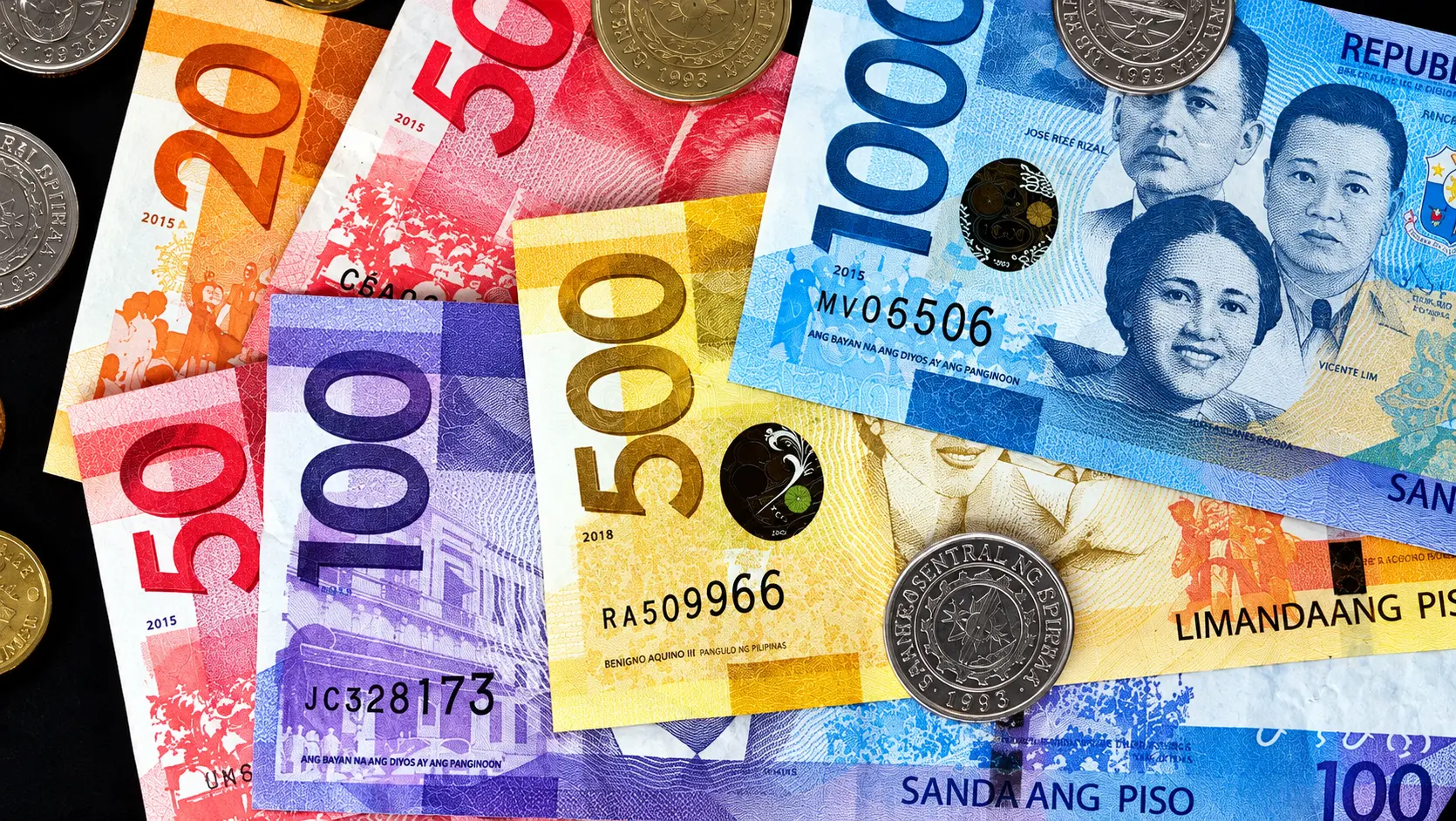
- Currency: Philippine peso (PHP, symbol ₱), divided into 100 centavos.
- Banknotes: ₱20, ₱50, ₱100, ₱200, ₱500 and ₱1,000. Newer polymer (plastic) versions now circulate for several denominations alongside paper notes, and both are legal tender.
- Coins: ₱1, ₱5, ₱10 and ₱20, plus small centavo coins.
- Exchange rate: about ₱61 per US$1 in October 2026. Check a live rate before you travel, since it moves daily.
How much cash to carry
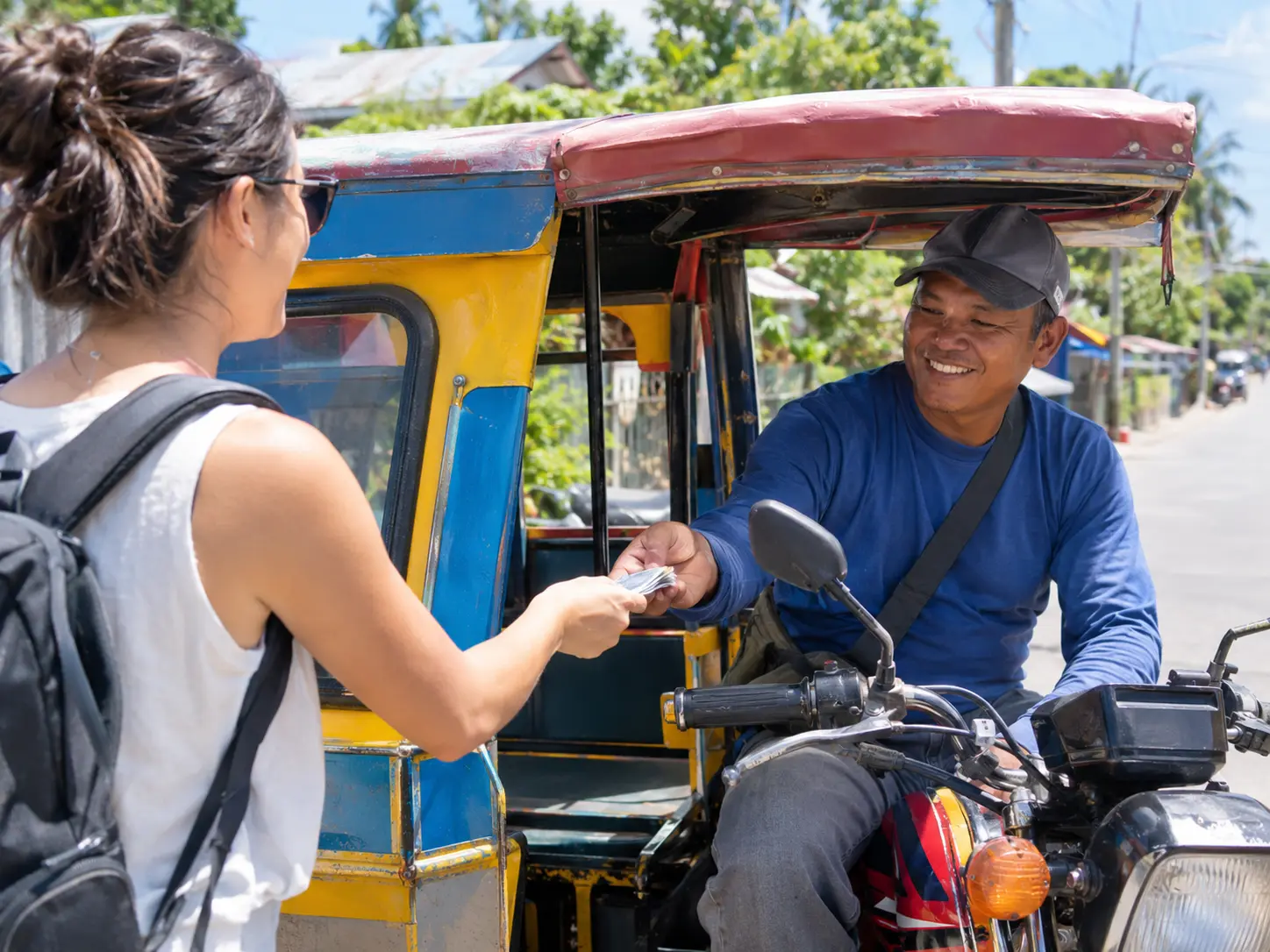
Outside big cities, cash is king. You’ll need it for:
- Jeepneys, tricycles, habal-habal and many boat transfers.
- Environmental, entrance and island-hopping fees, often collected in cash at the site.
- Local eateries, markets, street food and small shops.
- Small resorts and homestays in places like Siargao, Siquijor, Batad and parts of Palawan.
In remote areas, ATMs can be few, out of cash, or offline during brownouts. Withdraw enough in the nearest town before heading to small islands. To estimate how much you’ll spend per day, see our budget travel guide and cost of living guide.
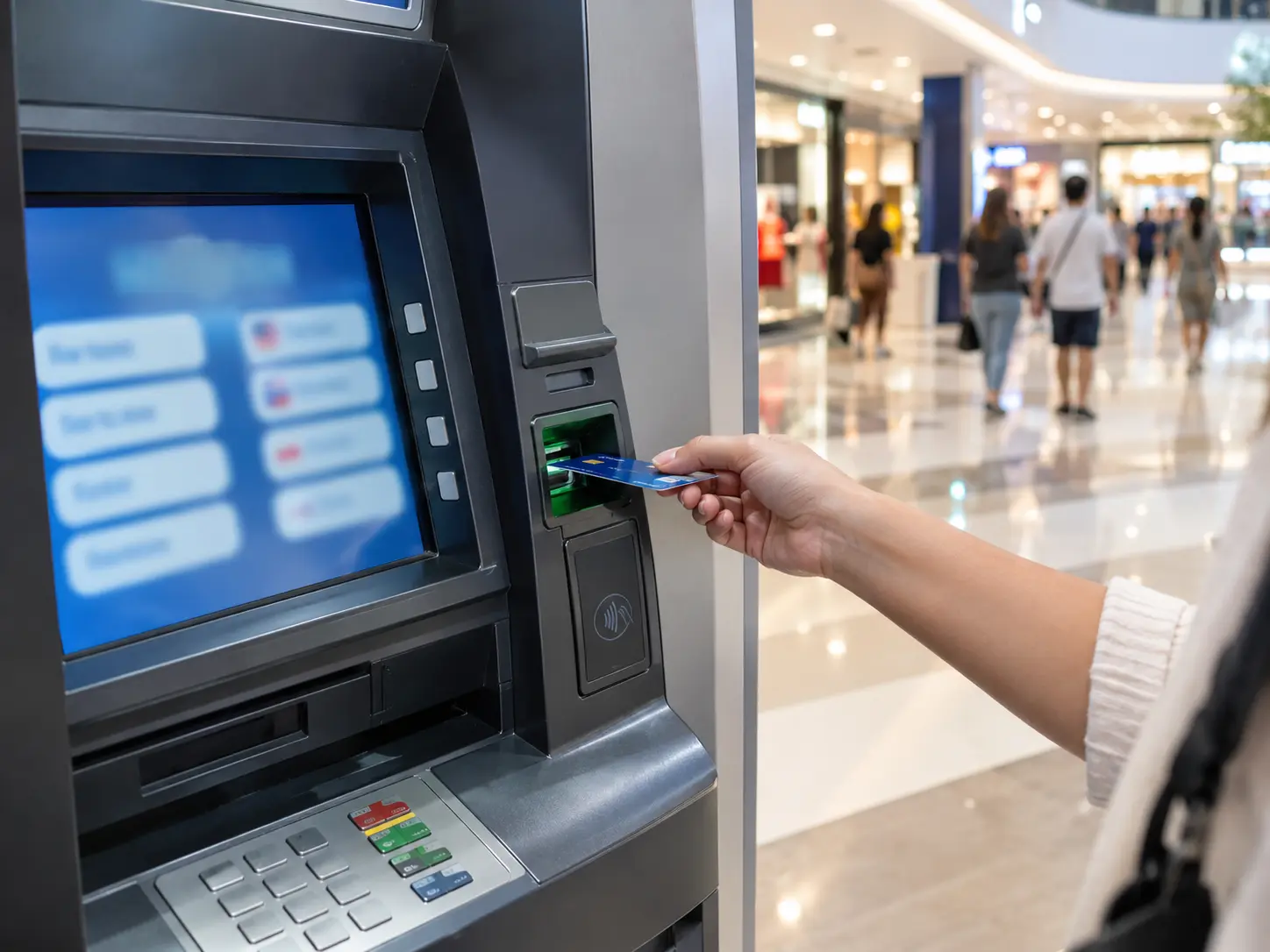
ATMs in the Philippines: fees and limits
| Bank | Foreign-card fee (approx.) | Typical limit per withdrawal | Notes |
|---|---|---|---|
| BDO | About ₱250 | ₱10,000–₱20,000 | Largest network; accepts Amex at its ATMs |
| BPI | About ₱200–₱250 | ₱10,000–₱20,000 | Large network nationwide |
| Metrobank, UnionBank, Security Bank | About ₱200–₱250 | ₱10,000–₱20,000 | Common in cities and malls |
| HSBC | No local fee reported | Up to about ₱40,000 | Very few ATMs, mostly in Metro Manila and Cebu |
Fees as reported by travelers and fee trackers in 2026. Banks change their charges, and your home bank adds its own fees and exchange markup, so check both before you go.
- Withdraw the maximum each time, since the local fee is a flat amount.
- Decline conversion. If the ATM offers to charge you in your home currency, choose PHP or “without conversion.” Accepting adds a poor exchange rate.
- Use ATMs inside malls and banks, which are safer and less likely to have skimmers.
- Know your PIN length. Some Philippine ATMs expect 4-digit or 6-digit PINs, so check that your card works with yours.
- Don’t withdraw on a credit card, which is charged as a cash advance with interest from day one.
- Tell your bank you’re traveling so your card isn’t blocked.
Using credit and debit cards
Visa and Mastercard are widely accepted at malls, hotels, chain restaurants, supermarkets, airlines and larger resorts. American Express and other networks are accepted less often. Many small businesses still take cash only, and some add a surcharge for cards.
- Use a no-foreign-transaction-fee card to avoid the usual 2.5–3.5% charge on every purchase.
- Always pay in pesos when the card machine asks. Paying in your home currency means a worse rate.
- Carry a backup card on a different network, kept separately from your main one.
Multi-currency cards like Wise
Multi-currency travel cards such as Wise let you hold or convert money to pesos at the real exchange rate, with low, transparent fees. They work at ATMs and card machines across the Philippines, though the local ₱200–₱250 ATM fee still applies. They’re a good way to avoid your home bank’s markup on both spending and withdrawals.
GCash and Maya: can tourists use them?
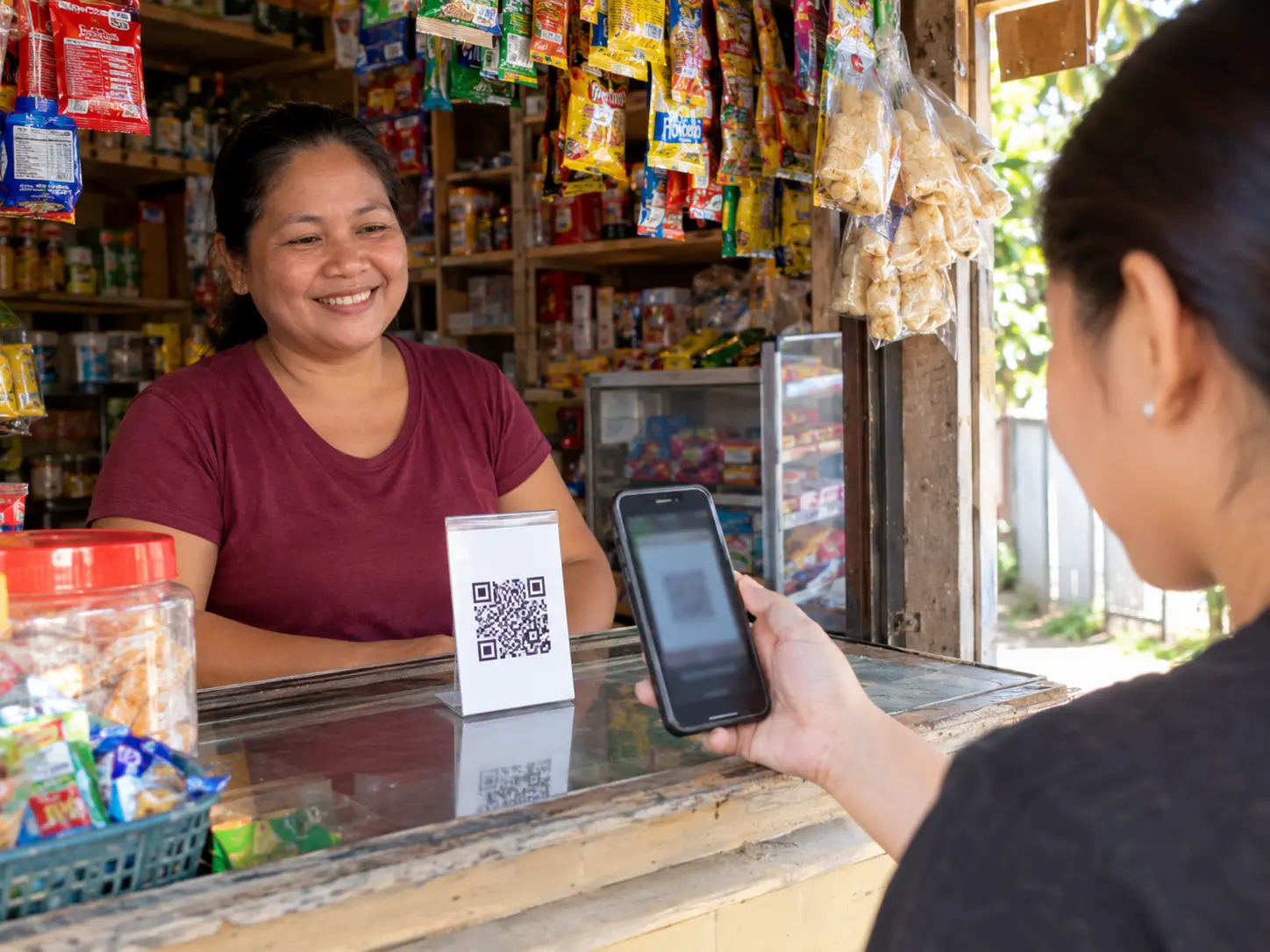
Filipinos pay for almost everything with GCash or Maya, by scanning a QR Ph code at the counter, from malls to sari-sari stores. For tourists, it’s more complicated:
- GCash GTourist: a visitor account verified with a foreign passport, a selfie and a non-Philippine mobile number. It’s valid for about 30 days and activates once you’re in the Philippines. Availability has been limited to certain countries’ phone numbers, so check whether yours is supported before you travel.
- Standard GCash accounts usually need a Philippine ID such as an ACR I-Card for full verification, which short-term visitors don’t have.
- Maya has been more accepting of foreign passports for basic verification, but higher limits and banking features generally need local documents.
- You’ll need mobile data and a working number for verification codes. A Philippines eSIM or local SIM helps.
Exchanging money
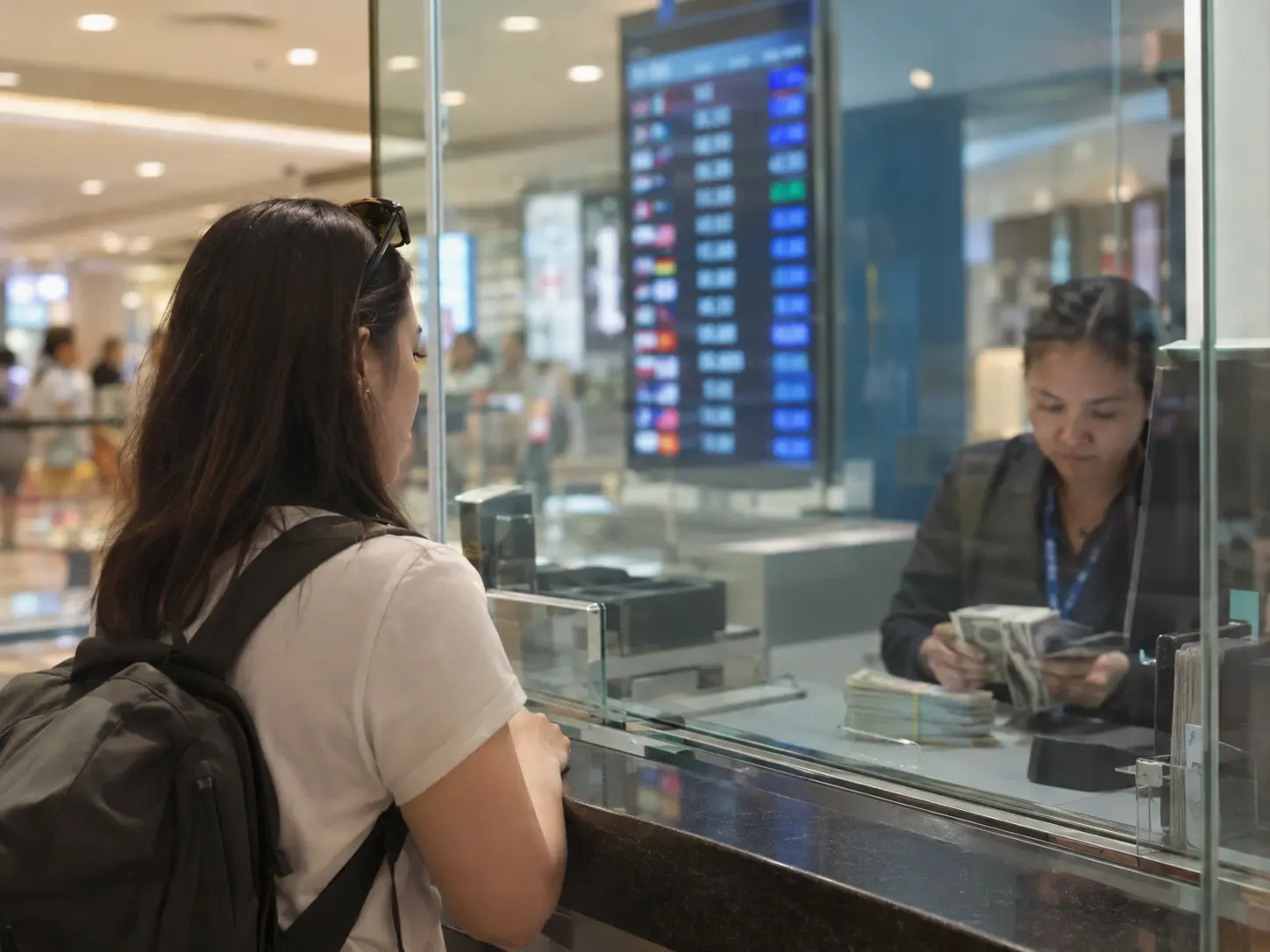
- Bring clean, undamaged notes. Money changers often reject torn, marked or very old US dollar bills, and many prefer US$100 notes.
- Exchange only a little at the airport for your first taxi or Grab and meals, since rates are usually better in cities.
- Use licensed money changers in malls and count your pesos at the counter.
- US dollars, euros, British pounds, Japanese yen and Australian dollars are the easiest currencies to exchange.
How much cash can you bring into the Philippines?
Under Bangko Sentral ng Pilipinas rules, you must declare foreign currency over US$10,000 (or the equivalent) when you enter or leave the country. Bringing in or taking out more than ₱50,000 in Philippine pesos requires prior authorization from the central bank. Most tourists carry far less, but check the latest rules if you’re bringing large amounts.
Tipping in the Philippines
- Restaurants: many add a service charge, often around 10%. If they don’t, leaving a small tip is appreciated.
- Drivers, guides and boat crews: a tip of a few dozen to a hundred pesos or so is a kind gesture for good service, more for full-day tours.
- Hotel staff: small tips for porters and housekeeping are appreciated but not expected.
Money safety tips
- Split cash and cards between your bag, wallet and hotel safe.
- Use a front pocket or crossbody bag in crowds, jeepneys and festivals.
- Prepay tours, transfers and ferries online where you can, so you carry less cash.
- Keep your bank’s emergency number and card details saved offline.
Carry less cash: book ahead
Prepay tours and transfers by card, and stay connected for app payments and verification codes. Klook bookings often include free cancellation.
Money in the Philippines: FAQ
Is the Philippines a cash or card country?
Mostly cash, especially outside big cities. Cards work in malls, hotels and chain restaurants, but transport, markets, small eateries and many island fees are cash only. Locals increasingly pay by GCash or Maya QR codes.
How much is the ATM fee in the Philippines for foreign cards?
Most Philippine banks charge about ₱200 to ₱250 per withdrawal on foreign cards, plus whatever your home bank charges. HSBC ATMs have been reported to charge no local fee, but they’re rare.
What is the ATM withdrawal limit in the Philippines?
Most ATMs limit foreign cards to about ₱10,000 to ₱20,000 per withdrawal. HSBC allows up to about ₱40,000. Your home bank’s daily limit also applies.
Can tourists use GCash?
Sometimes. GCash has a GTourist account for visitors, verified with a foreign passport and a non-Philippine number, valid for about 30 days, but it isn’t available for every country’s phone numbers. Standard accounts usually need a Philippine ID. Don’t rely on GCash as your only way to pay.
Should I bring US dollars or pesos to the Philippines?
Bring a small amount of pesos or clean US dollars for your first day, then use ATMs or licensed money changers. Using a low-fee card for withdrawals is usually cheaper than carrying large amounts of cash.
Do I need to declare cash when entering the Philippines?
Yes, if you carry foreign currency worth more than US$10,000. Bringing in or taking out more than ₱50,000 in Philippine pesos requires prior authorization from the Bangko Sentral ng Pilipinas.
Should I pay in pesos or my home currency by card?
Always choose pesos. Paying in your home currency through dynamic currency conversion usually means a worse exchange rate.
Do you tip in the Philippines?
Tipping isn’t required, but it’s appreciated. Many restaurants add a service charge, and small tips for drivers, guides, boat crews and hotel staff are a kind gesture for good service.
Add up flights, hotels, food, transport and tours, then see how much cash to bring.

Cebu-born travel writer raised between Cebu and Dumaguete, now based in Zamboanga del Sur, Mindanao. Gio writes Best Philippines Travel Guide to help first-time visitors travel the islands with confidence.