
This guide contains Klook affiliate links. If you book through them, Best Philippines Travel Guide may earn a small commission at no extra cost to you.
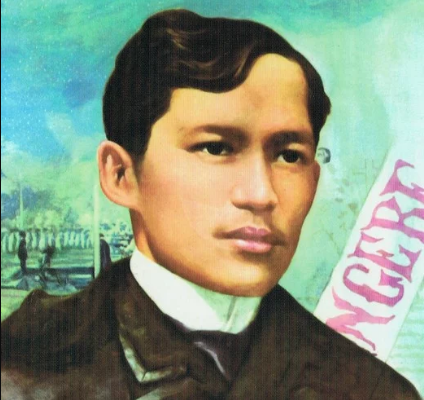
Dr. José Rizal (José Protasio Rizal Mercado y Alonso Realonda) was a Filipino physician, writer and reformist, born on June 19, 1861 in Calamba, Laguna. His novels Noli Me Tángere (1887) and El Filibusterismo (1891) exposed abuses under Spanish rule and inspired the Philippine Revolution. He was exiled to Dapitan from 1892 to 1896 and executed by the Spanish in Bagumbayan, now Rizal Park, on December 30, 1896. Today you can follow his life at the Rizal Shrine in Calamba, Fort Santiago in Intramuros, Rizal Park and the Rizal Shrine in Dapitan.
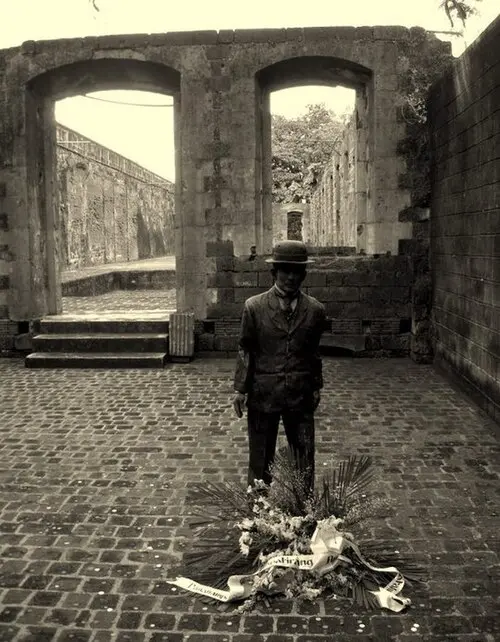
Walk in Rizal’s footsteps in Intramuros, where he spent his last days at Fort Santiago.
José Rizal at a glance
| Fact | Answer |
|---|---|
| Full name | José Protasio Rizal Mercado y Alonso Realonda |
| Born | June 19, 1861, Calamba, Laguna |
| Died | December 30, 1896, Bagumbayan (now Rizal Park), Manila, executed by firing squad |
| Parents | Francisco Mercado and Teodora Alonso |
| Siblings | The seventh of 11 children: two boys and nine girls |
| Profession | Ophthalmologist (eye doctor), writer, poet and reformist |
| Famous works | Noli Me Tángere (1887), El Filibusterismo (1891), Mi Último Adiós (1896) |
| Exile | Dapitan, Zamboanga del Norte, 1892–1896 |
| Rizal Day | December 30, a national holiday |
José Rizal timeline
| Year | Event |
|---|---|
| 1861 | Born on June 19 in Calamba, Laguna |
| 1872–1877 | Studies at the Ateneo Municipal de Manila, earning his bachelor’s degree with high honors |
| 1877–1882 | Studies philosophy and medicine at the University of Santo Tomas |
| 1882 | Leaves for Spain to continue his studies |
| 1884–1885 | Completes medicine and philosophy and letters at the Universidad Central de Madrid |
| 1885–1887 | Trains in ophthalmology in Paris and Heidelberg |
| 1887 | Publishes Noli Me Tángere in Berlin |
| 1891 | Publishes El Filibusterismo in Ghent, Belgium |
| 1892 | Founds La Liga Filipina in Manila on July 3; arrested and exiled to Dapitan |
| 1892–1896 | Lives in Dapitan as a doctor, teacher, farmer and community builder |
| 1896 | Volunteers as a doctor in Cuba; arrested on the way, imprisoned in Fort Santiago and tried for rebellion |
| December 30, 1896 | Executed at Bagumbayan; writes Mi Último Adiós on the eve of his death |
Rizal’s most important works
- Noli Me Tángere (1887) His first novel, exposing abuses by Spanish friars and officials. Its characters, like Crisóstomo Ibarra, María Clara and Padre Dámaso, are still studied in Philippine schools.
- El Filibusterismo (1891) The darker sequel, following Ibarra’s return as the vengeful jeweler Simoun, and dedicated to the three priests executed in 1872, known as GomBurZa.
- Mi Último Adiós (1896) His farewell poem, written in Fort Santiago the night before his execution and smuggled out to his family.
- Essays and letters Including writings for the reformist newspaper La Solidaridad, and his letter to the young women of Malolos.
Both novels have scenes Filipinos still quote, like the tinola dinner in Noli Me Tángere; see our tinola recipe.
Rizal’s family
Rizal was the seventh of eleven children of Francisco Mercado, a prosperous farmer, and Teodora Alonso, an educated, business-minded woman who was his first teacher. His only brother, Paciano, became a general in the Philippine Revolution. His sisters were Saturnina, Narcisa, Olympia, Lucia, María, Concepción, Josefa, Trinidad and Soledad. The family used the surname “Rizal,” which José adopted when he enrolled at school.
In Dapitan, Rizal lived with Josephine Bracken, who stayed with him until his execution.
Rizal sites you can visit today
- Rizal Shrine, Calamba, Laguna A reconstruction of the house where Rizal was born, with a garden and museum about his childhood, about two hours south of Manila.
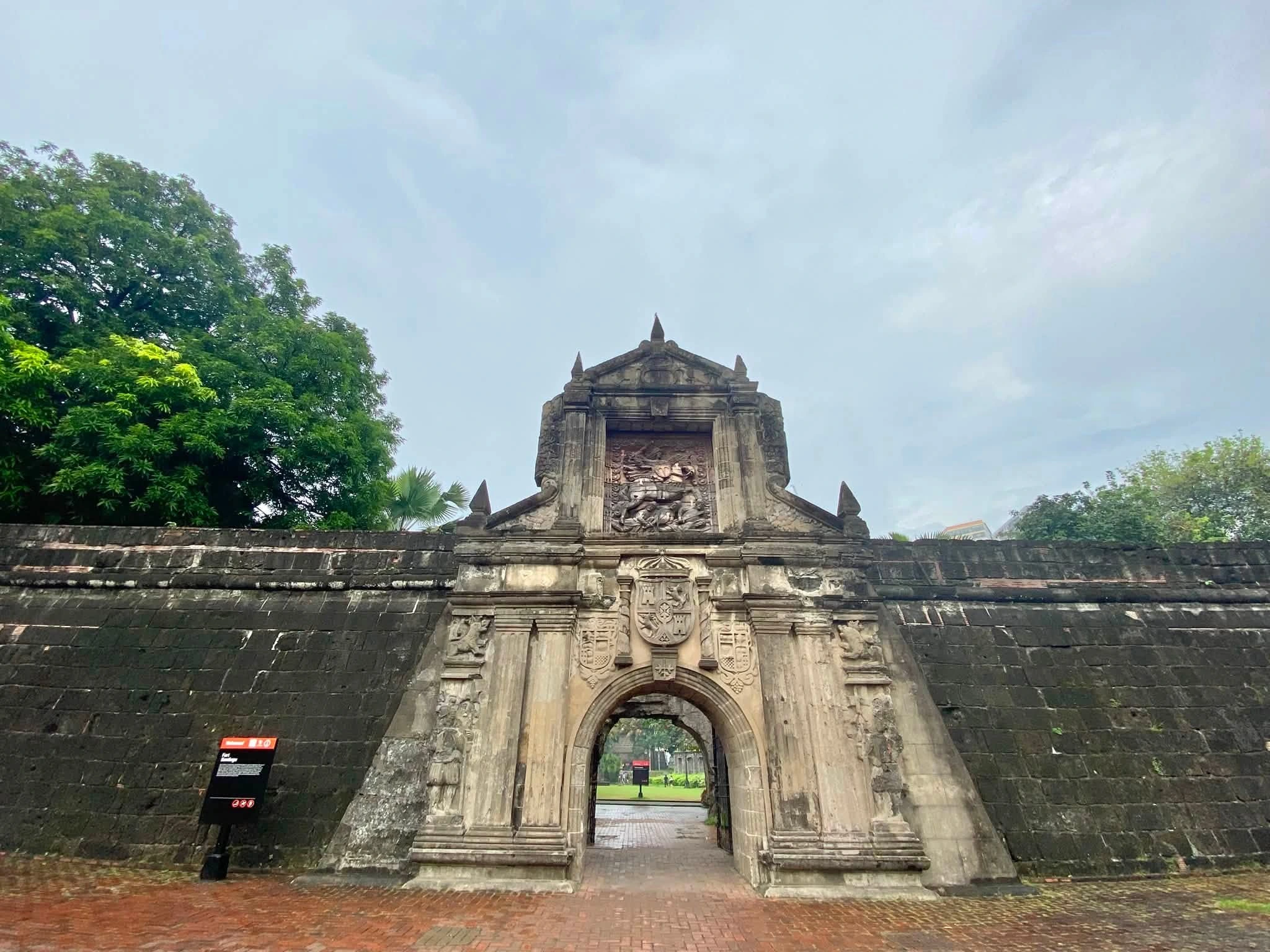
- Fort Santiago, Intramuros, Manila Where Rizal was imprisoned before his execution. The Rizal Shrine museum inside displays his belongings, and brass footprints trace his final walk to Bagumbayan. See our historical sites guide.

Fort Santiago, where Rizal spent his last days. - Rizal Park (Luneta), Manila The site of his execution, now home to the Rizal Monument, guarded around the clock, where his remains rest.
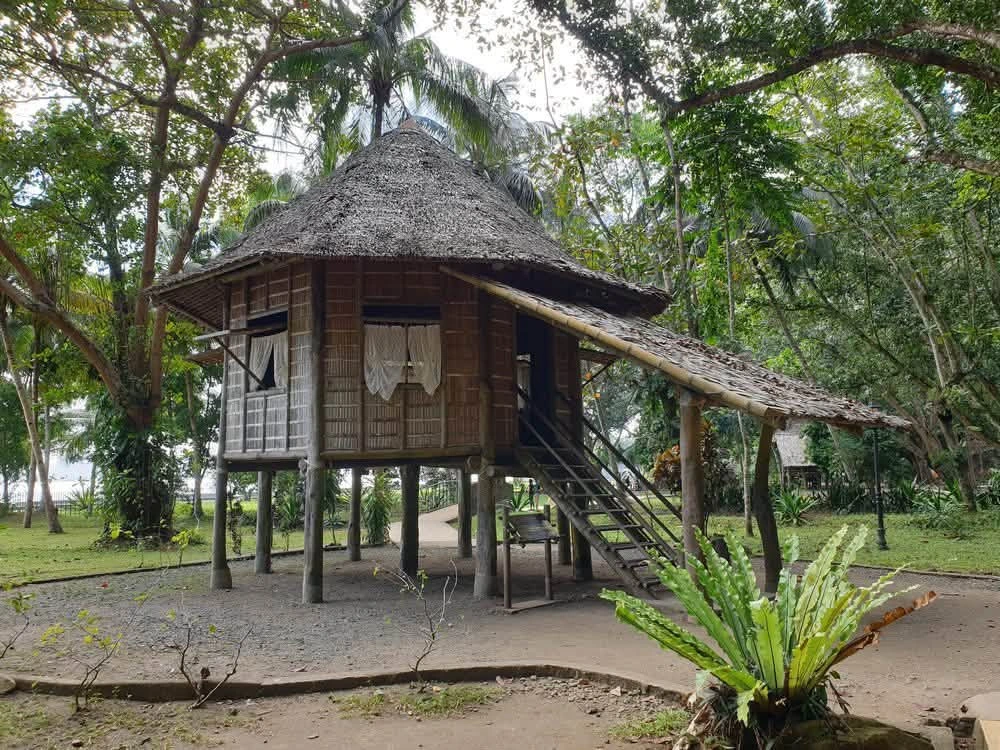
- Rizal Shrine, Dapitan, Zamboanga del Norte Where he lived in exile from 1892 to 1896, with replicas of his house, clinic and school, the water system he designed, and the relief map of Mindanao he helped create in the town plaza. See our Dapitan travel guide.

The Rizal Shrine in Dapitan. - Fort San Pedro, Cebu City On his way out of exile in August 1896, Rizal’s ship stopped in Cebu, and he was brought to the military headquarters at Fort San Pedro.
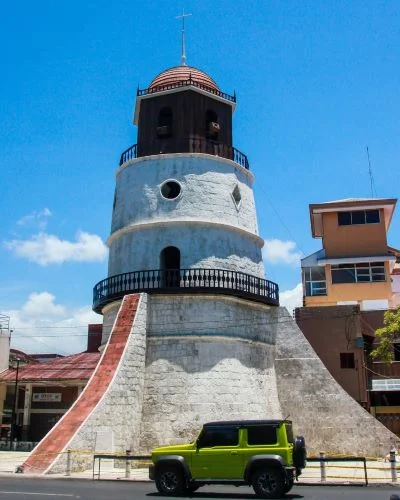
- Dumaguete, Negros Oriental On the same 1896 voyage, Rizal went ashore in Dumaguete, visited the governor and operated on the eyes of a former classmate. See our Dumaguete guide.

Dumaguete, where Rizal went ashore in 1896.
Is Rizal officially the national hero?
Rizal is universally regarded as the Philippines’ foremost national hero, and Rizal Day on December 30 is a national holiday. Interestingly, no Philippine law has ever formally proclaimed any official national hero. Rizal’s status comes from history, education and popular recognition, including the law requiring Rizal’s life and works to be taught in schools (Republic Act 1425, the Rizal Law of 1956).
From Manila and Calamba to Dapitan, add flights, hotels and tours in our free trip budget calculator.
Follow Rizal’s footsteps
Tours and passes for the main Rizal sites. Klook bookings often include free cancellation.
Dr. José Rizal: FAQ
What is José Rizal’s full name?
José Protasio Rizal Mercado y Alonso Realonda.
When and where was José Rizal born?
Rizal was born on June 19, 1861, in Calamba, Laguna, the seventh of eleven children of Francisco Mercado and Teodora Alonso.
How did José Rizal die?
Rizal was executed by a Spanish firing squad at Bagumbayan, now Rizal Park in Manila, on December 30, 1896, after being convicted of rebellion.
Why is Rizal a national hero?
His novels Noli Me Tángere and El Filibusterismo exposed abuses under Spanish rule and inspired Filipinos to seek reform and independence, and his execution helped fuel the Philippine Revolution.
What did Rizal do in Dapitan?
During his exile from 1892 to 1896, Rizal ran a clinic, opened a school for boys, farmed, built a water system and helped create a relief map of Mindanao in the town plaza.
How many siblings did Rizal have?
Rizal had ten siblings: one brother, Paciano, and nine sisters.
Where can I see Rizal’s grave?
His remains rest beneath the Rizal Monument in Rizal Park (Luneta), Manila, near where he was executed.
What is Rizal Day?
Rizal Day, December 30, is a national holiday commemorating his execution in 1896.
Visit the places that shaped the national hero, from Intramuros to Dapitan.

Cebu-born travel writer raised between Cebu and Dumaguete, now based in Zamboanga del Sur, Mindanao, next to Rizal’s exile home in Dapitan. Gio writes Best Philippines Travel Guide to share Philippine history and travel.